

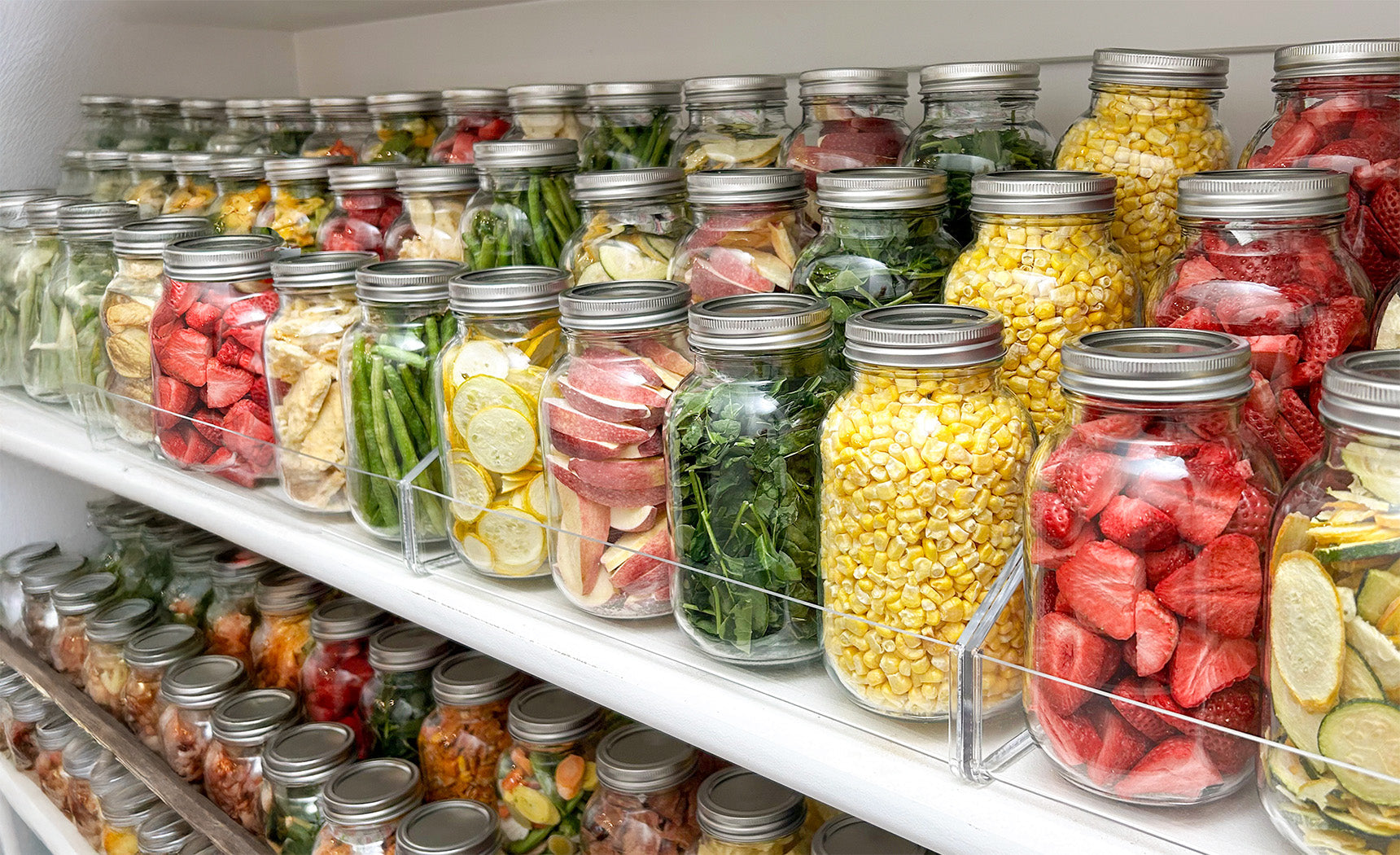
Respuesta Rápida
La liofilización y la deshidratación son excelentes métodos de conservación de alimentos, pero no están diseñados para exactamente el mismo tipo de alimentos.
La liofilización destaca por preservar la más amplia variedad de alimentos, mientras que la deshidratación sobresale en la creación de aperitivos masticables, cecina, hierbas secas y cuero de frutas.
En lugar de preguntar qué método es mejor en general, es más útil preguntar:
"¿Qué alimento voy a conservar y cómo quiero usarlo después?"
Esa única pregunta a menudo determina qué método de conservación es el más adecuado.
Mejores Alimentos para la Liofilización
La liofilización es especialmente adecuada para alimentos que se benefician de mantener su estructura y de rehidratarse bien.
Frutas
Muchas frutas se liofilizan excepcionalmente bien, incluyendo:
-
Fresas
-
Arándanos
-
Manzanas
-
Plátanos
-
Piña
-
Melocotones
-
Frambuesas
-
Mangos
Estas frutas se pueden disfrutar como aperitivos ligeros y crujientes o utilizarse más tarde en batidos, repostería, cereales, postres y otras recetas.
Verduras
Muchas verduras conservan su versatilidad después de la liofilización, lo que las convierte en ingredientes útiles para futuras comidas.
Ejemplos comunes incluyen:
-
Maíz
-
Guisantes
-
Judías verdes
-
Zanahorias
-
Brócoli
-
Pimientos
-
Patatas
-
Cebollas
Estas verduras a menudo pueden añadirse directamente a sopas, guisos, cazuelas y otras recetas después del almacenamiento.
Comidas Completas
Una de las mayores fortalezas de la liofilización es la conservación de comidas completas.
Ejemplos incluyen:
-
Chili
-
Estofado de ternera
-
Pollo con arroz
-
Platos de pasta
-
Sartenes de desayuno
-
Sopas
-
Curry
-
Cazuelas
Para familias ocupadas, campistas, cazadores y preparación para emergencias, conservar comidas completas puede ser una de las ventajas más valiosas de la liofilización.
Productos Lácteos
Muchos productos lácteos también se pueden liofilizar, lo que los hace disponibles para futuras cocinas y preparación de comidas.
Ejemplos incluyen:
-
Queso
-
Yogur
-
Crema agria
-
Requesón
-
Helado
Dado que los lácteos se comportan de manera diferente a muchos otros alimentos, los resultados pueden variar según el producto y cómo se prepara antes de la conservación.
Alimentos que no se pueden deshidratar
La liofilización también permite conservar alimentos que no son prácticos de conservar con un deshidratador.
Ejemplos incluyen:
-
Huevos
-
Helado
-
Caramelos
-
Tarta de queso
-
Yogur
-
Sobras completas
Algunos de estos alimentos se convierten en experiencias culinarias completamente nuevas, mientras que otros pueden almacenarse y usarse más tarde en recetas o comidas.
Mejores Alimentos para Deshidratar
La deshidratación sobresale cuando el alimento final está destinado a disfrutarse en su forma deshidratada.
Frutas
Algunas de las frutas deshidratadas más populares incluyen:
-
Rodajas de manzana
-
Chips de plátano
-
Mango
-
Piña
-
Albaricoques
-
Peras
-
Cerezas
Estas frutas desarrollan una textura masticable que las convierte en excelentes aperitivos.
Hierbas
Las hierbas son una de las mayores fortalezas de la deshidratación.
Las opciones populares incluyen:
-
Albahaca
-
Perejil
-
Romero
-
Tomillo
-
Orégano
-
Salvia
Secar las hierbas permite almacenarlas cómodamente manteniendo su utilidad en la cocina diaria.
Carne
La deshidratación se ha asociado durante mucho tiempo con la elaboración de carne seca.
Las opciones comunes incluyen:
-
Ternera
-
Pavo
-
Venado
-
Pescado
Para alimentos donde la masticabilidad es parte del resultado deseado, la deshidratación sigue siendo un excelente método de conservación.
Aperitivos
Muchos aperitivos caseros son naturalmente adecuados para la deshidratación.
Ejemplos incluyen:
-
Cuero de frutas
-
Chips de col rizada
-
Chips de verduras
-
Rodajas de cítricos secas
Estos alimentos se disfrutan típicamente exactamente como están, sin rehidratación.
Alimentos que se pueden conservar de ambas maneras
Algunos alimentos funcionan bien con cualquiera de los métodos de conservación.
La mejor elección depende del resultado que busques.
|
Alimento |
Liofilización |
Deshidratación |
|
Manzanas |
Snack crujiente o ingrediente para hornear |
Snack masticable |
|
Fresas |
Ligeras, crujientes, rehidratables |
Snacks dulces y masticables |
|
Tomates |
Ingrediente para cocinar |
Sabor concentrado |
|
Maíz |
Comidas futuras |
Ingrediente para sopa |
|
Champiñones |
Rehidratar para recetas |
Ingrediente para cocinar |
|
Hierbas Huevos Yogur Helado Caramelos Sobras |
Ingrediente a largo plazo Excelente Excelente Excelente Excelente Excelente |
Condimento diario – Limitado – – – |
Ningún método es universalmente mejor.
Cada uno crea un producto final diferente.
Un Alimento, Dos Resultados Muy Diferentes
El mismo alimento puede producir dos experiencias completamente diferentes según el método de conservación.
Una fresa liofilizada se vuelve ligera y crujiente y puede rehidratarse más tarde para recetas.
Una fresa deshidratada se vuelve masticable y se disfruta típicamente como snack.
Ninguno de los resultados es incorrecto, simplemente son diferentes.
Pensar en cómo quieres disfrutar el alimento más tarde es a menudo la forma más fácil de elegir el método de conservación adecuado.
¿Qué Alimentos No Suelen Ser Ideales?
No todos los alimentos son igualmente adecuados para cada método de conservación.
Los alimentos naturalmente ricos en grasas, aceites o azúcares pueden requerir una preparación especial o tener una vida útil más corta, independientemente del método de conservación. Por eso es importante seguir las recomendaciones específicas para cada alimento siempre que sea posible.
Ejemplos incluyen alimentos con muy alto contenido de grasa o ciertos alimentos con un contenido de azúcar excepcionalmente alto.
En lugar de forzar cada alimento en un solo método de conservación, a menudo es mejor evaluar cada uno individualmente.
Piensa en el Alimento Terminado
Una de las formas más sencillas de elegir un método de conservación es imaginarte comiendo el alimento dentro de seis meses.
Pregúntate a ti mismo:
-
¿Quiero que esto forme parte de una futura comida?
-
¿Quiero comerlo como un snack?
-
¿Estoy conservando ingredientes o recetas completas?
-
¿Cocinaré con él más tarde?
-
¿Lo quiero crujiente o masticable?
Esas preguntas a menudo facilitan mucho la decisión en comparación con la de comparar máquinas.
La liofilización suele ser la mejor opción para conservar comidas completas, sobras, productos lácteos, huevos, frutas, verduras y alimentos que quieras rehidratar más tarde o disfrutar como snacks crujientes.
La deshidratación suele ser la mejor opción para crear snacks sabrosos, hierbas, cecina e ingredientes diseñados para ser disfrutados en su estado seco.
Ninguno de los métodos de conservación reemplaza al otro.
En cambio, cada uno ofrece fortalezas únicas que lo hacen valioso para diferentes alimentos y diferentes objetivos.
Puntos Clave
-
Diferentes alimentos responden de manera diferente a cada método de conservación.
-
La liofilización destaca por conservar muchos alimentos para la preparación de comidas futuras.
-
La deshidratación sobresale en la creación de deliciosos snacks y condimentos listos para comer.
-
Muchos alimentos se pueden conservar con éxito utilizando cualquiera de los métodos, dependiendo del resultado deseado.
-
Elegir el método de conservación adecuado comienza decidiendo cómo quieres disfrutar el alimento más tarde.
PREGUNTAS FRECUENTES
¿Qué alimentos se liofilizan especialmente bien?
Muchas frutas, verduras, comidas cocinadas, sobras, productos lácteos, huevos, proteínas cocinadas, yogur, helado e incluso algunos dulces se liofilizan excepcionalmente bien cuando se preparan adecuadamente.
¿Qué alimentos son los mejores para deshidratar?
Frutas, hierbas, carne seca (jerky), cuero de frutas, champiñones, pimientos, tomates y snacks son algunas de las opciones más comunes.
¿Se puede liofilizar o deshidratar el mismo alimento?
Sí. Muchos alimentos pueden conservarse de ambas maneras, pero la textura final, el sabor, la rehidratación y el uso previsto serán diferentes.
¿Son difíciles de conservar los alimentos con alto contenido de grasa?
Los alimentos con alto contenido de grasa pueden ser más difíciles porque la grasa no se seca de la misma manera que el agua y puede limitar la estabilidad del almacenamiento. La orientación específica para cada alimento es importante.
¿Se pueden liofilizar los productos lácteos?
Muchos productos lácteos se pueden liofilizar, incluyendo queso, yogur, crema agria, requesón y helado, pero los resultados varían según el producto, el contenido de grasa, la preparación y el uso previsto.
¿Qué método es mejor para comidas completas?
La liofilización es la elección clara para comidas completas porque permite conservar comidas enteras y rehidratarlas posteriormente. La deshidratación está destinada principalmente a alimentos e ingredientes individuales en lugar de comidas completas.
¿Cómo debo elegir un método para un alimento específico?
Comience con el resultado que desea: crujiente o masticable, snack o ingrediente de comida, uso inmediato o almacenamiento, y si el alimento necesita rehidratarse bien.
Compartir:
Mitos comunes sobre la liofilización y la deshidratación
¿Qué es la liofilización?