

Quick Answer
If your goal is preserving food for the longest possible time, freeze drying generally offers greater long-term storage potential than dehydrating when food is properly packaged and stored.
That doesn't mean dehydrated food has a short shelf life. Many dehydrated foods can also be stored successfully for extended periods when they're dried correctly, packaged properly, and kept in cool, dry conditions.
The biggest differences come down to how each method removes moisture, the types of foods they preserve best, and how you plan to use the food later.
How Are Freeze Drying and Dehydrating Different?
Both methods preserve food by removing water, but they do it in very different ways.
A dehydrator uses warm air to slowly remove moisture from food.
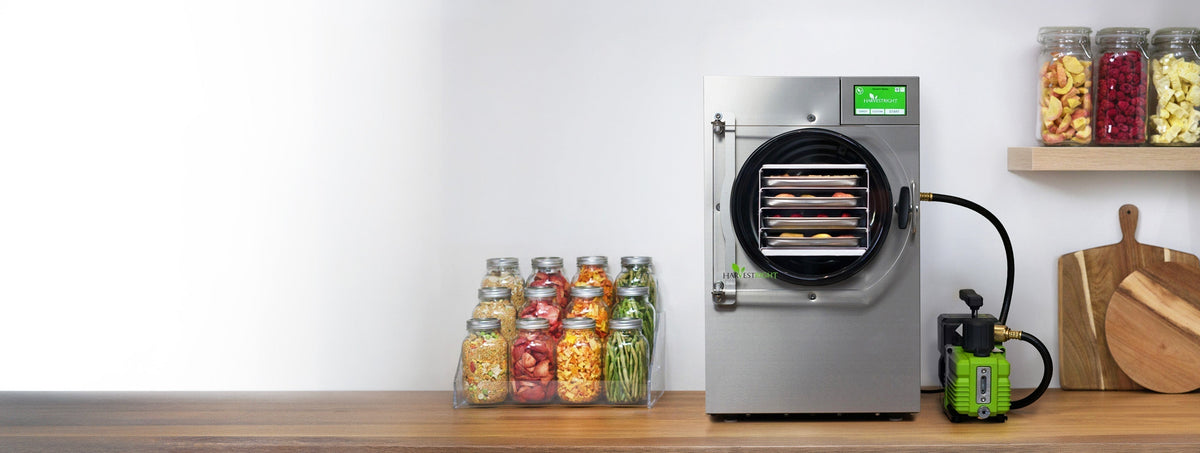
A freeze dryer freezes the food first, then removes the frozen water under a vacuum.
Because freeze drying removes more moisture while using much lower temperatures, freeze-dried food generally lasts longer, often keeps more of its original shape and color, and many foods rehydrate better when water is added back.
Why Many People Choose Freeze Drying
If your goal is long-term food storage, freeze drying offers several advantages over dehydrating.
Longer Shelf Life
When properly freeze dried, packaged, and stored, many foods can last for years, and some can last up to 25 years.
Dehydrated foods can also store well, but their shelf life is generally shorter and depends heavily on the type of food and storage conditions.
Preserves More Types of Food
One of the biggest advantages of freeze drying is the variety of foods you can preserve.
Harvest Right home freeze dryers make it possible to preserve foods such as:
-
Complete meals
-
Fruits
-
Vegetables
-
Cooked and raw meats
-
Eggs
-
Dairy products
-
Soups and stews
-
Leftovers
-
Prepared ingredients for future meals
-
Ice cream
-
Candy
Many of these foods are difficult, or simply not possible, to preserve with a dehydrator.
Better Rehydration
Because freeze drying removes water while the food remains frozen, many foods retain much of their original structure.
When water is added back later, many freeze-dried foods return close to their original texture, making freeze drying especially useful for complete meals and cooking ingredients.
Lower Processing Temperatures
A dehydrator relies on warm air to remove moisture.
A freeze dryer removes moisture while the food remains frozen throughout much of the process. Using much lower temperatures helps preserve many foods in a way that's difficult to achieve with traditional dehydration.
Reduce Food Waste
Freeze drying makes it easy to preserve garden harvests, leftovers, bulk grocery purchases, and meals you've prepared ahead of time, helping reduce food waste and giving you more flexibility in how you use your food.
When Is a Dehydrator a Great Choice?
Dehydrating remains an excellent option for many foods, especially those that are meant to be enjoyed in their dried form.
Examples include:
-
Beef jerky
-
Dried fruit
-
Herbs
-
Mushrooms
-
Vegetable chips
-
Fruit leather
Many freeze-dried foods can also be enjoyed without rehydrating, but freeze drying gives you the added flexibility of rehydrating many foods later for meals and cooking.
Packaging Is Just as Important as Preservation
One of the biggest misconceptions about shelf life is that the preservation method alone determines how long food will last.
In reality, even the best preservation method can't overcome poor packaging or storage.
Once food has been preserved, four factors become especially important:
Oxygen
Oxygen can gradually affect flavor, color, and overall food quality.
Moisture
Food can absorb moisture from the surrounding air if it isn't packaged properly, reducing storage life and quality.
Temperature
Cooler storage temperatures generally help preserved food maintain its quality longer than warmer temperatures.
Light
Keeping preserved food in a dark location helps protect flavor, color, and nutritional quality during storage.
A Helpful Way to Think About Shelf Life
Imagine preserving the same meal two different ways.
One batch is freeze dried.
The other is dehydrated.
Now imagine storing both in a warm garage inside containers that aren't properly sealed.
Neither batch is likely to perform as well as food that's packaged correctly and stored in a cool, dry pantry.
The preservation method matters.
But good packaging and storage matter just as much.
Which Method Is Right for You?
Your goals should help determine which preservation method makes the most sense.
If you're looking for the longest possible shelf life, preserving complete meals, reducing food waste, or building a long-term food supply, freeze drying is often the better choice.
If you're making jerky, drying herbs, creating fruit leather, or making dried snacks, a dehydrator remains a simple and effective option.
Many people eventually choose to own both because each serves a different purpose.
Common Misconception: "Shelf Life Is Guaranteed"
No preservation method can guarantee that food will remain safe or maintain its quality for a specific number of years.
Shelf life depends on many factors, including:
-
The type of food
-
Preparation methods
-
Complete moisture removal
-
Packaging quality
-
Oxygen exposure
-
Storage temperature
-
Overall storage conditions
Understanding these factors helps set realistic expectations and encourages better food storage practices.
Key Differences at a Glance
|
Feature |
Freeze Drying |
Dehydrating |
|
Shelf Life |
Often up to 25 years* |
Usually months to several years* |
|
Processing Method |
Removes frozen water under vacuum |
Removes water with warm air |
|
Processing Temperature |
Low |
Higher |
|
Complete Meals |
Excellent |
Limited |
|
Fruits & Vegetables |
Excellent |
Excellent |
|
Meats |
Excellent |
Good for select foods like jerky |
|
Dairy |
Excellent |
Limited |
|
Rehydrates Well |
Excellent |
Fair to good |
|
Great for Ready-to-Eat Snacks |
Yes |
Yes |
*Actual shelf life depends on the food, preparation, packaging, and storage conditions.
Frequently Asked Questions
Does freeze-dried food always last longer than dehydrated food?
Not always. Freeze drying generally provides greater long-term storage potential, but actual shelf life depends on the type of food, how completely it was preserved, packaging quality, storage temperature, moisture exposure, oxygen exposure, and handling.
What shortens the storage life of preserved food?
Heat, moisture, oxygen, light, incomplete drying, poor packaging, damaged seals, and repeated opening can all reduce food quality and storage life.
Is an oxygen absorber enough to protect stored food?
No. Oxygen absorbers are an important part of long-term storage, but they work best when combined with quality packaging that keeps out moisture and air and is stored in suitable conditions.
Can dehydrated food be stored long term?
Yes. Many dehydrated foods store well for extended periods when they're dried thoroughly and protected from moisture, oxygen, heat, and light. Storage life varies depending on the food and how it's packaged.
Why should exact shelf-life promises be treated cautiously?
Shelf-life estimates are based on specific foods stored under controlled conditions. Since preparation methods, packaging, and storage environments vary, no single number applies to every food or every situation. Some foods, particularly those that are high in fat or oil, naturally have a shorter shelf life than lower-fat foods, even when freeze dried.
How can I tell if preserved food has absorbed moisture?
Common signs include softening, clumping, loss of crispness, condensation inside the package, unusual odors, visible mold, or a broken package seal. If food appears spoiled or questionable, it should not be consumed.
Bottom Line
Both freeze drying and dehydrating are effective ways to preserve food, but they serve different purposes.
If your priority is preserving a wide variety of foods for the longest possible storage, freeze drying is generally the better choice when paired with proper packaging and storage.
If you're making jerky, dried fruit, herbs, or snacks you'll enjoy in their dried form, a dehydrator remains an excellent option.
Harvest Right has helped make freeze drying practical for home use, giving families a way to preserve everything from garden harvests and leftovers to complete meals for everyday use or long-term food storage.
Share:
How Does Freeze Drying Work?
Freeze Drying vs. Dehydrating: Which Tastes Better?