

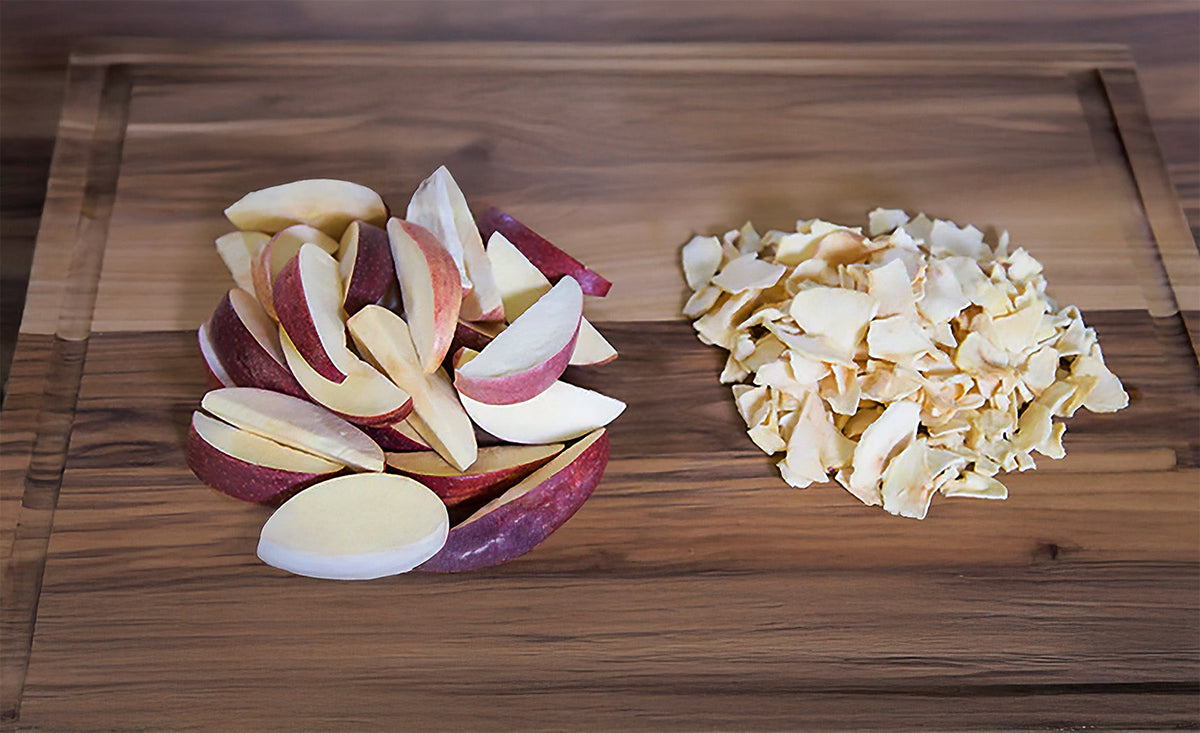
Freeze Drying vs. Dehydrating: The Complete Guide to Choosing the Right Food Preservation Method
Freeze drying and dehydrating are two of the most popular methods of preserving food at home, but they serve different purposes. While both remove moisture to extend the usable life of food, the way each method removes that moisture affects everything from texture and taste to shelf life, rehydration, and how the food is used later.
Freeze drying removes water from frozen food through a process called sublimation, allowing ice to transition directly into water vapor under a controlled vacuum. Because the food remains frozen during much of the process, freeze drying generally uses lower temperatures than dehydrating and helps preserve the food's structure differently than traditional drying methods. Many freeze-dried foods can later be rehydrated to a texture remarkably close to their original state, making freeze drying especially well suited for complete meals, fruits, vegetables, dairy products, eggs, meats, leftovers, and long-term food storage.
Dehydrating removes moisture using warm, circulating air. This creates foods with concentrated flavors and textures that are ideal for healthy snacks, herbs, seasonings, fruit leather, vegetable chips, and jerky. Dehydration has been used successfully for centuries because it is simple, affordable, and highly effective for many everyday foods.
Neither method is universally better.
The right choice depends on the foods you're preserving, how you plan to use them, how long you want to store them, your available budget, and your personal goals.
This guide compares freeze drying and dehydrating from every practical angle—including nutrition, taste, texture, rehydration, shelf life, cost, convenience, food quality, and real-world applications—to help you determine which preservation method is the best fit for you.
For many people, the decision isn't choosing one method over the other—it's understanding which one is best suited for each type of food and how they complement one another.
Quick Answer
If you're looking for the short answer:
Choose freeze drying if your goal is long-term food storage, preserving complete meals, reducing food waste, maintaining food quality, rehydrating foods later, or preserving the widest variety of foods—including dairy products, eggs, leftovers, and many foods that can't be effectively dehydrated.
Choose dehydrating if your goal is making healthy snacks, preserving herbs, preparing jerky, creating fruit leather, or drying fruits and vegetables for everyday use.
Many experienced home food preservers eventually use both methods because each excels in different situations. Rather than competing, freeze drying and dehydrating often complement one another.
Freeze Drying vs. Dehydrating at a Glance
|
Category |
Freeze Drying |
Dehydrating |
|
How Moisture Is Removed |
Removes frozen water through sublimation |
Removes moisture using warm, circulating air |
|
Typical Processing Temperature |
Low temperatures during most of the drying process |
Warm circulating air |
|
Primary Goal |
Preserve a wide variety of foods for both short- and long-term storage and everyday use |
Preserve foods for snacking and everyday use |
|
Texture |
Light, crisp, porous; rehydrates well |
Chewy, firm, leathery, or crisp |
|
Flavor |
Similar to the original food |
Often more concentrated |
|
Appearance |
Often retains its original size and shape |
Usually shrinks as moisture is removed |
|
Rehydration |
Excellent for many foods, including complete meals |
Suitable for many foods, though texture usually changes more |
|
Complete Meals |
Excellent |
Limited |
|
Fruits |
Crisp snacks or rehydrate for recipes |
Chewy snacks, fruit leather |
|
Vegetables |
Crunchy snacks or rehydrate for cooking |
Chips, soups, seasonings |
|
Meats |
Preserve raw or cooked meats |
Jerky |
|
Dairy Products |
Cheese, yogurt, sour cream, ice cream |
Limited |
|
Eggs |
Excellent |
Not recommended |
|
Ice Cream & Candy |
Excellent |
Not suitable |
|
Meal Prep |
Complete meals, leftovers, and ingredients |
Individual ingredients |
|
Backpacking |
Lightweight meals and ingredients |
Snacks and jerky |
|
Emergency Food Storage |
Excellent |
Useful for selected foods |
|
Healthy Snacks |
Excellent |
Excellent |
|
Garden Harvests |
Excellent |
Excellent |
|
Reducing Food Waste |
Excellent |
Excellent |
|
Shelf Life |
Often measured in years when properly packaged and stored (up to 25 years for many foods) |
Typically months to several years, depending on the food and storage conditions |
|
Initial Equipment Cost |
Higher |
Lower |
|
Learning Curve |
Moderate but easy to learn |
Beginner-friendly |
|
Best For |
Maximum versatility for both short- and long-term food preservation |
Simple, affordable everyday food preservation |
Introduction
Every year, millions of pounds of perfectly good food are discarded—not because it isn't nutritious or safe to eat, but because it spoils before it can be used.
Whether you're harvesting vegetables from your garden, buying fruit in bulk, preparing meals ahead of time, or building an emergency food supply, preserving food allows you to reduce waste, save money, and enjoy seasonal foods long after harvest.
Today's home food preservers have more options than ever before.
Two of the most popular are freeze drying and dehydrating.
At first glance, they seem very similar.
Both remove moisture.
Both slow spoilage.
Both make food easier to store.
Both reduce food waste.
But the similarities begin to fade once you look more closely.
The way moisture is removed affects nearly every characteristic of the finished food—from texture and taste to rehydration, shelf life, cooking performance, and overall versatility.
That's why choosing the right preservation method isn't simply a question of which machine to buy.
It's a question of matching the preservation method to your goals.
By the end of this guide, you'll understand:
-
How each preservation method works
-
The strengths and limitations of each
-
Which foods are best suited for each method
-
Which method best fits different lifestyles and goals
-
When it makes sense to use one—or both
Whether you're completely new to food preservation or looking to expand your knowledge, this guide is designed to help you make an informed decision with confidence.
What Is Freeze Drying?
Understanding One of the Most Advanced Methods of Food Preservation
Freeze drying is one of the most effective methods of preserving food for both everyday use and long-term storage while maintaining much of its original appearance, structure, and versatility. Although the process may sound highly technical, the basic principle is surprisingly straightforward.
Instead of removing water with heat, freeze drying removes water from frozen food through a carefully controlled process called sublimation. During sublimation, ice changes directly into water vapor without first becoming liquid water.
That single difference separates freeze drying from every other common food preservation method.
Because the food remains frozen during much of the drying process, its internal structure changes differently than it does during traditional drying methods. The result is food that is lightweight, contains very little remaining moisture, and can often be rehydrated to a texture remarkably close to its original state. Many foods are also enjoyed exactly as they come out of the package, making freeze drying just as useful for convenient snacks as it is for future meals.
For many people, this is the moment freeze drying "clicks."
Imagine holding three strawberries:
-
One is fresh.
-
One has been dehydrated.
-
One has been freeze dried.
The fresh strawberry is juicy and soft.
The dehydrated strawberry is chewy, darker in color, and noticeably smaller because much of its structure has collapsed as moisture evaporated.
The freeze-dried strawberry, however, still closely resembles the original fruit. It's light, crisp, and airy because much of its cellular structure remains intact after the ice is removed.
That simple comparison explains why freeze drying has become so popular for preserving everything from fruits and vegetables to complete meals, dairy products, meats, leftovers, and even foods like ice cream and candy.
How Does Freeze Drying Work?
Freeze drying is a food preservation method that removes moisture from food while it is frozen. Instead of using heat to evaporate water, a freeze dryer uses freezing, a vacuum, and a process called sublimation to remove the water as vapor.
The science behind freeze drying is sophisticated, but the basic process is fairly simple to understand. A freeze dryer takes food through three main stages: freezing, primary drying, and secondary drying.
Harvest Right has helped make this process practical for home use by developing home freeze dryers that automatically manage the freezing and drying process.

Stage 1: Freezing
Every freeze-drying cycle begins by freezing the food.
Fruits, vegetables, meats, dairy products, and prepared meals all naturally contain water. During the freezing stage, that water turns into ice.
At this point, the food is simply frozen. If the process stopped here, it would still need to stay in a freezer to remain preserved.
The next stage is what makes freeze drying different.
Stage 2: Sublimation
Once the food is completely frozen, the freeze dryer creates a low-pressure environment inside the chamber while carefully supplying controlled energy.
Under these conditions, the ice inside the food changes directly into water vapor without first becoming liquid water. This process is called sublimation.
As the frozen water inside the food turns to vapor, it leaves the food and is collected as ice inside the freeze dryer.
Because the water is removed while the food remains frozen, freeze drying helps preserve much of the food's original structure. Many foods keep their shape, color, and size remarkably well. When water is added back later, many foods can also return close to their original texture.
This is one of the biggest differences between freeze drying and other drying methods.
Stage 3: Secondary Drying
After most of the ice has been removed, a small amount of moisture may still remain in the food.
During the secondary drying stage, the freeze dryer removes much of this remaining moisture. The finished food should be dry all the way through before it is packaged for storage.
Removing moisture to very low levels is one of the reasons properly freeze-dried food can have such a long shelf life.
Why Removing Moisture Preserves Food
Fresh food naturally contains enough moisture to support the growth of microorganisms such as bacteria, mold, and yeast. Moisture also allows many of the natural processes that gradually affect food quality over time.
By removing most of the water, freeze drying creates conditions that dramatically slow these processes and help extend the usable life of food.
This doesn't mean food becomes immune to time.
Light, oxygen, temperature, packaging, and storage conditions all continue to influence long-term quality.
That's why successful food preservation depends on more than the freeze-drying process itself.
Proper packaging, oxygen management, storage conditions, and the quality of the food before preservation all contribute to the final result.
Freeze drying is one part of a complete food preservation system.
What Foods Can Be Freeze Dried?
One of the biggest advantages of freeze drying is the wide variety of foods it can preserve.
Unlike many other food preservation methods, freeze drying works well with everything from individual ingredients to complete meals.
Common examples include:
-
Fruits such as strawberries, bananas, blueberries, apples, peaches, pineapple, and raspberries
-
Vegetables including corn, peas, carrots, green beans, broccoli, onions, peppers, and potatoes
-
Cooked meats such as chicken, beef, pork, turkey, and seafood
-
Complete meals including soups, stews, casseroles, pasta dishes, chili, tacos, curries, and rice dishes
-
Dairy products such as cheese, yogurt, sour cream, and cottage cheese
-
Eggs, both raw (for cooking later) and cooked
-
Herbs and seasonings
-
Candy and desserts, including freeze-dried ice cream and a variety of popular candies
-
Pet treats and many homemade pet foods
Many freeze-dried foods can be enjoyed exactly as they are, while others can be rehydrated for cooking or serving.
This flexibility is one of the reasons freeze drying has become popular with families, gardeners, meal preppers, backpackers, hunters, emergency preparedness enthusiasts, and anyone looking to reduce food waste while extending the life of everyday foods.
Although freeze drying is remarkably versatile, not every food produces the same results. Foods that are extremely high in fat or sugar may not preserve as successfully because these ingredients contain little water to remove.
We'll take a closer look at those exceptions later in this guide.
Advantages of Freeze Drying
People choose freeze drying for many different reasons, but several advantages consistently stand out.
Excellent Shelf Life
When foods are properly freeze dried, packaged in moisture- and oxygen-resistant containers, and stored under appropriate conditions, they can remain usable for extended periods. Some foods can be stored for up to 25 years. This makes freeze drying a popular option for emergency preparedness, bulk food storage, and preserving seasonal harvests.
Outstanding Rehydration
Many freeze-dried foods readily absorb water and regain much of their original texture, making them well suited for complete meals, soups, and cooking ingredients.
Lightweight and Portable
Because most of the water has been removed, freeze-dried foods weigh significantly less than their fresh counterparts. This makes them ideal for backpacking, camping, travel, and emergency kits where every ounce matters.
Reduced Food Waste
Freeze drying allows foods to be preserved before they spoil, helping households make better use of garden harvests, leftovers, bulk purchases, and seasonal produce.
Year-Round Convenience
Seasonal fruits, vegetables, and prepared meals can be enjoyed long after harvest, providing greater flexibility in meal planning throughout the year.
What About Dehydrating?
Dehydrating has been used for centuries and remains one of the most practical, affordable, and accessible ways to preserve food.
Instead of freezing food first, a dehydrator uses warm, circulating air to slowly remove moisture. As water evaporates, the food becomes lighter, more shelf-stable, and easier to store.
While dehydrating doesn't preserve the same range of foods as freeze drying, it excels in many everyday situations.
A dehydrator is an excellent choice for:
-
Drying herbs and spices
-
Making beef, turkey, or venison jerky
-
Creating chewy fruit snacks and fruit leather
-
Drying apples, bananas, peaches, and other fruits
-
Making vegetable chips
-
Preparing ingredients for soups, seasonings, and baking
-
Preserving smaller garden harvests
Dehydrators also have several advantages. They typically cost less than freeze dryers, are simple to operate, and work well for anyone who primarily wants healthy snacks or dried ingredients for everyday cooking.
However, dehydrating also has limitations. The use of warm air changes the texture and appearance of many foods, making them less suitable for rehydration. Foods such as complete meals, dairy products, eggs, and many leftovers generally don't produce the same results they do when freeze dried.
For many households, dehydrating is an excellent introduction to home food preservation. For others who want to preserve a wider variety of foods—including complete meals, leftovers, meats, dairy products, and long-term food storage—freeze drying offers significantly greater versatility.
Rather than competing with one another, freeze drying and dehydrating often complement each other. Many experienced home food preservers use both methods, choosing the one that's best suited for the food they're preserving and how they plan to use it later.
Common Misconception
"Freeze Drying Is Just Freezing Food"
This is one of the most common misunderstandings.
Freezing preserves food only while it remains frozen.
Freeze drying removes most of the moisture from frozen food, allowing properly packaged food to be stored without continuous freezing.
Although both processes begin by freezing food, they produce very different results.
Key Takeaways
-
Freeze drying removes moisture through sublimation, not traditional evaporation.
-
The food remains frozen during much of the drying process.
-
Many foods retain their shape and rehydrate exceptionally well.
-
Proper packaging and storage are just as important as the drying process itself.
-
Freeze drying is particularly well suited for preserving complete meals, fruits, vegetables, dairy products, and proteins for long-term use.
Frequently Asked Questions
Is freeze drying better than dehydrating?
Neither method is universally better. The right choice depends on what you're preserving and how you plan to use it. Freeze drying is generally preferred for long-term food storage, complete meals, dairy products, eggs, and foods you want to rehydrate later. Dehydrating is an excellent choice for jerky, herbs, fruit leather, vegetable chips, and many everyday snacks.
What is the biggest difference between freeze drying and dehydrating?
The biggest difference is how moisture is removed.
Freeze drying removes frozen water through a process called sublimation under a controlled vacuum. Dehydrating removes moisture using warm, circulating air. Because the methods are different, they produce foods with different textures, shelf lives, and rehydration characteristics.
Which method preserves food longer?
When food is properly prepared, packaged, and stored, freeze drying generally provides a longer shelf life than dehydrating. Many freeze-dried foods can be stored for years, and some may last up to 25 years under appropriate conditions. Dehydrated foods typically have shorter storage lives that vary depending on the food and storage conditions.
Which foods are best for freeze drying?
Freeze drying works well for a wide variety of foods, including:
- Fruits
- Vegetables
- Cooked meats
- Seafood
- Eggs
- Dairy products
- Complete meals
- Soups and stews
- Leftovers
- Candy and desserts
Many foods can also be enjoyed directly from the package or rehydrated later for cooking.
Which foods are best for dehydrating?
Dehydrating is especially useful for:
- Beef jerky
- Fruit leather
- Dried fruit snacks
- Herbs
- Spices
- Vegetable chips
- Mushrooms
- Tomatoes
- Soup ingredients
It is an affordable and effective method for preserving many everyday foods.
Does freeze-dried food taste better than dehydrated food?
The taste depends on the food and personal preference.
Freeze-dried foods often retain flavors that are closer to the original fresh food because they are processed at lower temperatures. Dehydrated foods frequently develop a more concentrated flavor because moisture is removed using warm air.
Both methods produce delicious foods—they simply create different eating experiences.
Which method keeps food's original texture better?
Freeze drying generally preserves the food's original structure more effectively.
Many freeze-dried foods remain light and crisp while dry and can rehydrate to a texture remarkably close to their original form.
Dehydrated foods typically become chewy, leathery, or firm as moisture is removed.
Which method is better for emergency food storage?
Freeze drying is often preferred for long-term emergency food storage because many properly packaged freeze-dried foods have exceptionally long shelf lives, are lightweight, and can be rehydrated when needed.
Many people also use dehydrated foods as part of an emergency pantry, especially for snacks and ingredients.
Can complete meals be dehydrated?
Some complete meals can be dehydrated, but freeze drying is generally better suited for preserving full meals because many ingredients retain their texture and rehydrate more successfully after freeze drying.
Which method is more affordable?
Dehydrators generally cost much less than freeze dryers and are often a more affordable entry point into home food preservation.
Freeze dryers require a larger initial investment but offer greater versatility and allow you to preserve a much wider variety of foods.
Is freeze drying healthier than dehydrating?
Both methods preserve food without relying on chemical preservatives.
The nutritional profile of preserved food depends on many factors, including the food itself, preparation methods, storage conditions, and how the food is used afterward. Neither preservation method is universally "healthier" than the other.
Can you use both a freeze dryer and a dehydrator?
Yes.
Many experienced home food preservers use both methods.
For example:
- Freeze dry complete meals, leftovers, dairy products, and emergency food.
- Dehydrate herbs, jerky, fruit leather, and everyday snacks.
Using each method for the foods it handles best gives you the greatest flexibility.
Which method is better for reducing food waste?
Both freeze drying and dehydrating help reduce food waste by extending the usable life of food.
Freeze drying offers greater flexibility because it can preserve many leftovers, complete meals, and foods that are more difficult to dehydrate successfully.
Do freeze dryers use more energy than dehydrators?
Generally, yes.
Freeze dryers perform multiple processes—including freezing, creating a vacuum, and removing moisture—which typically require more energy than a dehydrator that uses warm circulating air.
The total energy used depends on the machine, the amount of food, and the length of the drying cycle.
Should beginners start with a dehydrator or a freeze dryer?
It depends on your goals.
If you primarily want to make healthy snacks, herbs, and jerky at a lower cost, a dehydrator is an excellent place to start.
If your goal is long-term food storage, preserving complete meals, reducing food waste, or preserving the widest variety of foods, a home freeze dryer may be the better long-term investment.
Share:
How Does Texture Compare? Freeze Drying vs. Dehydrating
Which Costs More? Freeze Drying vs. Dehydrating