

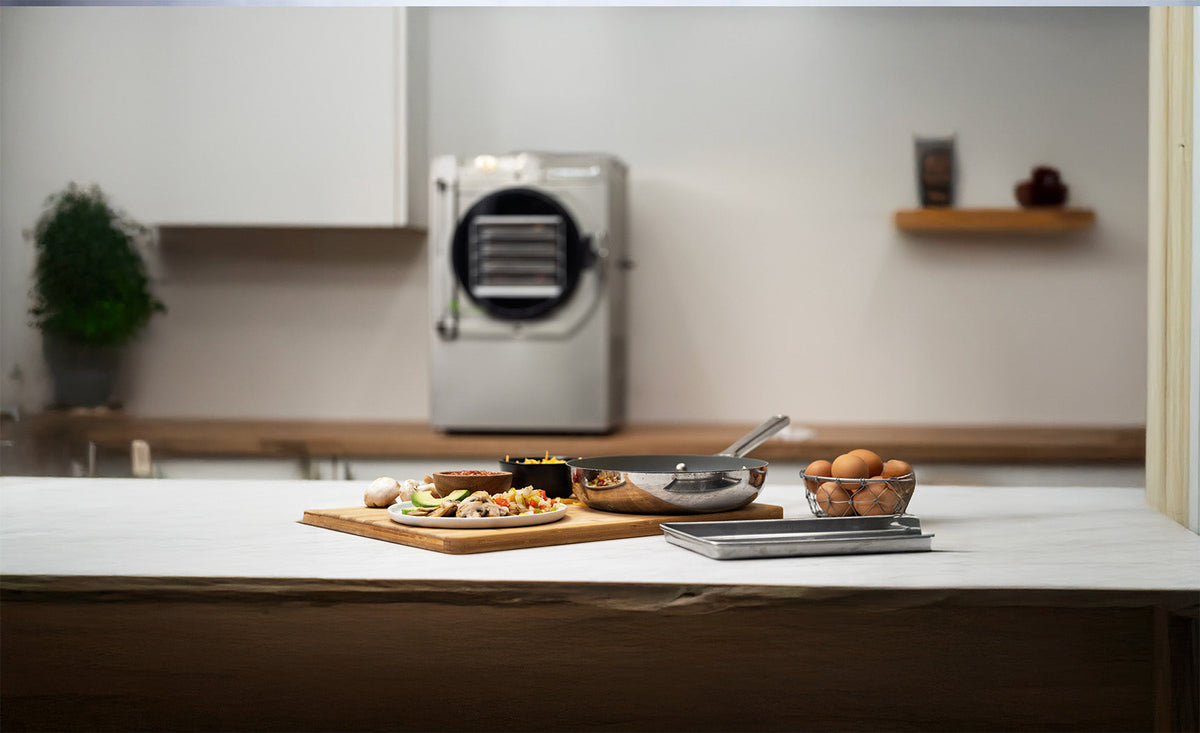
Freeze drying is a food preservation method that removes moisture from food while it is frozen. Instead of using heat to evaporate water, a freeze dryer uses freezing, a vacuum, and a process called sublimation to remove the water as vapor.
The science behind freeze drying is sophisticated, but the basic process is fairly simple to understand. A freeze dryer takes food through three main stages: freezing, primary drying, and secondary drying.
Harvest Right has helped make this process practical for home use by developing home freeze dryers that automatically manage the freezing and drying process.
Stage 1: Freezing
Every freeze-drying cycle begins by freezing the food.
Fruits, vegetables, meats, dairy products, and prepared meals all naturally contain water. During the freezing stage, that water turns into ice.
At this point, the food is simply frozen. If the process stopped here, it would still need to stay in a freezer to remain preserved.
The next stage is what makes freeze drying different.
Stage 2: Sublimation
Once the food is completely frozen, the freeze dryer creates a low-pressure environment inside the chamber while carefully supplying controlled energy.
Under these conditions, the ice inside the food changes directly into water vapor without first becoming liquid water. This process is called sublimation.
As the frozen water inside the food turns to vapor, it leaves the food and is collected as ice inside the freeze dryer.
Because the water is removed while the food remains frozen, freeze drying helps preserve much of the food's original structure. Many foods keep their shape, color, and size remarkably well. When water is added back later, many foods can also return close to their original texture.
This is one of the biggest differences between freeze drying and other drying methods.
Stage 3: Secondary Drying
After most of the ice has been removed, a small amount of moisture may still remain in the food.
During the secondary drying stage, the freeze dryer removes much of this remaining moisture. The finished food should be dry all the way through before it is packaged for storage.
Removing moisture to very low levels is one of the reasons properly freeze-dried food can have such a long shelf life.
How Does Removing Water Preserve Food?
Moisture plays a major role in food spoilage. Bacteria, mold, and yeast need available moisture to grow, and water also contributes to chemical reactions that affect food quality over time.
Freeze drying removes most of that moisture, dramatically slowing the processes that cause food to spoil.
However, freeze drying is only part of successful long-term food storage. Once food has been freeze dried, it needs to be packaged correctly to protect it from moisture and oxygen.
For long-term storage, freeze-dried food is commonly stored in Mylar bags or other airtight containers with oxygen absorbers. Storage temperature, exposure to light, packaging quality, and the type and condition of the food can all affect how long it will last.
When properly freeze dried, packaged, and stored, many foods can last for years, and some can last up to 25 years.
What Foods Can You Freeze Dry?
One of the biggest advantages of owning a home freeze dryer is the variety of foods you can preserve. You can freeze dry individual foods, complete meals, snacks, and even many foods that are difficult to preserve using traditional methods.
Common foods people freeze dry include:
-
Fruits: strawberries, blueberries, apples, bananas, peaches, pineapple, raspberries, and mangoes
-
Vegetables: corn, peas, carrots, green beans, broccoli, bell peppers, potatoes, and onions
-
Meats and proteins: chicken, beef, turkey, seafood, and eggs
-
Dairy products: cheese, yogurt, sour cream, and ice cream
-
Complete meals: soups, stews, pasta dishes, rice bowls, casseroles, chili, and prepared breakfasts
Being able to preserve complete meals is one of the things that makes freeze drying so useful. Instead of storing only individual foods, you can freeze dry many of the meals your family already eats and rehydrate them later.
What Are the Advantages of Freeze Drying?
People use freeze dryers for everything from everyday food preservation to long-term food storage. Some of the biggest benefits include:
Long-term food storage: Properly freeze-dried and packaged food can remain shelf stable for years. This makes freeze drying useful for emergency preparedness, preserving garden harvests, and building a supply of food you actually want to eat.
Excellent rehydration: Because freeze drying helps preserve the structure of the food, many foods rehydrate very well when water is added back.
Lightweight food: Removing water dramatically reduces weight. Freeze-dried food is convenient for camping, backpacking, hunting, travel, and other situations where carrying lighter food matters.
Less food waste: Garden produce, bulk purchases, leftovers, and extra meals can be preserved before they spoil.
Everyday convenience: Freeze-dried fruits, vegetables, snacks, and meals can be kept on hand and used when you need them. Seasonal foods can be enjoyed long after harvest, and prepared meals can be stored for busy days or future use.
Is Freeze Drying the Same as Freezing Food?
No. Although both processes begin by freezing food, the final result is very different.
Frozen food must remain frozen. If it thaws and is not used safely, it will eventually spoil.
Freeze-dried food has had most of its moisture removed. Once the process is complete, properly packaged freeze-dried food can be stored without a freezer or refrigerator.
That is the key difference: freezing keeps the water in the food as ice, while freeze drying removes the water from the food.
How Does a Home Freeze Dryer Work?
A home freeze dryer handles the freezing and drying process automatically.
Food is placed on trays and loaded into the freeze dryer. Once the cycle begins, the freeze dryer freezes the food, creates a vacuum inside the chamber, and controls the conditions needed to remove moisture through sublimation.
Harvest Right home freeze dryers use sensors and smart technology to manage the process and determine when the food is dry. The time required for a batch depends on several factors, including the type of food, the amount of water it contains, how much food is loaded, and how thickly it is placed on the trays.
Once the cycle is finished, the food can be checked to make sure it is completely dry and then packaged for storage.
Frequently Asked Questions
Is freeze drying the same as freezing food?
No. Freezing keeps the water in food frozen and requires continuous cold storage. Freeze drying begins by freezing the food, then removes most of the water through sublimation. Once the process is complete, properly packaged freeze-dried food can be stored without refrigeration or freezing.
What is sublimation in freeze drying?
Sublimation is the process of ice changing directly into water vapor without first becoming liquid water. During freeze drying, the frozen water inside the food is removed through sublimation.
Why does a freeze dryer use a vacuum pump?
A freeze dryer creates a vacuum to lower the pressure inside the chamber. Combined with carefully controlled temperature and energy, these conditions allow the frozen water in the food to turn into water vapor through sublimation.
Does a freeze dryer freeze the food?
Yes. Freezing is the first stage of the freeze-drying process. Harvest Right home freeze dryers freeze the food before creating the conditions needed to remove the frozen water through sublimation.
Can you freeze dry complete meals?
Yes. Many complete meals can be freeze dried, including soups, stews, pasta dishes, casseroles, rice dishes, chili, and cooked meats. This is one of the biggest advantages of having a home freeze dryer because you can preserve many of the meals your family already eats.
How long does freeze-dried food last?
Shelf life depends on the type of food, how completely it was freeze dried, how it is packaged, and the conditions in which it is stored. When properly freeze dried, packaged, and stored, many foods can last for years, and some can last up to 25 years.
Why does freeze-dried food rehydrate well?
Because the water is removed while the food is frozen, much of the food's structure remains intact. When water is added back, many freeze-dried foods can absorb it effectively and return close to their original form.
Share:
Winner of a Medium Freeze Dryer
Freeze Drying vs. Dehydrating: Which Preserves Food Longer?