

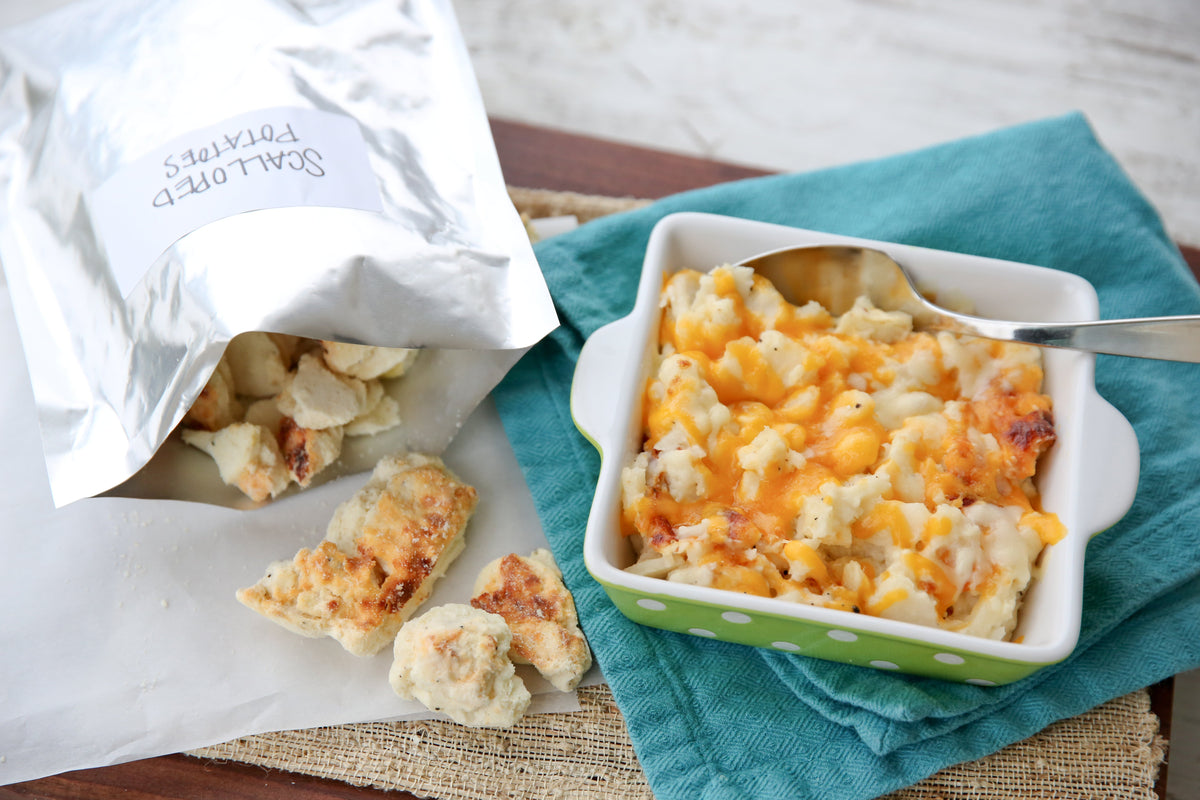
Freeze drying makes it possible to preserve an incredibly wide variety of foods while maintaining much of their nutritional value, flavor, color, and structure.
But how does freeze dryting actually work?
Freeze drying removes water from frozen food through a process called sublimation. Instead of allowing frozen water inside the food to melt into liquid, a freeze dryer creates conditions that allow ice to change directly from a solid into water vapor.
The process has three main stages:
-
Freezing — Water inside the food freezes into ice.
-
Primary drying — A vacuum and controlled heat allow the ice to sublimate into water vapor.
-
Secondary drying — Additional moisture remaining in the food is removed.
The result is food with very little moisture remaining. Because much of the food's physical structure remains after the water is removed, many freeze-dried foods are lightweight, porous, and easy to rehydrate.
Removing moisture also makes it possible to store freeze-dried food without continuous refrigeration. When food is completely freeze dried, appropriately packaged, and stored under suitable conditions, many foods can last for years, with some lasting up to 25 years.
Quick Answer: How Does Freeze Drying Work?
A freeze dryer first freezes food, then lowers the pressure inside its sealed chamber using a vacuum pump.
Once the food is frozen and the chamber is under vacuum, the freeze dryer carefully adds heat. Under these conditions, frozen water inside the food can change directly from ice into water vapor without becoming liquid first.
This process is called sublimation.
The water vapor leaves the food and is captured by extremely cold surfaces inside the freeze dryer, where it accumulates as ice. After most of the frozen water has been removed, the freeze dryer continues drying to remove additional moisture.
The combination of freezing, vacuum pressure, and controlled heat is what makes freeze drying possible.
What Is Freeze Drying?
Freeze drying, also known as lyophilization, is a method of removing water from a product after it has been frozen.
Unlike ordinary evaporation, where liquid water becomes vapor, freeze drying is designed so that much of the frozen water moves directly from:
Ice → Water Vapor
rather than:
Ice → Liquid Water → Water Vapor
That difference is the foundation of the freeze-drying process.
Although we're focusing on food in this guide, freeze drying isn't limited to food preservation. Lyophilization is also used in pharmaceutical and scientific applications where removing water without excessive heating is valuable.
For home food preservation, the idea is simple:
Freeze the water inside the food, create the right pressure and temperature conditions, and remove that frozen water as vapor.
What Is Sublimation?
Most people are familiar with water moving between three states:
Solid → Liquid → Gas
Ice melts into water. Water evaporates into water vapor.
But under the right temperature and pressure conditions, ice can skip the liquid phase and change directly from a solid into a gas.
That process is called sublimation.
During freeze drying:
Ice → Water Vapor
A freeze dryer creates the temperature and pressure conditions that allow sublimation to occur efficiently inside the food.
This is fundamentally different from simply heating food and allowing liquid moisture to evaporate.
The Three Stages of Freeze Drying
A Harvest Right freeze dryer automates the freeze-drying process, but understanding what's happening during each stage can help you prepare food and get consistent results.
Stage 1: Freezing
The process begins by freezing the food.
Foods naturally contain varying amounts of water. As the food becomes cold enough, much of that water freezes into ice.
This matters because the next stage is designed to remove frozen water, not simply evaporate liquid water.
Food can also be pre-frozen before being placed in the freeze dryer. Pre-freezing isn't required, but it can be useful for workflow and can shorten the freezing portion of the cycle.
The type of food also matters. Water content, sugar content, fat content, density, thickness, structure, and piece size can all affect how a food processes.
A thinly sliced strawberry, for example, presents a very different drying challenge than a thick, dense piece of food.
That's one reason cutting foods to relatively uniform sizes and loading trays appropriately can help produce more consistent results.
Stage 2: Primary Drying — Sublimation
After the food has frozen, the freeze dryer reduces the pressure inside the chamber using a vacuum pump.
The freeze dryer then supplies controlled heat.
At first, adding heat to frozen food may sound counterproductive. But sublimation requires energy.
The controlled addition of heat provides the energy needed for frozen water inside the food to transition from ice into water vapor while the chamber remains under the appropriate low-pressure conditions.
This stage is known as primary drying.

Where Does All That Water Go?
It doesn't disappear.
As ice sublimates, water vapor leaves the food and travels through the chamber.
The vapor reaches extremely cold surfaces inside the freeze dryer, where the moisture collects again as ice.
That's why you may see a significant accumulation of ice inside your freeze dryer after a batch.
Much of that ice is water that was previously inside your food.
Stage 3: Secondary Drying — Removing Remaining Moisture
Removing most of the frozen water isn't the end of the process.
After primary drying, some moisture can still remain associated with the food.
During secondary drying, additional moisture is removed.
This stage is important because food can sometimes appear dry on the outside while still containing moisture internally, particularly with thick, dense, or unevenly cut foods.
Before food is packaged for storage, it needs to be dry throughout, not simply crisp on the surface.
What Happens to Food During Freeze Drying?
Consider a strawberry.
A fresh strawberry contains water throughout its structure.
First, that water freezes. Then, during primary drying, much of the ice changes into vapor and leaves the strawberry.
What remains is a dry structure with spaces where much of that water used to be.
That helps explain several of the characteristics commonly associated with freeze-dried food.
Freeze-Dried Food Becomes Much Lighter
Water accounts for a substantial amount of the weight of many foods.
Remove most of that water, and the food becomes significantly lighter.
That's one reason freeze-dried foods are useful for camping, backpacking, emergency kits, travel, and other situations where weight matters.
Many Foods Become Crisp or Airy
Removing water changes the texture of the food.
Depending on the food, the result may be crisp, crunchy, airy, or brittle.
Some foods, including fruits, yogurt, ice cream, and candy, can be eaten directly in their freeze-dried form.
Many Foods Rehydrate Well
The porous structure left after freeze drying can allow water to move back into the food during rehydration.
Soups, meals, vegetables, meats, and many other foods can be rehydrated for later use.
Not every food returns to exactly the same texture it had before freeze drying, but many rehydrate remarkably well.
Many Foods Retain Their Shape and Structure
Because water is removed while frozen rather than through conventional hot-air drying, many foods experience less of the shrinkage associated with traditional dehydration.
Freeze drying can retain much of the food's recognizable shape, color, flavor, and structure.
Why Does a Freeze Dryer Need a Vacuum?
The vacuum doesn't simply “suck the water out.”
Lowering the pressure inside the chamber helps create the conditions necessary for frozen water to transition directly from solid ice into vapor.
Several parts of the freeze dryer work together:
Refrigeration freezes the food and creates the cold conditions needed for the process.
Vacuum reduces chamber pressure so sublimation can occur under the appropriate conditions.
Controlled heat supplies the energy necessary to drive moisture out of the food.
Sensors and controls manage the stages of the freeze-drying cycle.
Together, these allow the freeze dryer to automate a process that would otherwise require careful control of temperature and pressure.
Why Does a Freeze Dryer Add Heat?
If the food needs to be frozen, why would a freeze dryer add heat?
Because changing ice into water vapor requires energy.
The freeze dryer carefully adds heat while controlling the pressure and temperature inside the chamber.
The purpose isn't to cook the food. It's to provide enough energy for sublimation to continue.
That's an important difference between freeze drying and conventional dehydration.
Traditional dehydration generally uses heat and air circulation to evaporate liquid moisture from food.
Freeze drying first freezes the food and then removes much of that water as vapor through sublimation under reduced pressure.
Why Does Freeze Drying Take So Long?
Freeze drying requires more than simply freezing food and pulling a vacuum.
Water inside the food has to freeze, sublimate, leave the food, travel through the chamber, and be captured. Then additional moisture must be removed during final drying.
The amount of time required can therefore vary from batch to batch.
Factors that can affect drying time include:
-
Type of food
-
Water content
-
Sugar content
-
Thickness
-
Density
-
Amount of food on the trays
-
Whether the food was pre-frozen
-
How uniformly the food was prepared
Dense foods, thick pieces, heavily loaded trays, and some foods with high sugar or water content can require more time.
A freeze dryer automatically manages the process, so the owner doesn't need to manually control each stage.
How Do You Know When Freeze-Dried Food Is Finished?
A completed cycle doesn't mean food should automatically be packaged without checking it.
Before storage, examine thicker or denser pieces and make sure the food is completely dry throughout.
If you discover moisture inside a piece, additional dry time may be needed.
This is especially important before packaging food intended for long-term storage.
What Happens After Freeze Drying?
Once food has been completely freeze dried, it contains very little moisture.
But dry food can absorb moisture from the environment again, so packaging is an important part of successful preservation.
For long-term storage, freeze-dried food is commonly stored in Mylar bags or other airtight containers with oxygen absorbers. Appropriate packaging helps protect the food from moisture and oxygen, while a cool, dry, dark storage environment can help protect its quality over time.
Food you plan to eat soon doesn't necessarily need to be packaged the same way as food you're preparing for long-term storage.
The important point is:
Freeze drying the food and storing the food are two separate parts of successful preservation.
When food is completely freeze dried, appropriately packaged, and stored under suitable conditions, many foods can last for years, and some can last up to 25 years.
How Does Removing Water Preserve Food?
Moisture plays a major role in food spoilage.
Bacteria, mold, and yeast need available moisture to grow, and water also contributes to chemical and enzymatic reactions that can affect food quality over time.
Freeze drying removes most of that moisture, helping slow microbial growth and many of the changes that cause food to deteriorate.
Once the food is freeze dried, appropriate packaging helps prevent moisture from returning and limits exposure to oxygen.
This combination is what makes long-term shelf-stable storage possible.
Does Freeze Drying Kill Bacteria?
No.
Freeze drying is a preservation process, not a sterilization process.
Microorganisms can survive freeze drying. That's why safe food selection, sanitation, preparation, cooking when required, complete drying, packaging, and safe handling still matter.
Unsafe food doesn't become safe simply because it has been freeze dried.
Foods that normally require cooking for safety still require appropriate cooking and food-safety practices.
For a deeper look at this topic, see Does Freeze Drying Kill Bacteria? Food Safety Explained.
Does Freeze Drying Remove Nutrients?
Freeze drying removes water, but it doesn't remove the food's nutrition along with it.
Freeze drying can preserve nearly all of the nutritional value of many foods, although the exact amount varies depending on the food and the nutrients being measured.
Different nutrients respond differently to processing. Some vitamins are more sensitive to heat, oxygen, and storage conditions, while protein, fiber, minerals, and other nutrients are generally more stable.
Because freeze drying removes water at relatively low product temperatures, it can retain many nutrients very well while preserving food for long-term storage.
This combination of nutrient retention and long-term shelf-stable storage is one of freeze drying's biggest advantages.
For more, see Does Freeze Drying Remove Nutrients?

What Foods Can You Freeze Dry?
One of the biggest advantages of home freeze drying is the variety of foods you can preserve.
Examples include many:
Fruits
Strawberries, apples, blueberries, bananas, peaches, pineapple, watermelon, and more.
Vegetables
Corn, peas, carrots, peppers, potatoes, tomatoes, and many others.
Complete meals and leftovers
Soups, casseroles, pasta dishes, chili, breakfast foods, leftovers, and other meals.
Meats
Chicken, beef, pork, fish, and many other appropriately prepared meats.
Dairy products
Yogurt, cheese, cottage cheese, and other dairy foods.
Eggs
Cooked or raw eggs can be freeze dried with appropriate food handling.
Desserts and snacks
Ice cream, fruit, yogurt snacks, candy, and many other treats.
Freeze drying works with an exceptionally broad range of foods, but not every food is equally well suited to the process.
Freeze drying removes water. It doesn't remove fat or oil. Foods that are almost entirely fat or oil don't freeze dry well, and very high-sugar foods can sometimes present processing challenges.
Freeze Drying vs. Freezing: What's the Difference?
A freezer and a freeze dryer both involve freezing, but the final result is very different.
With conventional freezing, the water remains inside the food as ice.
The food therefore has to remain frozen to stay preserved.
With freeze drying, freezing is only the first step. Much of the frozen water is subsequently removed from the foodthrough sublimation and drying.
Completely freeze-dried and appropriately packaged food can therefore be stored without continuous refrigeration.
Freezing keeps the water frozen.
Freeze drying removes most of the water.
That makes freeze drying particularly useful when you want to free up freezer space or preserve food for longer-term storage.
Freeze Drying vs. Dehydrating: What's the Difference?
Both methods preserve food by removing moisture, but the processes and results are different.
Traditional dehydration generally uses heat and air circulation to encourage water to evaporate from food.
Freeze drying begins by freezing the food and then removes frozen water primarily through sublimation under reduced pressure.
Because conventional dehydration generally exposes food to higher temperatures, freeze drying can have an advantage when maintaining heat-sensitive nutrients and qualities closer to the original food is important.
The finished foods are different too.
Dehydrated foods tend to shrink and become chewy, leathery, or dense. Sometimes that's exactly the result you want. Jerky and fruit leather are good examples.
Freeze-dried foods are generally lighter and more porous, and many foods retain more of their original shape and structure.
Both have useful applications, but freeze drying offers significant advantages when long-term storage, nutrient retention, lightweight food, and preserving qualities closer to the original food are priorities.
What Are the Benefits of Freeze Drying?
Understanding how freeze drying works makes its advantages easier to understand.
It Provides Excellent Long-Term Storage
Removing most of the moisture from food and protecting it with appropriate packaging makes long-term shelf-stable storage possible.
Many foods can last for years, and some can last up to 25 years when completely freeze dried, appropriately packaged, and stored under suitable conditions.
It Preserves a Wide Variety of Foods
Freeze drying can preserve fruits, vegetables, meats, dairy, eggs, snacks, desserts, complete meals, leftovers, and many other foods.
That versatility is one of its biggest advantages over many other preservation methods.
It Can Preserve Nearly All of the Nutritional Value of Many Foods
Freeze drying doesn't rely on prolonged high-temperature processing.
That can help protect heat-sensitive nutrients while preserving much of the nutritional value present in the food when preservation begins.
The Finished Food Is Lightweight
Because most of the water has been removed, freeze-dried food weighs considerably less than the original food.
That makes it especially useful for camping, backpacking, travel, emergency kits, and food storage.
Many Foods Rehydrate Well
The porous structure created during freeze drying allows many foods to accept water readily during rehydration.
That makes it possible to preserve everything from individual foods to complete meals and use them later.
It Can Help Reduce Food Waste
Freeze drying gives you another way to preserve foods that might otherwise go unused.
Leftovers, extra produce, bulk grocery purchases, foods bought on sale, and large batches of meals can all become food you can use later instead of something that has to be eaten immediately or kept in the freezer.
It Can Be Used Throughout the Year
Freeze drying isn't only for garden season.
You can use it for grocery purchases, leftovers, snacks, meals, camping food, pet treats, bulk purchases, seasonal foods, and many other everyday uses throughout the year.
What Are the Limitations of Freeze Drying?
Freeze drying has significant advantages, but there are a few things to consider.
It Takes Time
Freeze drying is a multi-stage process, and some foods require more drying time than others.
Much of that time is machine time, however, rather than continuous hands-on work.
The Equipment Is an Investment
A home freeze dryer costs more upfront than many traditional food-preservation tools.
For households considering the investment, it makes sense to consider how much food they'll preserve, how often they'll use it, food waste they may avoid, commercially freeze-dried foods they may replace, and other ways they'll use the freeze dryer throughout the year.
It Requires Electricity During Operation
Refrigeration, the vacuum pump, heaters, and electronics require electricity while the freeze dryer is running.
Once food is completely freeze dried and appropriately packaged, however, it doesn't require continuous refrigeration for storage.
Some Foods Work Better Than Others
Freeze drying removes water, not fat or oil, so foods that are primarily fat or oil aren't good candidates. Very high-sugar foods can also behave differently during processing.
Food Safety Still Matters
Freeze drying doesn't sterilize food. Safe food handling, appropriate cooking when required, complete drying, and proper storage still matter.
Packaging Matters
Even completely freeze-dried food can absorb moisture again if it's exposed to the environment.
Appropriate packaging is an important part of long-term storage.
Getting Started With Freeze Drying
If you're new to freeze drying, begin with foods that are relatively easy to prepare and evaluate.
Strawberries, bananas, sliced apples, cooked meat, leftovers, or other familiar foods can be good places to start.
Prepare foods in relatively uniform pieces, arrange them evenly on the trays, and avoid overloading them.
Then slide the trays into the freeze dryer, close the door, and press Start.
The freeze dryer manages the freezing, vacuum, and drying process automatically.
When the batch is complete, check the food to make sure it's dry throughout, then package it based on how long you plan to store it.
As you become more familiar with the process, you can experiment with different foods, meals, snacks, and ways to use your freeze dryer.
Key Takeaways
-
Freeze drying removes water from food while the water is frozen.
-
The defining process is sublimation, in which ice changes directly into water vapor.
-
Freeze drying consists of three main stages: freezing, primary drying, and secondary drying.
-
A freeze dryer uses refrigeration, vacuum pressure, and controlled heat together.
-
Removing most of the moisture helps slow microbial growth and many of the changes that cause food to deteriorate.
-
Freeze drying can preserve nearly all of the nutritional value of many foods.
-
Freeze-dried food is lightweight and can be stored without continuous refrigeration.
-
Many foods can last for years, with some lasting up to 25 years when completely freeze dried, appropriately packaged, and stored under suitable conditions.
-
Freeze drying works with an exceptionally broad variety of foods, including complete meals and leftovers.
-
Freeze drying does not sterilize food or reliably kill bacteria.
-
Food should be checked to make sure it's completely dry before packaging.
-
Appropriate packaging and storage are important parts of successful long-term preservation.
Frequently Asked Questions
What is sublimation in freeze drying?
Sublimation is the process in which frozen water changes directly from solid ice into water vapor without first becoming liquid. It's the primary way water is removed during freeze drying.
Does a freeze dryer freeze food first?
Yes. Freezing is the first stage of the freeze-drying process. Food can also be pre-frozen before being placed into a home freeze dryer.
Why does a freeze dryer need a vacuum?
Reducing the pressure inside the chamber helps create the conditions necessary for sublimation.
Why does a freeze dryer heat frozen food?
Sublimation requires energy. Controlled heat provides the energy that helps frozen water change into vapor while the freeze dryer maintains the appropriate pressure conditions.
Where does the water go?
Water leaves the food as vapor and collects as ice on extremely cold surfaces inside the freeze dryer.
How do I know when freeze-dried food is finished?
Food should be dry throughout, not just on the outside. Check thicker pieces before packaging. If moisture remains, additional dry time may be necessary.
Does freeze drying cook food?
No. Freeze drying is a drying and preservation process, not a cooking process. Foods that require cooking for safety still need to be handled and cooked appropriately.
Does freeze drying kill bacteria?
No. Freeze drying should not be considered a method for killing bacteria or sterilizing food. Safe food handling still matters.
Does freeze drying remove nutrients?
Freeze drying can preserve nearly all of the nutritional value of many foods. Exact nutrient retention varies depending on the food, nutrient, processing, packaging, and storage conditions.
How long does freeze-dried food last?
When food is completely freeze dried, appropriately packaged, and stored under suitable conditions, many foods can last for years, with some lasting up to 25 years.
Why is freeze-dried food so light?
A significant portion of the weight of many foods comes from water. Removing most of that water dramatically reduces the food's weight.
Can freeze-dried food absorb moisture again?
Yes. Freeze-dried food can absorb moisture from its environment, which is why appropriate packaging is important after drying.
What foods can I freeze dry?
You can freeze dry a wide variety of fruits, vegetables, meats, dairy products, eggs, complete meals, leftovers, snacks, desserts, and other foods. Foods that are almost entirely fat or oil generally don't freeze dry well.
Compartir:
Freeze Dryer Touchscreen Not Working?
How Much Food Should You Put in a Harvest Right Freeze Dryer?