

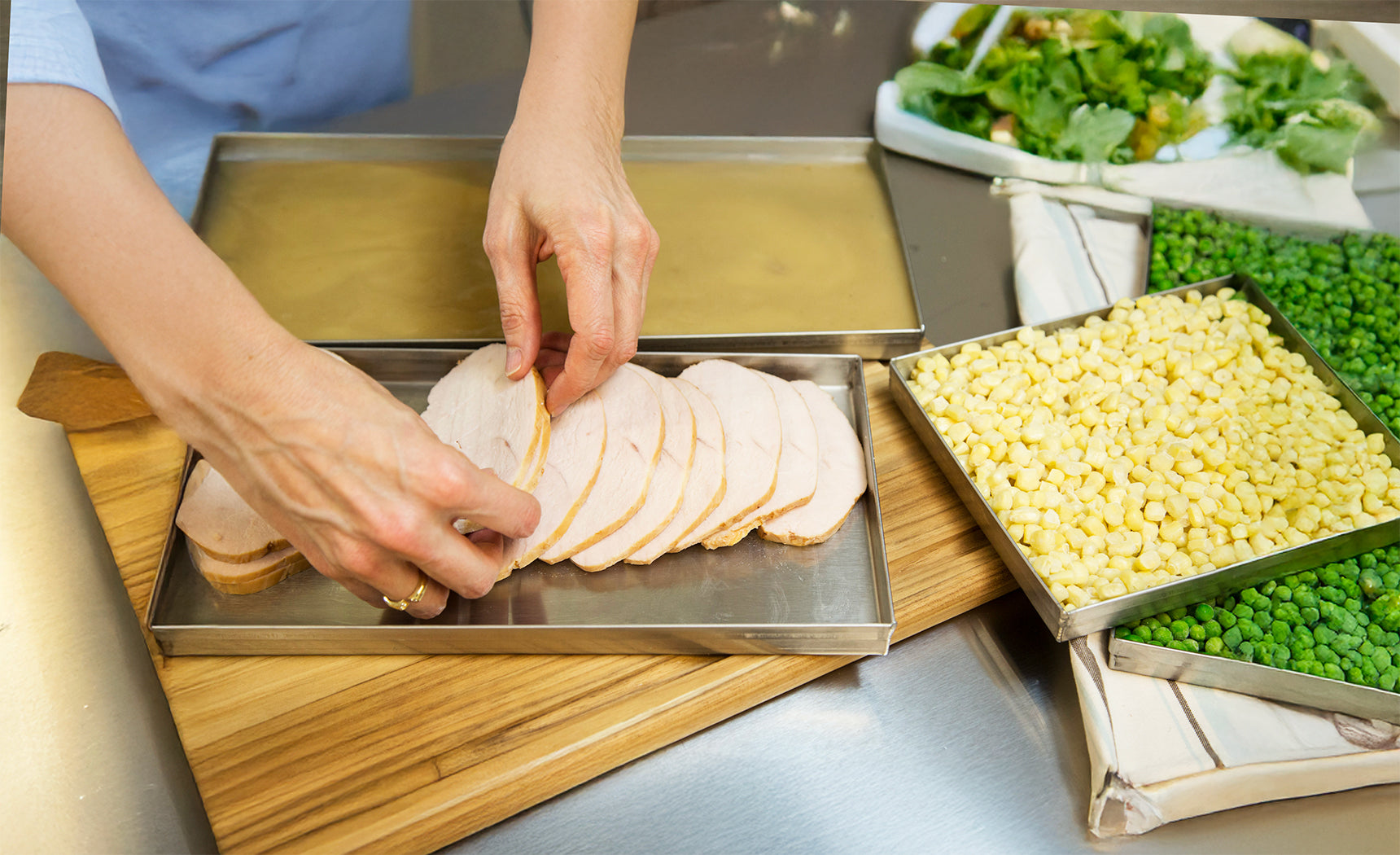
Preparare il cibo per l'essiccazione a freddo è di solito molto più semplice di quanto la gente si aspetti.
La maggior parte degli alimenti richiede una preparazione molto semplice. Lavali se necessario, preparali come faresti normalmente, distribuiscili uniformemente sui vassoi e lascia che l'essiccatore a freddo faccia il suo lavoro.
Detto questo, alcune semplici abitudini — e sapere che alcuni alimenti traggono beneficio da una preparazione extra — possono aiutare a produrre risultati più consistenti.
Che tu stia conservando frutta fresca, verdure dell'orto, pasti cucinati o avanzi, questi consigli pratici ti aiuteranno a ottenere il massimo da ogni lotto.
Risposta Rapida
La maggior parte degli alimenti richiede una preparazione molto semplice prima dell'essiccazione a freddo.
Per i migliori risultati:
-
Lava e prepara gli alimenti secondo necessità.
-
Taglia gli alimenti più grandi in pezzi di dimensioni simili quando possibile.
-
Distribuisci il cibo uniformemente sui vassoi.
-
Evita di riempire eccessivamente i vassoi.
-
Sii consapevole che alcuni alimenti traggono beneficio da una preparazione extra.
Questo è tutto. Mentre alcuni alimenti richiedono un po' di attenzione in più, queste semplici abitudini si applicano alla stragrande maggioranza dei lotti di essiccazione a freddo.
Consiglio Harvest Right
Non pensarci troppo. La maggior parte degli alimenti è semplice come prepararli nel modo in cui faresti normalmente, caricare i vassoi e premere Start.
Lava e Prepara gli Alimenti Secondo Necessità
Diversi alimenti richiedono una preparazione diversa.
Per molti frutti e verdure, il lavaggio prima dell'essiccazione a freddo aiuta a rimuovere sporco e detriti.
Altri alimenti potrebbero aver bisogno di essere sbucciati, tagliati, affettati o privati dei gambi prima di essere pronti.
I pasti preparati devono essere gestiti utilizzando pratiche appropriate di sicurezza alimentare prima di essere essiccati a freddo.
Nella maggior parte dei casi, la preparazione del cibo per l'essiccazione a freddo è molto simile alla preparazione per la cottura o il consumo.
Taglia gli Alimenti Più Grandi in Pezzi Simili
Pezzi uniformi aiutano a creare lotti più omogenei.
Ad esempio:
-
Affetta le fragole a uno spessore simile.
-
Taglia le verdure a dadini in pezzi di dimensioni simili.
-
Porziona le carni in modo consistente.
-
Distribuisci i pasti preparati in uno strato uniforme sul vassoio.
L'uniformità non riguarda la perfezione, ma semplicemente aiuta pezzi simili a essiccarsi a freddo in condizioni simili.
Alcuni Alimenti Traggono Beneficio da una Piccola Preparazione Extra
Mentre la maggior parte degli alimenti è semplice da essiccare a freddo, alcuni traggono beneficio da una piccola preparazione extra per aiutarli ad asciugarsi più efficientemente o a produrre risultati migliori.
Patate
Le patate vengono comunemente scottate prima dell'essiccazione a freddo. La scottatura aiuta a preservarne il colore e può impedire loro di scurirsi durante il processo di essiccazione.
Mirtilli
I mirtilli hanno una buccia esterna dura che può rallentare la rimozione dell'umidità. Perforare leggermente, tagliare o schiacciare la buccia prima dell'essiccazione a freddo aiuta l'umidità a fuoriuscire più facilmente.
Uva
Anche l'uva intera ha una buccia spessa che trattiene l'umidità. Tagliarla a metà e posizionarla con la parte tagliata verso l'alto (o la parte della buccia verso il basso) sul vassoio permette all'umidità di fuoriuscire più facilmente e aiuta ad asciugarla in modo più uniforme.
Questi sono solo alcuni esempi. La maggior parte degli alimenti richiede una preparazione molto semplice, ma alcuni traggono beneficio da tecniche specifiche che migliorano il processo di essiccazione a freddo o i risultati finali.
Per consigli e raccomandazioni sulla preparazione specifica degli alimenti, consulta l'app Harvest Right prima di iniziare un nuovo lotto.
Pensa all'Uso Futuro
Prima di iniziare un lotto, pensa a come userai il cibo in seguito.
Chiediti:
-
Sarà uno spuntino?
-
Un contorno?
-
Un ingrediente per una zuppa?
-
Un pasto completo?
-
Un ingrediente per un frullato?
Pensare in anticipo può aiutarti a decidere:
-
Dimensione della porzione
-
Confezionamento
-
Etichettatura
Consiglio Harvest Right
Confeziona il cibo nelle quantità che userai effettivamente. Una porzione di zuppa per famiglia, una singola porzione di frullato o un pacchetto pronto per la ricetta possono far risparmiare tempo e ridurre gli sprechi in seguito.
Alcuni Consigli sui Vassoi
Prima di iniziare un lotto:
-
Distribuisci il cibo uniformemente, tipicamente in un unico strato.
-
Evita di accumulare il cibo oltre l'altezza del vassoio.
Queste semplici abitudini aiutano il cibo a congelare e asciugare in modo più consistente, rendendo il confezionamento più facile una volta completato il ciclo.
Considerazioni Finali
Preparare il cibo per l'essiccazione a freddo è di solito molto più facile di quanto la gente si aspetti.
La maggior parte degli alimenti richiede una preparazione molto semplice prima di essere pronti per l'essiccatore a freddo. Man mano che acquisisci esperienza, imparerai naturalmente che alcuni alimenti traggono beneficio da una preparazione extra, ma queste sono l'eccezione piuttosto che la regola.
Carica i vassoi, premi Start e lascia che l'essiccatore a freddo faccia il suo lavoro.
Punti Chiave
-
La maggior parte degli alimenti richiede una preparazione molto semplice prima dell'essiccazione a freddo.
-
Lava e prepara gli alimenti come faresti normalmente.
-
Taglia gli alimenti più grandi in pezzi di dimensioni simili quando possibile.
-
Alcuni alimenti, come patate, mirtilli e uva, traggono beneficio da una preparazione extra.
-
Porzioni ponderate e vassoi caricati uniformemente possono aiutare a produrre risultati più consistenti.
-
L'app Harvest Right include consigli di preparazione per un'ampia varietà di alimenti.
Domande Frequenti
Devo lavare frutta e verdura prima dell'essiccazione a freddo?
Nella maggior parte dei casi, sì. Il lavaggio aiuta a rimuovere sporco e detriti prima della conservazione. Prepara ogni alimento come faresti normalmente prima di mangiarlo o cucinarlo.
Tutti gli alimenti necessitano di una preparazione speciale?
No. La maggior parte degli alimenti richiede una preparazione molto semplice. Solo una manciata di alimenti traggono beneficio da passaggi extra, come scottare, affettare o rompere la buccia.
Devo essiccare a freddo gli avanzi?
Assolutamente. Molti avanzi adeguatamente preparati sono ottimi candidati per l'essiccazione a freddo. Lascia raffreddare i cibi cotti, segui le pratiche appropriate di sicurezza alimentare e distribuiscili uniformemente sui vassoi.
Perché alcuni alimenti necessitano di una preparazione extra?
Alcuni alimenti hanno caratteristiche — come bucce spesse o enzimi naturali — che possono influenzare il modo in cui si essiccano a freddo. Semplici passaggi di preparazione possono aiutare a produrre risultati più consistenti.
L'organizzazione dei vassoi è davvero importante?
Sì. Distribuire il cibo uniformemente ed evitare di riempire eccessivamente i vassoi aiuta a creare lotti più consistenti.
Condividi:
Alimenti che richiedono ulteriore considerazione prima della liofilizzazione
Come Reintegrare i Cibi Liofilizzati per i Migliori Risultati