

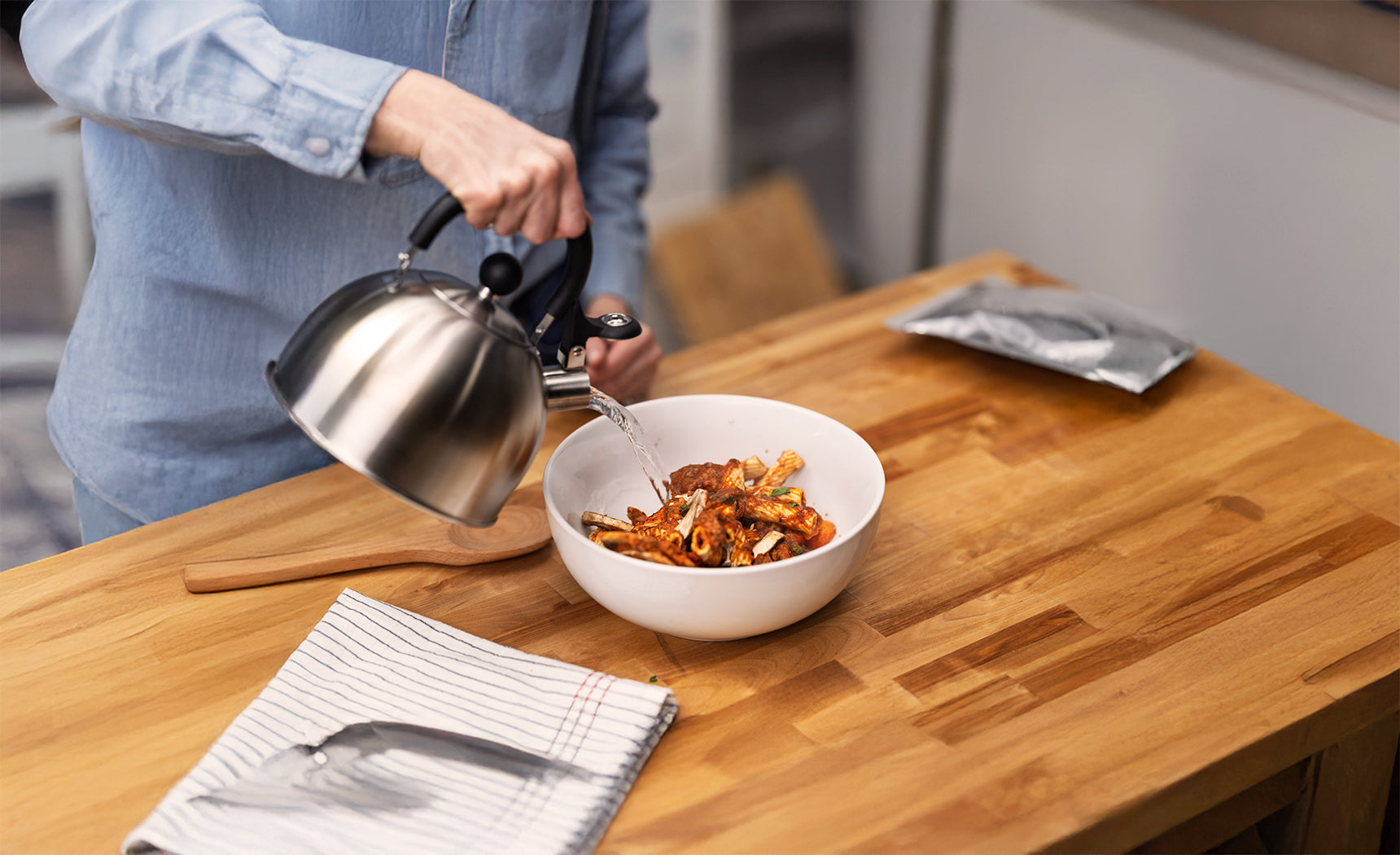
Una de las partes más gratificantes de la liofilización es disfrutar de los alimentos conservados más tarde. Ya sea que estés preparando una cena familiar, empacando comidas para acampar o usando ingredientes liofilizados en recetas cotidianas, una hidratación adecuada te ayuda a obtener los mejores resultados posibles.
Rehidratar alimentos liofilizados suele ser sencillo, pero diferentes alimentos absorben la humedad a diferentes velocidades. La preparación, el empaque, el almacenamiento y el alimento en sí influyen en el resultado final.
Esta guía explica por qué la rehidratación varía de un alimento a otro y comparte consejos prácticos para lograr resultados mejores y más consistentes.

Respuesta rápida
La mejor manera de rehidratar alimentos liofilizados depende de lo que estés preparando. Los factores que pueden afectar el resultado final incluyen:
-
El tipo de alimento
-
Tamaño y grosor de las piezas
-
Cómo se empacó y almacenó el alimento
-
La cantidad y temperatura del líquido que se utiliza
-
Cómo se está rehidratando
Los diferentes alimentos absorben la humedad de forma natural a diferentes velocidades, por lo que la paciencia y la técnica adecuada a menudo marcan una diferencia notable.
Piensa en cocinar pasta, arroz o frijoles secos. Cada uno absorbe el agua de manera diferente.
Los alimentos liofilizados se comportan de manera muy similar.
Una fresa no se rehidratará como el pollo. El pollo no se rehidratará como el puré de papas.
Comprender esas diferencias ayuda a establecer expectativas realistas y mejora tu experiencia general con la liofilización.
Los diferentes alimentos se rehidratan de manera diferente
Cada alimento tiene una estructura única.
Algunos absorben agua muy rápidamente. Otros tardan más. Algunos se rehidratan mejor antes de cocinar, mientras que otros absorben la humedad de forma natural durante la cocción.
No existe un enfoque universal que funcione para cada alimento.
Para muchos alimentos liofilizados, simplemente cubrir el alimento con agua caliente y dejarlo reposar durante unos minutos es todo lo que se necesita. Si queda un exceso de agua después de que el alimento alcance la consistencia deseada, generalmente se puede verter antes de servir o usar el alimento en una receta.
El mejor método de rehidratación a menudo depende de cómo planeas usar el alimento. Los ingredientes que van a sopas, guisos o cazuelas pueden rehidratarse mientras se cocinan, mientras que los alimentos destinados a hornear o servir solos pueden beneficiarse de un enfoque diferente.
Consejo de Harvest Right
Cuando pruebes un alimento liofilizado por primera vez, prepara una pequeña porción antes de servir una comida más grande. Esto te ayuda a aprender cómo responde ese alimento específico a la rehidratación.
La preparación antes de la liofilización importa
Los buenos resultados a menudo comienzan incluso antes de que el ciclo de liofilización comience.
Por ejemplo:
-
Las verduras cortadas uniformemente tienden a rehidratarse de manera más uniforme.
-
Las comidas porcionadas de manera uniforme son más fáciles de restaurar de manera consistente.
-
Las piezas de tamaño similar a menudo se secan y rehidratan a una velocidad más uniforme.
Una preparación cuidadosa ayuda a producir resultados más predecibles más adelante.
Los pequeños hábitos de preparación pueden marcar una diferencia notable.

La rehidratación toma tiempo
Algunos alimentos absorben agua casi instantáneamente. Otros se benefician de un poco más de tiempo.
Comienza con suficiente agua caliente para cubrir el alimento, luego déjalo reposar antes de decidir si necesita más. Algunas comidas completas pueden seguir absorbiendo líquido mientras reposan, por lo que agregar agua gradualmente a menudo te da más control sobre la textura final.
Consejo de Harvest Right
Comienza con suficiente agua caliente para cubrir el alimento, luego déjalo reposar durante varios minutos. Si es necesario, agrega más agua poco a poco hasta que el alimento alcance la textura deseada.
La textura puede variar según el alimento
La liofilización conserva el sabor y muchas de las características de los alimentos frescos, pero diferentes alimentos responden de manera diferente cuando se rehidratan.
Dependiendo del alimento y cómo planees usarlo, la textura puede cambiar ligeramente después de la rehidratación. En muchas recetas, eso no es perceptible. Las frutas utilizadas en productos horneados, batidos, salsas o mermeladas, por ejemplo, no necesitan la misma textura firme que la fruta servida fresca.
Comprender cómo planeas usar el alimento a menudo ayuda a determinar el mejor método de rehidratación.

Considera cómo usarás el alimento
El mejor método de rehidratación a menudo depende de la receta.
Ejemplos incluyen:
-
Sopas
-
Guisos
-
Platos de pasta
-
Batidos
-
Guarniciones
-
Productos horneados
Algunos alimentos no necesitan rehidratación separada porque absorberán la humedad de forma natural mientras se cocinan. Otros pueden disfrutarse secos, mientras que algunas recetas requieren rehidratar los ingredientes antes de mezclarlos con el resto de los ingredientes.
Planificar con anticipación a menudo produce mejores resultados.
La experiencia genera confianza
Con el tiempo, comenzarás a notar patrones.
Ciertas frutas se rehidratan rápidamente de forma constante. Algunas verduras se benefician de un poco de tiempo extra. Las comidas completas a menudo responden de manera diferente según sus ingredientes.
Cada lote te enseña un poco más sobre cómo se comportan los diferentes alimentos. A medida que continúes liofilizando, aprenderás naturalmente qué métodos funcionan mejor para los alimentos y las recetas que preparas con más frecuencia.
La rehidratación exitosa comienza por comprender que los diferentes alimentos se comportan de manera diferente. Una preparación cuidadosa, un empaque adecuado y una rehidratación paciente contribuyen a obtener mejores resultados.
Conclusiones clave
-
Los diferentes alimentos se rehidratan de forma natural de manera diferente.
-
Una buena preparación mejora la consistencia.
-
Un empaque adecuado ayuda a preservar la calidad.
-
Comienza con agua caliente y agrega más gradualmente si es necesario.
-
Considera cómo usarás el alimento antes de decidir cómo rehidratarlo.
-
La experiencia te ayuda a lograr resultados más consistentes.
Preguntas frecuentes
¿Por qué no todos los alimentos absorben el agua de la misma manera?
Cada alimento tiene su propia estructura, contenido de humedad y composición, todo lo cual influye en cómo se rehidrata.
¿Debo remojar todo?
No necesariamente. Algunos alimentos se benefician del remojo, mientras que otros se rehidratan naturalmente durante la cocción.
¿Puedo agregar demasiada agua?
Sí. Si bien muchos alimentos absorben solo el agua que necesitan, agregar demasiada agua puede afectar la textura de algunos alimentos y comidas completas. Comenzar con menos y agregar más según sea necesario te da mayor control sobre el resultado final.
¿La preparación afecta la rehidratación?
Absolutamente. Una preparación consistente antes de la liofilización a menudo conduce a una rehidratación más consistente más adelante.
¿Importa el almacenamiento?
Sí. Un empaque y almacenamiento adecuados ayudan a mantener la calidad de los alimentos liofilizados hasta que estés listo para usarlos.
¿Todos los alimentos liofilizados necesitan ser rehidratados?
No. Muchos alimentos liofilizados se pueden disfrutar tal como están. Las frutas a menudo se comen como bocadillos crujientes, mientras que otros alimentos están destinados a ser rehidratados antes de cocinar o servir. El mejor enfoque depende del alimento y cómo planeas usarlo.
¿La experiencia lo hará más fácil?
Definitivamente. A medida que prepares diferentes alimentos, aprenderás naturalmente qué métodos funcionan mejor para cada uno.
Compartir:
Preparación de alimentos antes de la liofilización
Errores comunes al liofilizar (y cómo evitarlos)