

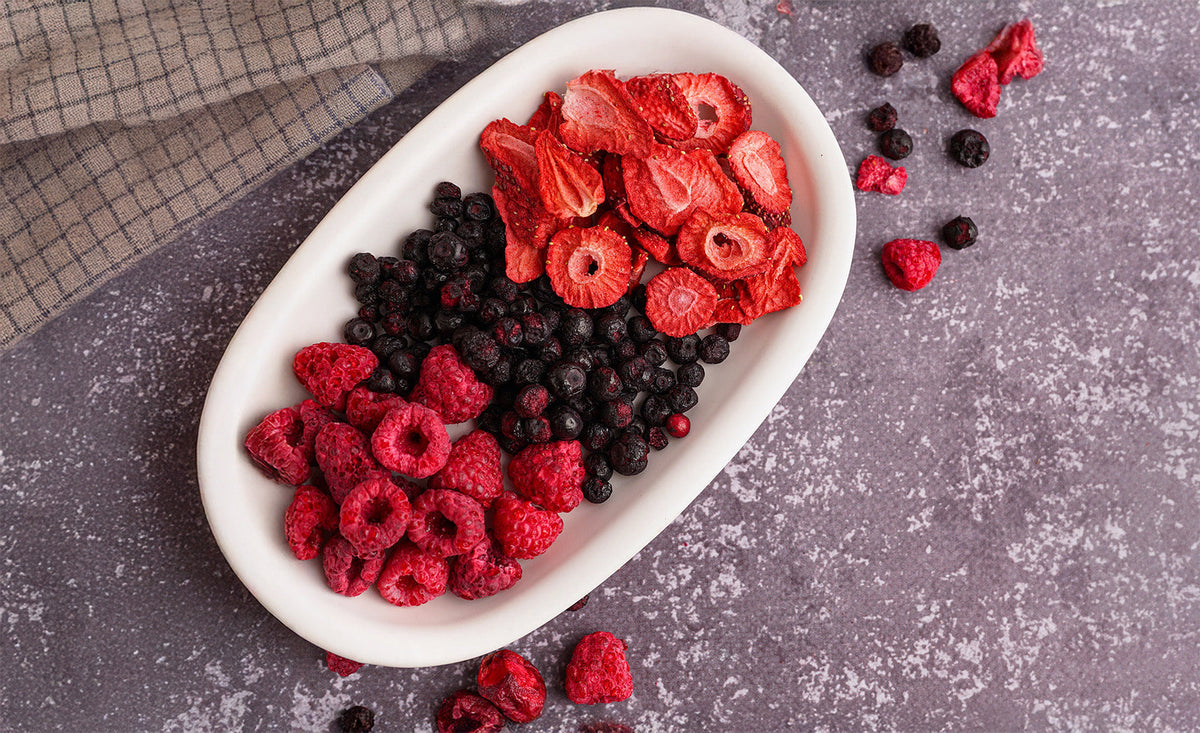
Home Freeze-Dried Food vs. Commercial Freeze-Dried Food: Which Is Right for You?
Freeze-dried food has become increasingly popular with gardeners, outdoor enthusiasts, busy families, travelers, and people building emergency food supplies.
Today you have two primary options:
- Buy commercially prepared freeze-dried food.
- Make your own using a home freeze dryer.
Both preserve food using the same basic freeze-drying process, but the final products can be very different depending on the ingredients, recipes, packaging, and intended use.
The best choice depends on your goals.
Some people value convenience and want meals that are ready to purchase. Others prefer complete control over ingredients, portion sizes, allergens, recipes, and food quality.
This guide compares both options so you can decide which approach best fits your household.
Quick Comparison
| Feature | Home Freeze-Dried | Commercial Freeze-Dried |
|---|---|---|
| Ingredients | You choose everything | Manufacturer chooses |
| Recipes | Unlimited | Limited product selection |
| Allergens | Easier to control | Depends on product |
| Taste | Familiar family recipes | Varies by brand |
| Cost per serving | Often lower over time | Higher upfront cost |
| Convenience | Requires preparation | Ready to purchase |
| Garden preservation | Yes | No |
| Leftover preservation | Yes | No |
| Packaging | You control portions | Fixed package sizes |

Both Methods Use the Same Technology
Whether food is freeze dried at home or in a commercial facility, the basic preservation process is similar:
- The food is frozen.
- A vacuum is created.
- Ice changes directly from solid to vapor (sublimation).
- Most of the water is removed.
- The food is packaged to protect it from moisture and oxygen.
The difference is not the science—it's what happens before and after the freeze-drying cycle.
Ingredients: Who Chooses What Goes Into the Food?
This is one of the biggest differences.
Home Freeze-Dried Food
You decide:
- Which ingredients to use
- Fresh vs. frozen produce
- Organic or conventional
- Sodium level
- Sugar level
- Portion size
- Seasonings
- Allergens
- Dietary substitutions
If your family loves homemade chicken noodle soup, that's exactly what you can preserve.

Commercial Freeze-Dried Food
Commercial meals are designed for consistency and long shelf life.
Manufacturers choose:
- Recipes
- Ingredients
- Portion sizes
- Packaging
- Flavor profile
- Nutritional formulation
Many brands produce excellent products, but they cannot customize meals for every household.
Taste
Taste is highly personal.
Home freeze-dried meals have one obvious advantage:
They're the recipes your family already enjoys.
That means you can preserve:
- Grandma's chili
- Homemade spaghetti sauce
- Family casseroles
- Favorite soups
- Holiday leftovers
Commercial products range from simple freeze-dried ingredients to complete backpacking or emergency meals.
Quality varies between brands, recipes, and price points.
Variety
Commercial companies have expanded their product lines considerably, but home freeze drying still offers virtually unlimited flexibility.
At home you can preserve:
- Fruits
- Vegetables
- Herbs
- Complete meals
- Desserts
- Dairy products
- Eggs
- Smoothies
- Sauces
- Garden harvests
- Leftovers
You're limited mostly by what freeze dries well—not by a catalog.
Food Allergies and Special Diets
One of the strongest advantages of home freeze drying is ingredient control.
You can prepare foods that fit:
- Gluten-free diets
- Dairy-free diets
- Vegetarian diets
- Vegan diets
- Low-sodium diets
- Nut-free households
- Family recipes
Freeze drying does not remove allergens, but it allows you to preserve meals made with ingredients you've selected.

Cost
Commercial freeze-dried food is convenient because there's no preparation required.
However, convenience has a price.
Over time, many households find that preserving:
- garden produce,
- bulk purchases,
- seasonal sales,
- leftovers,
can significantly reduce the cost per serving compared with buying equivalent commercial freeze-dried foods. Harvest Right has long illustrated this with comparisons showing lower per-serving costs when the machine is used consistently over time.
The exact economics depend on:
- machine usage,
- food costs,
- electricity,
- packaging,
- maintenance,
- and how much food would otherwise go to waste.
Convenience
Commercial food wins here.
Advantages include:
- Ready to purchase
- No preparation
- No equipment required
- Consistent packaging
- Convenient for occasional users
Home freeze drying requires:
- meal preparation,
- loading trays,
- packaging,
- labeling,
- storage.
The tradeoff is flexibility.
Garden Harvests
This is an area where home freeze drying has a clear advantage.
You can preserve:
- Tomatoes
- Corn
- Green beans
- Peppers
- Herbs
- Berries
- Peaches
- Apples
- Zucchini
- Complete garden meals
Commercial products can't preserve your harvest.
Leftovers
One of the biggest benefits of owning a freeze dryer is preserving meals that might otherwise be wasted.
Examples include:
- Chili
- Lasagna
- Beef stew
- Pasta
- Rice dishes
- Chicken dinners
- Breakfast casseroles
Instead of throwing away leftovers, many families freeze dry them for future meals.
Shelf Life
This topic deserves nuance.
Properly freeze-dried foods, packaged and stored correctly can remain shelf stable for many years.
However, shelf life depends on factors including:
- food type,
- fat content,
- complete drying,
- packaging,
- oxygen exposure,
- temperature,
- humidity,
- storage conditions.
Higher-fat foods generally have shorter storage lives than lean fruits, vegetables, grains, and legumes.
Commercial manufacturers often use highly standardized production and quality-control processes, while home results depend on careful preparation, drying, packaging, and storage. Avoid implying that every homemade food will automatically match the shelf life of every commercial product.

Which Is Better?
The answer depends on what you value most.
Choose commercial freeze-dried food if you want:
- Immediate convenience
- No equipment
- Ready-made meals
- Small quantities
Choose home freeze drying if you want:
- Control over ingredients
- Family recipes
- Garden preservation
- Less food waste
- Custom meal planning
- Long-term value through regular use
Many households actually use both approaches—keeping some commercial meals on hand while building a larger pantry from foods they preserve themselves.
Frequently Asked Questions
Is homemade freeze-dried food healthier?
It depends on the recipe. Home freeze drying allows you to control ingredients, while commercial products vary by brand and formulation.
Is homemade freeze-dried food cheaper?
For households that regularly preserve garden produce, leftovers, and bulk purchases, it often can be less expensive over time than buying equivalent commercial freeze-dried foods. The overall cost depends on machine use, packaging, electricity, and the foods being preserved.
Does homemade freeze-dried food last as long?
Some foods may have comparable storage potential when properly processed and packaged, but there is no single shelf-life guarantee that applies to every food. Fat content, moisture removal, packaging quality, and storage conditions all matter.
Can I freeze dry my own family recipes?
Yes. One of the biggest advantages of a home freeze dryer is preserving the meals your household already enjoys.
Can commercial food and homemade food be stored together?
Yes, as long as both are packaged correctly and stored according to their respective recommendations.
The Best Choice Depends on Your Goals
Commercial freeze-dried food and home freeze-dried food both have an important place in food preservation.
Commercial products offer convenience, consistency, and immediate availability.
Home freeze drying offers flexibility, ingredient control, the ability to preserve your own harvest and favorite recipes, and the satisfaction of building a pantry around foods your family already loves.
Rather than asking which option is universally "better," ask which one better fits your needs. For many households, the answer is a combination of both.
Share:
How to Freeze Dry Hamburgers
How to Freeze Dry Bread: The Complete Guide to Long-Term Storage