

Kurze Antwort
Gefriertrocknung und Dehydrierung sind beides hervorragende Methoden zur Lebensmittelkonservierung, aber sie sind nicht für genau dieselben Arten von Lebensmitteln gedacht.
Die Gefriertrocknung eignet sich hervorragend zur Konservierung einer großen Vielfalt an Lebensmitteln, während das Trocknen vor allem zur Herstellung von zähen Snacks, Trockenfleisch, getrockneten Kräutern und Fruchtleder geeignet ist.
Anstatt zu fragen, welche Methode insgesamt besser ist, ist es sinnvoller, sich zu fragen:
„Welche Lebensmittel möchte ich einmachen und wie möchte ich sie später verwenden?“
Diese eine Frage entscheidet oft darüber, welche Konservierungsmethode besser geeignet ist.
Die besten Lebensmittel für die Gefriertrocknung
Die Gefriertrocknung eignet sich besonders gut für Lebensmittel, bei denen es wichtig ist, dass sie ihre Struktur behalten und sich gut rehydrieren lassen.
Obst
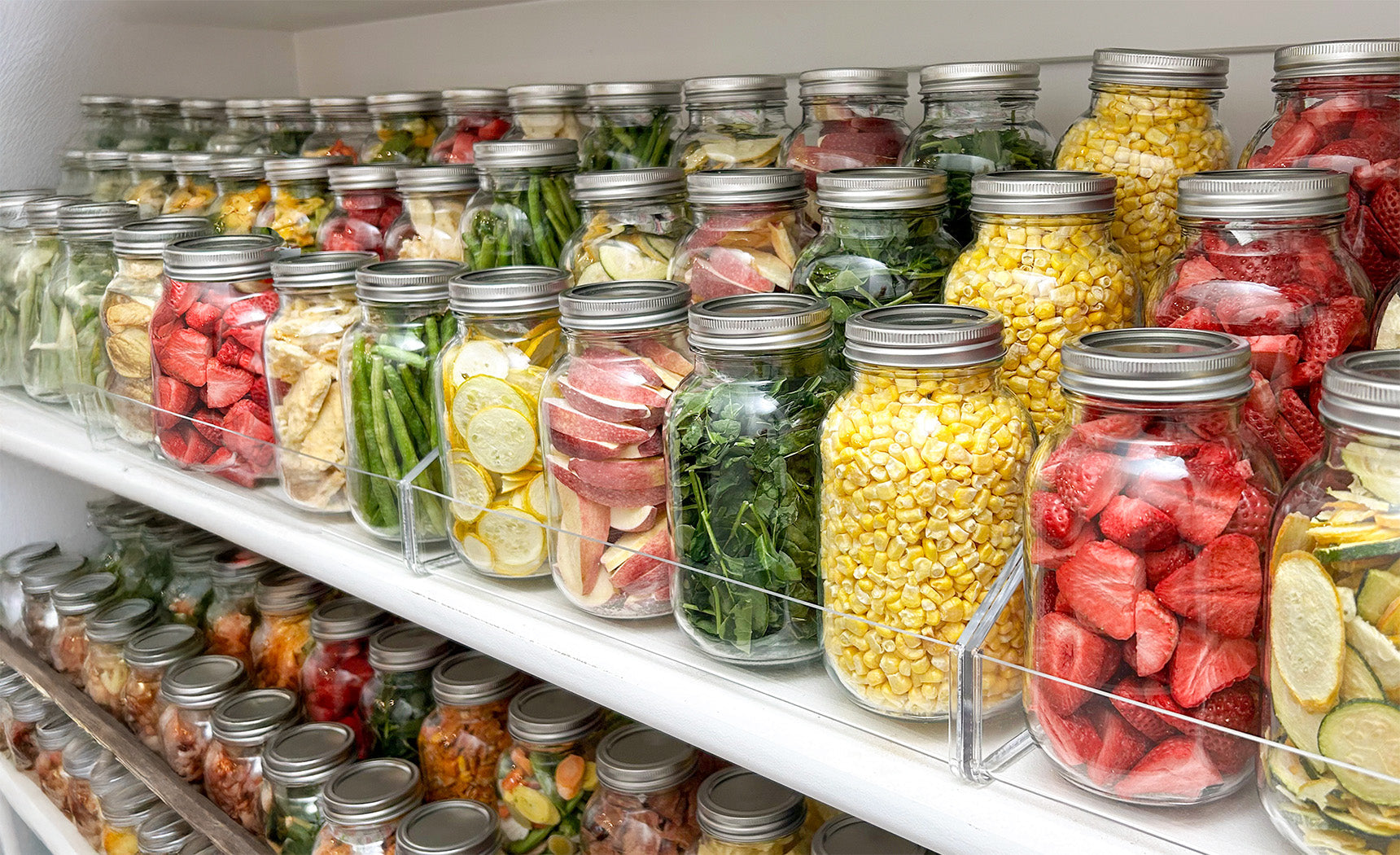
Viele Obstsorten lassen sich hervorragend gefriertrocknen, darunter:
Erdbeeren
Heidelbeeren
Äpfel
Bananen
Ananas
Pfirsiche
Himbeeren
Mangos
Diese Früchte lassen sich als leichte, knackige Snacks genießen oder später in Smoothies, beim Backen, in Müsli, in Desserts und anderen Rezepten verwenden.
Gemüse
Viele Gemüsesorten behalten nach dem Gefriertrocknen ihre Vielseitigkeit, wodurch sie sich gut als Zutaten für zukünftige Mahlzeiten eignen.
Zu den gängigen Beispielen gehören:
Mais
Erbsen
Grüne Bohnen
Möhren
Brokkoli
Paprika
Kartoffeln
Zwiebeln
Diese Gemüsesorten können nach der Lagerung oft direkt in Suppen, Eintöpfe, Aufläufe und andere Gerichte gegeben werden.
Vollwertige Mahlzeiten
Eine der größten Stärken der Gefriertrocknung ist die Konservierung kompletter Mahlzeiten.
Beispiele hierfür sind:
Chili
Rindfleischeintopf
Hähnchen mit Reis
Nudelgerichte
Frühstückspfannen
Suppen
Curry
Aufläufe
Für vielbeschäftigte Familien, Camper, Jäger und zur Notfallvorsorge kann die Konservierung kompletter Mahlzeiten einer der größten Vorteile der Gefriertrocknung sein.
Milchprodukte
Viele Milchprodukte lassen sich zudem gefriertrocknen, sodass sie für das spätere Kochen und die Zubereitung von Mahlzeiten zur Verfügung stehen.
Beispiele hierfür sind:
Käse
Joghurt
Sauerrahm
Hüttenkäse
Eiscreme
Da sich Milchprodukte anders verhalten als viele andere Lebensmittel, können die Ergebnisse je nach Produkt und der Art der Zubereitung vor der Konservierung variieren.
Lebensmittel, die man nicht trocknen kann
Durch die Gefriertrocknung lassen sich auch Lebensmittel konservieren, deren Konservierung mit einem Dörrgerät nicht praktikabel ist.
Beispiele hierfür sind:
Eier
Eiscreme
Süßigkeiten
Käsekuchen
Joghurt
Reste aufbrauchen
Manche dieser Lebensmittel sorgen für ganz neue Geschmackserlebnisse, während andere gelagert und später in Rezepten oder Mahlzeiten verarbeitet werden können.
Die besten Lebensmittel zum Trocknen
Die Dehydrierung eignet sich besonders gut, wenn das fertige Lebensmittel in getrockneter Form verzehrt werden soll.
Obst
Zu den beliebtesten getrockneten Früchten gehören unter anderem:
Apfelscheiben
Bananenchips
Mango
Ananas
Aprikosen
Birnen
Kirschen
Diese Früchte entwickeln eine zähe Konsistenz, die sich hervorragend als Snack eignet.
Kräuter
Kräuter sind eine der größten Stärken der Entwässerung.
Zu den beliebtesten Optionen gehören:
Basilikum
Petersilie
Rosmarin
Thymian
Oregano
Salbei
Durch das Trocknen lassen sich Kräuter bequem lagern, ohne dass sie ihre Eignung für die tägliche Küche verlieren.
Fleisch
Das Trocknen wird schon seit langem mit der Herstellung von Trockenfleisch in Verbindung gebracht.
Zu den gängigen Optionen gehören:
Rindfleisch
Türkei
Wildfleisch
Fisch
Bei Lebensmitteln, bei denen die Bissfestigkeit Teil des gewünschten Ergebnisses ist, bleibt die Trocknung eine hervorragende Konservierungsmethode.
Snacks
Viele selbstgemachte Snacks eignen sich von Natur aus zum Trocknen.
Beispiele hierfür sind:
Fruchtleder
Grünkohlchips
Gemüsechips
Getrocknete Zitrusscheiben
Diese Lebensmittel werden in der Regel so genossen, wie sie sind, ohne sie vorher wieder mit Wasser anzureichern.
Lebensmittel, die auf beide Arten haltbar gemacht werden können
Manche Lebensmittel lassen sich mit beiden Konservierungsmethoden gut aufbewahren.
Die beste Wahl hängt davon ab, welches Ergebnis Sie erzielen möchten.
|
Essen |
Gefriertrocknung |
Trocknen |
|
Äpfel |
Knuspriger Snack oder Backzutat |
Kausnack |
|
Strawberrie |
Leicht, knusprig, rehydrierbar |
Süße, zähe Snacks |
|
Tomaten |
Zutat |
Intensiver Geschmack |
|
Mais |
Zukünftige Mahlzeiten |
Zutat für Suppe |
|
Pilze |
Einweichen für Rezepte |
Zutat |
|
Kräuter Eier Joghurt Eiscreme Süßigkeiten Reste |
Langfristiger Inhaltsstoff Hervorragend Hervorragend Hervorragend Hervorragend Hervorragend |
Gewürze für den täglichen Gebrauch – Begrenzt – – – |
Keine der beiden Methoden ist grundsätzlich besser.
Jedes davon führt zu einem anderen Endprodukt.
Ein Lebensmittel, zwei sehr unterschiedliche Ergebnisse
Ein und dasselbe Lebensmittel kann je nach Konservierungsmethode zwei völlig unterschiedliche Geschmackserlebnisse hervorrufen.
Eine gefriergetrocknete Erdbeere wird leicht und knusprig und kann später für Rezepte wieder mit Wasser aufgeweicht werden.
Eine getrocknete Erdbeere wird zäh und wird meist als Snack gegessen.
Keines der beiden Ergebnisse ist falsch – sie sind einfach nur unterschiedlich.
Sich zu überlegen, wie man das Essen später genießen möchte, ist oft der einfachste Weg, um die richtige Aufbewahrungsmethode zu wählen.
Welche Lebensmittel sind in der Regel nicht ideal?
Nicht jedes Lebensmittel eignet sich gleichermaßen für jede Konservierungsmethode.
Lebensmittel, die von Natur aus viel Fett, Öl oder Zucker enthalten, erfordern unter Umständen eine besondere Zubereitung oder sind unabhängig von der Konservierungsmethode weniger lange haltbar. Deshalb ist es wichtig, sich nach Möglichkeit an die für das jeweilige Lebensmittel geltenden Empfehlungen zu halten.
Beispiele hierfür sind Lebensmittel mit sehr hohem Fettgehalt oder bestimmte Lebensmittel mit außergewöhnlich hohem Zuckergehalt.
Anstatt jedes Lebensmittel einer einzigen Konservierungsmethode zu unterziehen, ist es oft besser, jedes einzelne individuell zu beurteilen.
Denken Sie an das fertige Gericht
Eine der einfachsten Methoden, um sich für eine Konservierungsmethode zu entscheiden, besteht darin, sich vorzustellen, wie man das Essen in sechs Monaten isst.
Frage dich selbst:
Möchte ich, dass dies Teil einer zukünftigen Mahlzeit wird?
Möchte ich das als Snack essen?
Bewahre ich einzelne Zutaten oder ganze Rezepte auf?
Werde ich später damit kochen?
Möchte ich es knusprig oder zäh?
Diese Fragen erleichtern die Entscheidung oft wesentlich mehr als der Vergleich verschiedener Geräte.
Die Gefriertrocknung ist oft die bessere Wahl für die Konservierung von kompletten Mahlzeiten, Essensresten, Milchprodukten, Eiern, Obst, Gemüse und Lebensmitteln, die Sie später wieder rehydrieren oder als knusprige Snacks genießen möchten.
Das Trocknen ist oft die bessere Wahl, um aromatische Snacks, Kräuter, Trockenfleisch und Zutaten herzustellen, die dazu bestimmt sind, in getrocknetem Zustand genossen zu werden.
Keine der beiden Konservierungsmethoden ersetzt die andere.
Stattdessen bietet jede von ihnen einzigartige Vorteile, die sie für verschiedene Lebensmittel und unterschiedliche Ziele wertvoll machen.
Das Wichtigste auf einen Blick
Verschiedene Lebensmittel reagieren unterschiedlich auf die einzelnen Konservierungsmethoden.
Die Gefriertrocknung eignet sich hervorragend zur Konservierung vieler Lebensmittel für die spätere Zubereitung von Mahlzeiten.
Durch Dehydrierung lassen sich hervorragend leckere, verzehrfertige Snacks und Gewürzmischungen herstellen.
Viele Lebensmittel lassen sich je nach gewünschtem Ergebnis mit beiden Methoden erfolgreich konservieren.
Die Wahl der richtigen Konservierungsmethode hängt zunächst davon ab, wie Sie die Lebensmittel später genießen möchten.
HÄUFIG GESTELLTE FRAGEN
Welche Lebensmittel lassen sich besonders gut gefriertrocknen?
Viele Obst- und Gemüsesorten, Fertiggerichte, Essensreste, Milchprodukte, Eier, gekochte Eiweißquellen, Joghurt, Eiscreme und sogar manche Süßigkeiten lassen sich bei richtiger Vorbereitung hervorragend gefriertrocknen.
Welche Lebensmittel eignen sich am besten zum Trocknen?
Zu den beliebtesten Optionen zählen Obst, Kräuter, Trockenfleisch, Fruchtleder, Pilze, Paprika, Tomaten und Snacks.
Kann dasselbe Lebensmittel gefriergetrocknet oder dehydriert werden?
Ja. Viele Lebensmittel lassen sich auf beide Arten konservieren, doch die Konsistenz, der Geschmack, die Rehydrierung und der Verwendungszweck unterscheiden sich.
Sind fettreiche Lebensmittel schwer zu lagern?
Fettreiche Lebensmittel können eine größere Herausforderung darstellen, da Fett nicht auf dieselbe Weise trocknet wie Wasser und die Lagerstabilität beeinträchtigen kann. Lebensmittelspezifische Hinweise sind wichtig.
Können Milchprodukte gefriergetrocknet werden?
Viele Milchprodukte lassen sich gefriertrocknen, darunter Käse, Joghurt, saure Sahne, Hüttenkäse und Eiscreme; die Ergebnisse variieren jedoch je nach Produkt, Fettgehalt, Zubereitung und Verwendungszweck.
Welche Methode eignet sich besser für vollwertige Mahlzeiten?
Die Gefriertrocknung ist die erste Wahl für komplette Mahlzeiten, da sie es ermöglicht, ganze Mahlzeiten zu konservieren und später wieder mit Wasser anzureichern. Die Dehydrierung ist in erster Linie für einzelne Lebensmittel und Zutaten gedacht und weniger für komplette Mahlzeiten.
Wie soll ich die richtige Zubereitungsart für ein bestimmtes Lebensmittel auswählen?
Beginnen Sie mit dem gewünschten Ergebnis: knusprig oder bissfest, als Snack oder als Zutat für eine Mahlzeit, zum sofortigen Verzehr oder zur Lagerung – und überlegen Sie, ob das Lebensmittel gut wieder mit Feuchtigkeit versorgt werden muss.
Teilen:
Häufige Mythen über Gefriertrocknung und Dehydrierung
Was ist Gefriertrocknung?