

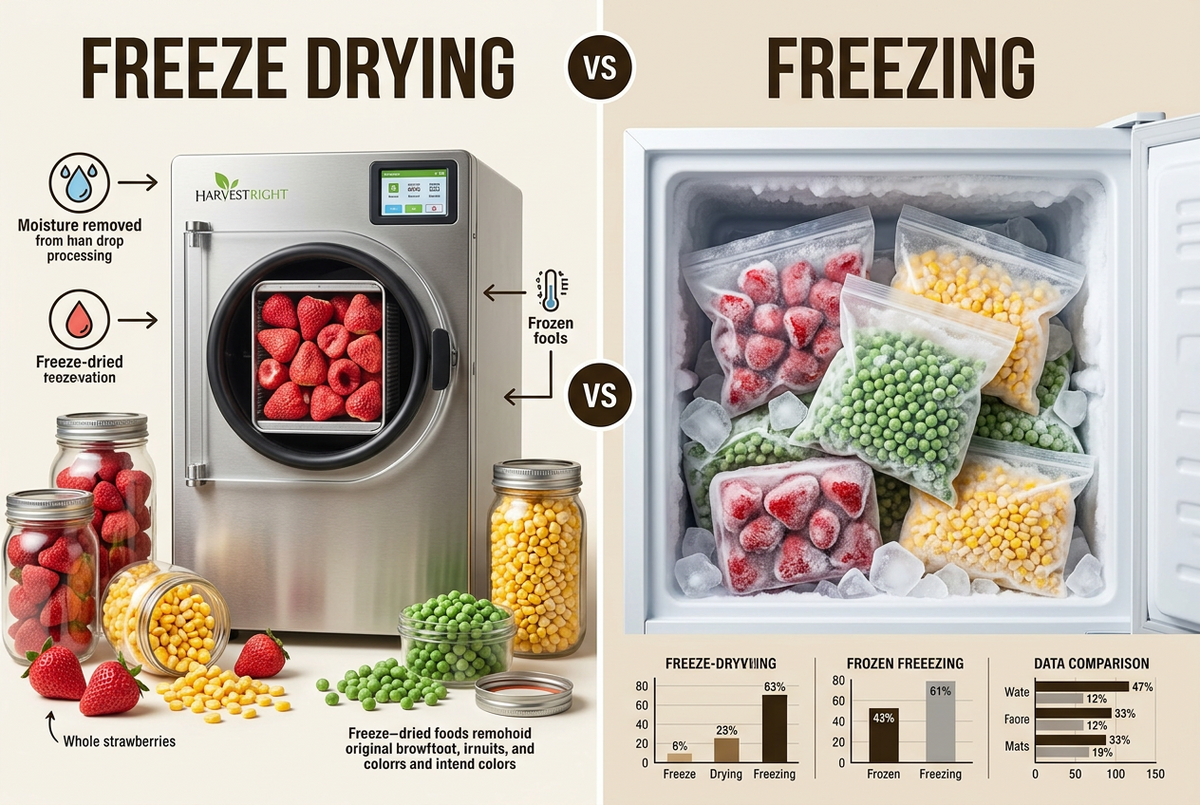
Freezing and freeze drying both preserve food, but they work differently, and each has advantages depending on what you want to store, how long you want to keep it, and how you plan to use it.
Short answer: For short-term storage and food you'll cook or eat soon, freezing is usually simpler and cheaper. For longer-term storage, less dependence on your freezer, preserving seasonal harvests, and lightweight portable meals, freeze drying has real advantages. Many households use both.
Freezing is familiar and convenient. Freeze drying takes specialized equipment and more preparation, but it produces lightweight foods that can be stored on a pantry shelf instead of in a freezer.
(Comparing against other methods? See freeze drying vs. dehydrating and canning vs. freeze drying. This article focuses on your freezer.)
What Is the Difference Between Freeze Drying and Freezing?
The biggest difference is what happens to the water inside the food.
How Freezing Works
In a conventional freezer, the water inside food turns to ice. Cold temperatures slow microbial growth and many of the chemical reactions that cause food to deteriorate. But the water stays in the food, so it has to stay frozen to stay preserved. When you're ready to use it, you thaw or cook it.
Freezing works well for meats, vegetables, fruits, leftovers, soups, sauces, and many prepared meals.
How Freeze Drying Works
Freeze drying starts by freezing the food, then goes further. A freeze dryer lowers the pressure around the frozen food so the ice turns directly into water vapor, a process called sublimation. Additional drying then removes the remaining moisture.
The result is food with very little water in it. When properly processed, packaged, and stored, many freeze-dried foods keep at room temperature without refrigeration. Some, like freeze-dried strawberries, can be eaten dry. Others, like soups and cooked meals, are rehydrated with water.
For the full walkthrough, see A Complete Guide to the Freeze-Drying Process.
Freeze Drying vs. Freezing: Side-by-Side Comparison
|
Feature |
Freezing |
Freeze Drying |
|
Preservation method |
Keeps water frozen inside the food |
Removes most water through sublimation and additional drying |
|
Equipment |
Household freezer |
Specialized freeze dryer |
|
Upfront cost |
Often lower if you already own a freezer |
Higher equipment investment |
|
Ongoing electricity |
Needed continuously to keep food frozen |
Used during processing; generally not needed for sealed, shelf-stable storage |
|
Storage |
Freezer space required |
Pantry or other cool, dry storage |
|
Storage life |
Varies; quality gradually declines |
Potentially much longer with proper processing and packaging |
|
Weight |
Food keeps its water weight |
Much lighter, since most water is removed |
|
Texture |
Can soften after thawing |
Often crisp when dry; varies after rehydration |
|
Convenience |
Easy for everyday meals |
Useful for pantry ingredients, snacks, and portable meals |
|
Packaging |
Freezer-safe containers and bags |
Moisture-resistant, airtight packaging; oxygen protection for long-term storage |
|
Best use |
Near-term meals and everyday storage |
Longer-term storage, portability, pantry building |
Neither method is universally better. What matters is which advantages count most for your household.

Which Method Keeps Food Longer?
Both preserve food, but their storage requirements differ.
How Long Does Frozen Food Last?
Food kept continuously at 0°F (-18°C) or below stays safe for an extended period, but its quality can decline. Freezer burn, oxidation, texture changes, and flavor loss can make food less enjoyable even while it's still safe. Recommended freezer storage times usually refer to quality, not a strict safety deadline. Packaging, temperature stability, and the type of food all matter.
How Long Does Freeze-Dried Food Last?
Properly freeze-dried food can last much longer when it's stored in packaging that protects it from moisture and oxygen. Some foods can stay suitable for many years, and under favorable conditions certain foods may approach 25 years. But 25 years is not a guarantee for every freeze-dried food.
Actual storage life depends on:
-
Food type and fat content
-
How completely the food was dried
-
Packaging quality
-
Oxygen and moisture exposure
-
Storage temperature
-
Light exposure
-
Seal integrity
Higher-fat foods generally call for more conservative expectations.
For packaging and storage details, see How to Package Freeze-Dried Food So It Keeps for 25 Years and How to Store Freeze-Dried Food.
[ADD if the post exists: link to "How Long Does Freeze-Dried Food Last?"]
[ADD: a real Harvest Right example, such as a batch of freeze-dried food that's been stored for a known number of years, with what it looked and tasted like when opened.]
Which Preserves More Nutrients?
Both can retain substantial amounts of a food's original nutrients.
Freezing generally preserves nutrients well, especially when food is prepared properly and kept consistently frozen. Freeze drying also preserves many nutrients because water is removed at low temperatures. But retention varies with the food, the preparation, the processing conditions, and how long it's stored. Some vitamins are more sensitive to oxygen, heat, light, and long storage than others.
It isn't accurate to say freeze drying always preserves more nutrients than freezing. The food and how it's handled usually matter more than the method alone.
[ADD if the post exists: link to "Does Freeze Drying Remove Nutrients?"]
Which Method Preserves Taste and Texture Better?
It depends heavily on the food.
Frozen Foods
Freezing is best when you want to cook or serve food in a form close to the original. Frozen berries work in smoothies, frozen vegetables cook straight from the bag, and frozen soups reheat. But ice crystals can damage cell structure, especially in high-moisture foods, which is why thawed strawberries get soft and some vegetables lose their crispness.
Freeze-Dried Foods
Removing most of the water changes texture. Fruits become light and crisp, and cooked meals and ingredients often regain much of their original character when rehydrated. But rehydration doesn't restore every food perfectly. A freeze-dried strawberry is delicious as a crunchy snack, but a rehydrated one won't have the firmness of a fresh-picked berry.
Choose freezing when keeping the original cooking or serving experience matters most. Choose freeze drying when dry texture, portability, and storage flexibility matter more.
Which Is More Convenient?
Freezing wins on immediate convenience. You put prepared food into freezer-safe packaging and you're done, with no processing cycle. For busy households, that's a big advantage.
Freeze drying takes more planning: the food has to be prepared, processed, checked for complete dryness, and packaged properly. But once that work is done, freeze-dried food is convenient in other ways. You can keep appropriate foods in the pantry, pack lightweight meals for travel, and use ingredients without thawing anything.
-
Frozen soup needs freezer space and has to be thawed or reheated. Freeze-dried soup can sit on a shelf and be rehydrated when needed.
-
Frozen strawberries are great for smoothies. Freeze-dried strawberries can be eaten straight from the bag.
The preparation takes longer, but the finished food can be easier to store and carry.
Which Costs Less?
There are two costs to consider: preserving the food and storing it afterward.
The Cost of Freezing
If you already own a freezer, freezing adds little upfront cost. But a freezer runs on electricity all the time, and how much you can store depends on your space. A separate chest freezer adds purchase, maintenance, and electricity costs.
The Cost of Freeze Drying
A home freeze dryer is a larger upfront investment. You'll also account for:
-
Electricity used during processing (see how much energy a freeze dryer uses)
-
Packaging supplies
-
Vacuum pump maintenance, where applicable
-
Time spent preparing and packaging food
Once food is properly processed and packaged, shelf-stable freeze-dried food generally doesn't need ongoing electricity for storage. That doesn't automatically make freeze drying cheaper overall. The economics depend on how often you use the machine, what you preserve, how much, and what you'd otherwise buy or throw away. For a closer look, see how long it takes a freeze dryer to pay for itself.
For some households, freezing stays the more economical choice. For others, the combination of preservation, pantry convenience, and less reliance on freezer space makes freeze drying worthwhile.

Which Foods Are Better Frozen?
Freezing is often the practical choice for food you'll use relatively soon or want to keep in a familiar cooking format:
-
Raw meats intended for later cooking
-
Bread and baked goods
-
Soups and sauces you use often
-
Vegetables for everyday cooking
-
Fruit for smoothies
-
Prepared meals you'll eat within weeks or months
Foods that are very high in fat, or formulated in ways that don't freeze dry well, may also suit conventional freezing better.
Which Foods Are Better Freeze Dried?
Freeze drying shines when you want shelf-stable storage, portability, or a crisp dry texture:
-
Strawberries, apples, and bananas
-
Garden vegetables
-
Herbs
-
Properly prepared cooked meats
-
Cooked rice and beans
-
Low-fat prepared meals
-
Backpacking meals
-
Fruit snacks
-
Selected dairy products, prepared and handled appropriately
Not every food freezes or freeze dries equally well. Foods high in oil, fat, or sugar can be harder, and some are poor candidates for freeze drying.
What About Food Safety?
Neither method replaces safe food handling. Freezing doesn't reliably kill harmful bacteria, and neither does freeze drying. Some microorganisms survive both processes and can become active again when food is thawed or rehydrated under favorable conditions.
Always follow good food-safety practices:
-
Start with wholesome ingredients.
-
Wash hands, utensils, and preparation surfaces.
-
Keep perishable foods at safe temperatures.
-
Cook foods that need cooking to a safe internal temperature.
-
Avoid cross-contamination.
-
Follow the equipment manufacturer's instructions.
-
Package freeze-dried food only after confirming it is completely dry.
Proper preservation protects quality and stability, but it doesn't make contaminated food safe.
[ADD if the post exists: link to "Does Freeze Drying Kill Bacteria? Food Safety Explained"]
Should You Freeze Dry or Freeze Your Garden Harvest?
A big garden shows why the two methods complement each other. You might freeze vegetables you'll cook over the next few months and freeze dry the rest for pantry storage. Frozen berries are ideal for smoothies, while freeze-dried berries suit snacking, baking, and lightweight storage. A household with limited freezer space may especially appreciate a second way to preserve part of the harvest. For more, see how to freeze dry your garden harvest.
The goal isn't necessarily to replace your freezer. It's to have more ways to preserve food that fit your household.
[ADD: a short Harvest Right customer or test-kitchen example of splitting a harvest between freezer and freeze dryer, ideally with a photo.]
Frequently Asked Questions
Is freeze drying the same as freezing?
No. Freezing turns the water in food to ice and keeps it frozen. Freeze drying freezes the food and then removes most of its water through vacuum drying.
Is freeze-dried food healthier than frozen food?
Not necessarily. Both can preserve substantial nutritional value, and retention depends on the food, the processing, and how it's stored.
Does freeze-dried food need to stay frozen?
Properly freeze-dried and packaged food is shelf-stable and generally doesn't need the freezer. It does need protection from moisture, oxygen, and unfavorable storage conditions.
Is freeze drying better than freezing vegetables?
It depends on how you'll use them. Freezing is convenient for everyday cooking. Freeze drying suits pantry storage, lightweight meals, and long-term planning.
Does freeze drying save freezer space?
Yes. Food that's been freeze dried and packaged for shelf-stable storage no longer takes up freezer space.
Can you freeze food before freeze drying it?
Yes. Pre-freezing suitable foods is a useful preparation step before moving them into the freeze dryer.
Is freeze drying worth replacing a freezer?
For most households, freeze drying works best as an additional preservation option, not a replacement for a refrigerator or freezer.
The Bottom Line: Which Should You Choose?
Choose freezing when you want a familiar, economical way to preserve food you'll use fairly soon.
Choose freeze drying when you want lightweight, shelf-stable food, longer-term storage, convenient dry ingredients, or less dependence on freezer space.
Use both when different foods suit different methods.
If you're weighing a freeze dryer, what size freeze dryer do I need? is a good next step.
Partager:
What Are the Best Foods to Freeze Dry for Beginners?