

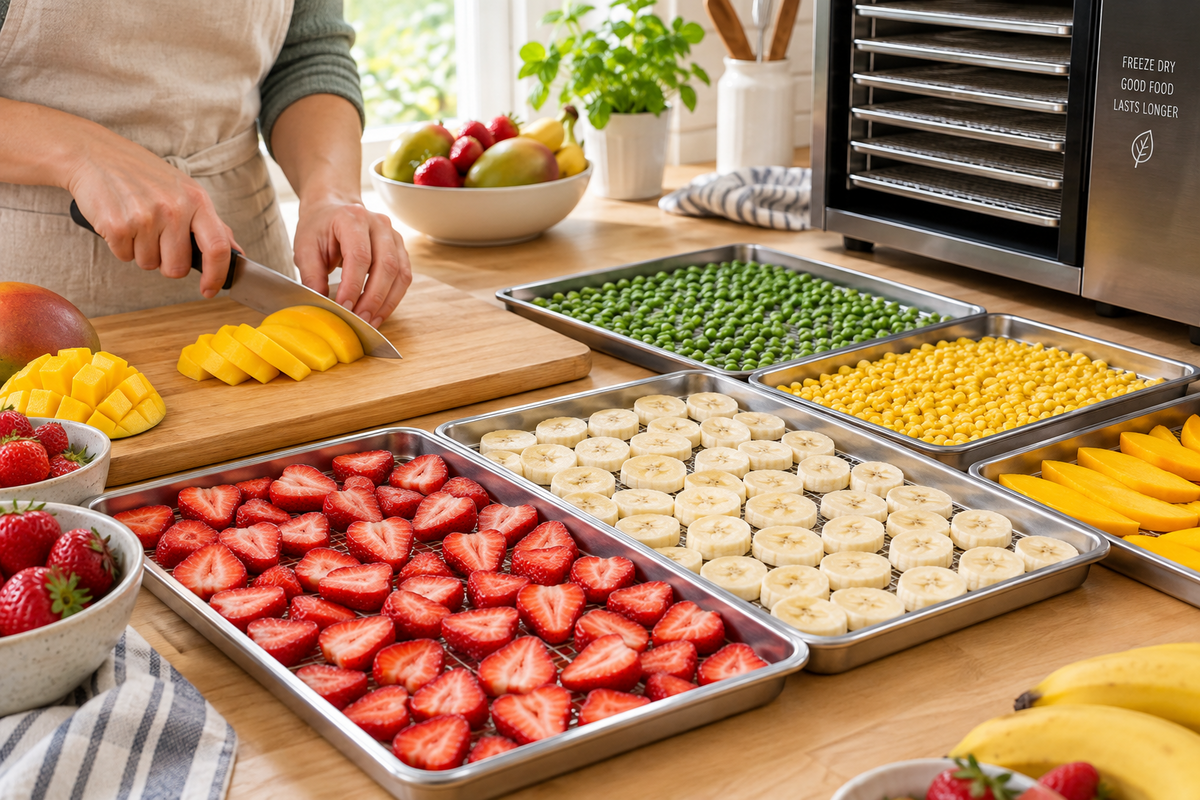
Your first few batches in a home freeze dryer teach you a lot about how the process works, and choosing the right foods makes learning easier.
Short answer: Strawberries, apples, peas, and sweet corn are the easiest foods to start with. They're simple to prepare, easy to spread on trays, and easy to check for dryness. Bananas, blueberries, pineapple, carrots, cooked rice, and cooked chicken are good next steps once you've run a batch or two.
You don't need an elaborate recipe at first. Familiar foods help you understand your machine before you move on to complete meals and tougher ingredients. (For a wider set of tips, see tips for successful home freeze drying.)
What Makes a Food Good for Beginners?
A beginner-friendly food is easy to prepare and gives results that are easy to judge. Look for foods that:
-
Can be cut into consistent pieces
-
Fit easily on freeze dryer trays
-
Aren't very oily or fatty
-
Have a predictable texture after drying
-
Are easy to check for leftover moisture
-
Are things your household already enjoys
It also helps to start with one ingredient at a time rather than a mixed meal, so you can see how each food behaves.
10 Good Foods for Your First Batches
|
Food |
Preparation |
What you'll learn |
|
Strawberries |
Wash, hull, and slice evenly |
Preparing fruit and checking dryness |
|
Apples |
Wash, core, and slice |
Consistent slicing and browning control |
|
Peas |
Use prepared fresh or frozen peas |
Processing small vegetables |
|
Sweet corn |
Use prepared kernels |
Drying and rehydrating vegetables |
|
Bananas |
Peel and slice |
Managing piece thickness and ripeness |
|
Blueberries |
Wash and pierce or split the skins |
How food structure affects drying |
|
Carrots |
Slice and blanch |
Vegetable pretreatment |
|
Pineapple |
Peel, core, and cut into pieces |
Handling sugary fruit |
|
Cooked rice |
Cook and cool safely, spread evenly |
Rehydrating a prepared ingredient |
|
Cooked lean chicken |
Cook thoroughly, cut into small pieces |
Handling and checking cooked protein |
Strawberries, apples, peas, and corn are the most approachable. Blueberries, pineapple, and cooked meats add extra considerations.

Notes on Each Food
-
Strawberries: A popular first batch because the change is dramatic, from juicy and soft to light and crisp with concentrated flavor. Sliced berries are easier to evaluate than large whole ones. Eat them as snacks, add them to cereal, or crush them into powder for recipes.
-
Apples: Affordable, familiar, and easy to portion. Experiment with slice thickness and optional browning prevention. Good for snacks, baking, and oatmeal. See freeze-drying apples.
-
Peas: Little or no cutting, especially with commercially prepared frozen peas. A good first lesson in rehydrating vegetables for soups and rice dishes.
-
Sweet corn: Spread prepared kernels in an even layer. Comparing corn eaten dry with corn after rehydration is a useful experiment. Prepare it as appropriate, with blanching or cooking.
-
Bananas: Slice into similar-sized pieces. They turn light and crunchy, good for snacks, cereal, and baking. Ripeness changes the result: very ripe bananas are sweeter and can be harder to handle than firmer ones. See freeze-drying bananas.
-
Blueberries: Their intact skins can trap moisture, so piercing or splitting them helps them dry. A good second experiment after a simple sliced-fruit batch.
-
Carrots: Your introduction to blanching, which slows enzyme activity that can affect color, flavor, and quality in storage. Cut into uniform pieces and follow blanching guidance. Good in soups and stews.
-
Pineapple: Flavorful, but its sugar makes it trickier than other fruits. Don't overload trays and check dryness carefully. Save it for after you're comfortable with simpler fruit.
-
Cooked rice: Introduces freeze drying prepared ingredients. Cooked rice can support bacterial growth if handled poorly, so cool it promptly and don't leave it at room temperature for long.
-
Cooked lean chicken: Cook to a safe internal temperature of 165°F before freeze drying, use clean equipment, cut into small pieces, and trim excess fat. Check the thickest pieces for dryness. It's best saved until after you've done fruit or vegetables.
[ADD: a short Harvest Right customer or test-kitchen story about a beginner's first batch, ideally with a photo.]
Which Food Should You Try First?
-
Strawberries if you want a flavorful snack that shows the texture change.
-
Apples if you want an affordable food that's easy to slice and portion.
-
Peas or corn if you're more interested in practical pantry ingredients.
-
Bananas if your household loves fruit snacks and you want to see how ripeness matters.
There isn't one perfect first food. The best choice is one that's easy to prepare and that you'll actually use.
How to Prepare Your First Batch
-
Start with fresh, wholesome food. Freeze drying doesn't improve spoiled or contaminated ingredients. Wash produce and follow normal food-safety practices.
-
Cut into even pieces. Thick pieces can stay moist in the center even when the outside looks dry.
-
Spread food evenly and follow your freeze dryer's load limits. A fuller tray isn't a better tray if the food is piled too thick. See how much food to put in a Harvest Right freeze dryer.
-
Consider pre-freezing. It can help with batch prep and lets you set up trays ahead of time.
-
Run the appropriate cycle. Times vary with food type, thickness, moisture, and load size, so don't rely on one time for every batch.
-
Check for complete dryness. Break open several of the largest or thickest pieces from different trays and look for moisture, ice, or softness in the centers. High-sugar foods may not turn brittle the way low-sugar foods do. When unsure, add dry time and check again. See how to know when freeze-dried food is completely dry.
-
Package promptly. Freeze-dried food absorbs moisture from the air. Use an airtight container for food you'll eat soon and moisture-resistant packaging with oxygen protection for longer storage. See how to package freeze-dried food for long-term storage.
For more on cutting, pre-freezing, blanching, and tray loading, see how to prepare food for freeze drying.
Foods Beginners May Want to Save for Later
Some foods are harder and are better after you've had a few successful batches:
-
High-fat foods: Pure oils, butter, and mayonnaise are poor candidates.
-
Very sugary foods: Honey and syrups don't freeze dry well in their original form, and other high-sugar foods can take longer and stay sticky.
-
Thick, dense foods: Large pieces and deep casseroles dry unevenly. Smaller portions and even thickness help.
-
Raw meat, fish, and eggs: These can be freeze dried, but they must be labeled as raw and handled and cooked like any raw product, because freeze drying doesn't reliably kill bacteria. Beginners are better off starting with cooked meats and pasteurized ingredients.
For the full list, see foods that require additional consideration before freeze drying and what foods you can freeze dry.

Common Beginner Mistakes
The usual ones are trying too many different foods at once, cutting pieces too thick, overloading the machine, sealing food before checking dryness, and not keeping notes on what worked. A few lines noting the food, preparation, and result will save time on future batches. For more, see common freeze-drying mistakes and how to avoid them, and if food comes out chewy, why freeze-dried food can still be soft.
A Simple Three-Batch Learning Plan
Learn one skill at a time:
-
Batch 1: Sliced strawberries or apples. Practice slicing, tray loading, dryness checks, and packaging.
-
Batch 2: Peas or corn. Practice preparing vegetables and testing rehydration. See how to rehydrate freeze-dried food.
-
Batch 3: Cooked rice or another properly prepared ingredient. Practice handling prepared food, drying it completely, and rehydrating it.
After three batches, you'll have experience with snacks, pantry vegetables, and cooked ingredients.
[ADD: a real example of a beginner's results from these three batches, such as what they learned or changed.]
Frequently Asked Questions
What is the easiest food to freeze dry?
Sliced strawberries, apples, and prepared peas or corn. They're easy to prepare and check for dryness.
Can I freeze dry frozen fruit?
Yes. Many frozen fruits freeze dry well. Follow preparation guidance and don't overload the trays.
Do I have to cook vegetables before freeze drying?
Many benefit from blanching or other preparation first. The right treatment depends on the vegetable.
Can I freeze dry different foods in the same batch?
Often, but foods with different thickness, sugar, or moisture dry at different rates, which can leave some underdone. Beginners usually get more predictable results by running similar foods together.
How do I know when freeze-dried food is done?
Inspect several of the largest or thickest pieces. The centers should show no moisture or ice. Finished texture varies by food, so follow food-specific guidance.
Do I need to rehydrate freeze-dried fruit?
No. Many freeze-dried fruits are good as dry snacks, as long as they were prepared safely and are ready to eat.
Should beginners start with meat?
Fruit and vegetables are usually easier. Meat requires careful cooking, handling, complete drying, and storage.
Start Simple, Then Experiment
Your first batches don't need to be complicated. Start with familiar foods, prepare them carefully, and watch how they change. Strawberries, apples, peas, and corn are all good ways to learn. Once you're comfortable with preparing, drying, packaging, and rehydrating, move on to complete meals and more challenging foods.
The goal isn't just to fill trays. It's to learn how to preserve foods your household will enjoy using. If you're still choosing a machine, what size freeze dryer do I need? is a good place to start.
Partager:
How to Build a Freeze-Dried Food Pantry
Freeze Drying vs. Freezing: Which Is Better for Food Storage?