

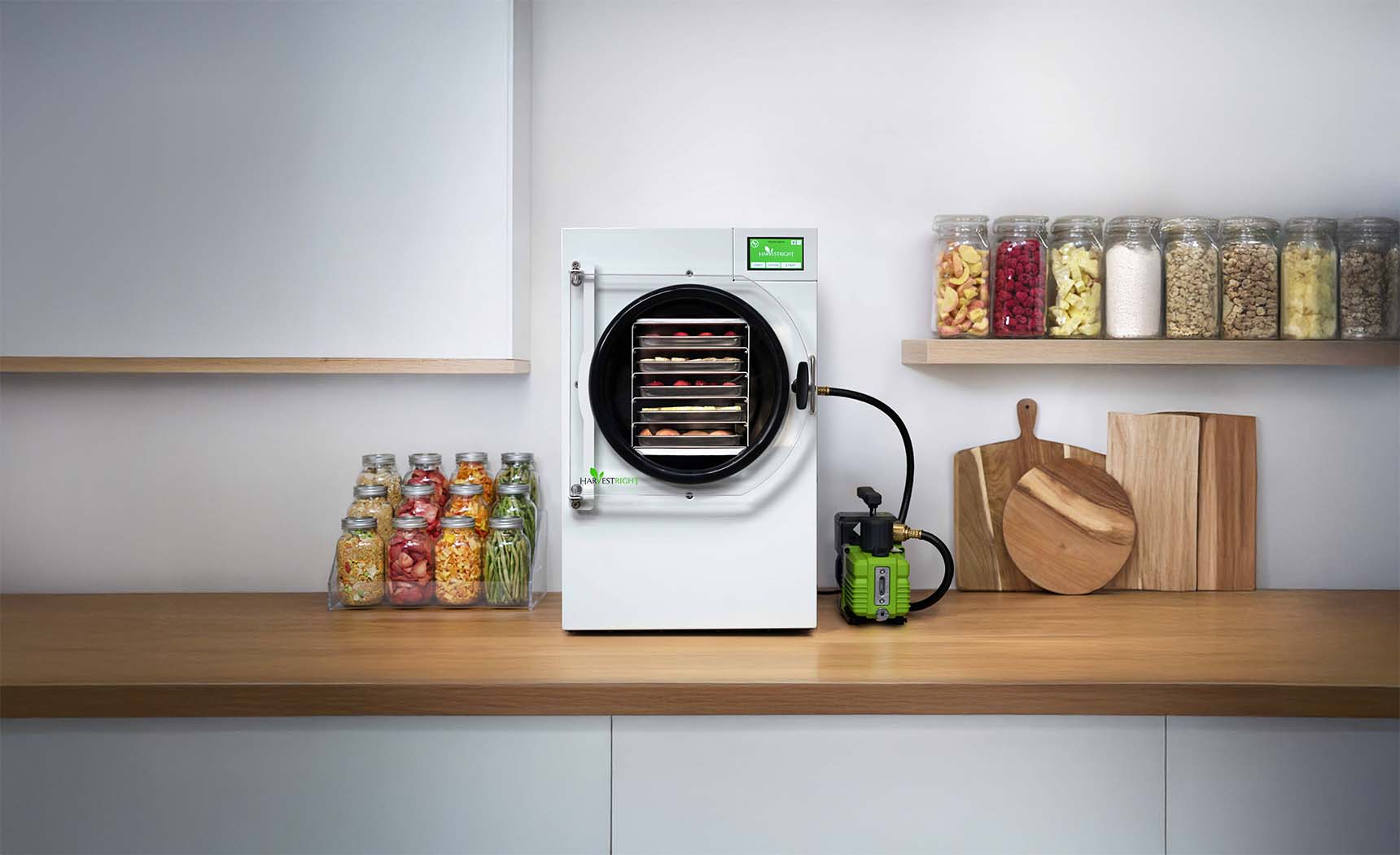
Ganz gleich, ob Sie Erdbeeren aus Ihrem Garten gefriertrocknen, Essensreste vor dem Verderben retten, komplette Familienmahlzeiten zubereiten oder einen langfristigen Vorratsvorrat anlegen – ein paar einfache Gewohnheiten können jede Zubereitung einfacher und erfolgreicher machen.
Je öfter Sie Lebensmittel gefriertrocknen, desto mehr lernen Sie darüber, wie sich verschiedene Lebensmittel verhalten, welche Zubereitungsmethoden am besten funktionieren und wie Sie die fertigen Lebensmittel am liebsten verpacken und verwenden.
Diese 25 praktischen Tipps können Ihnen helfen, bessere Ergebnisse zu erzielen, häufige Fehler zu vermeiden und mehr aus Ihrem Harvest Right-Gefriertrockner herauszuholen.
Bevor Sie beginnen
1. Beginnen Sie mit den Lebensmitteln, die Sie konservieren möchten
Das Gefriertrocknen ist eine hervorragende Methode, um Lebensmittel zu konservieren, die Sie gerade zur Hand haben – egal, ob es sich um frische Erzeugnisse aus dem Garten handelt, um im Sonderangebot gekaufte Produkte, um Essensreste oder einfach um etwas, von dem Sie feststellen, dass Sie es nicht so schnell verbrauchen werden, wie Sie ursprünglich erwartet hatten.
Mit der Gefriertrocknung können Sie Folgendes optimal nutzen:
Zusätzliche Ernteerträge aus dem Garten
Lebensmittel, die im Sonderangebot oder in Großpackungen gekauft wurden
Reste und zusätzliche Mahlzeiten
Lebensmittel, die du noch zu Hause hast und die verbraucht werden müssen
Man muss Lebensmittel nicht sofort gefriertrocknen, sobald man sie nach Hause bringt oder erntet. Manchmal ergibt sich die Gelegenheit einfach dadurch, dass man feststellt: „Das werden wir nicht alles verbrauchen.“ Das ist ein guter Zeitpunkt, um sie zu gefriertrocknen.

2. Bereite das Obst und Gemüse zu, solange es noch frisch ist
Frische Lebensmittel beginnen nach der Ernte, Nährstoffe zu verlieren. Daher gilt im Allgemeinen: Je frischer sie sind, wenn man sie gefriertrocknet, desto besser.
Das heißt aber nicht, dass Obst und Gemüse sofort gefriergetrocknet werden müssen. Vielleicht wächst in Ihrem Garten alles so schnell, dass Sie kaum hinterherkommen, Sie haben zusätzliche Erzeugnisse gekauft, als diese gerade Saison hatten oder im Angebot waren, oder Sie stellen einfach fest, dass Sie nicht alles so schnell verbrauchen werden, wie Sie erwartet hatten. Gefriertrocknen ist eine großartige Möglichkeit, diese Lebensmittel zu konservieren, bevor sie verderben.
Sie können die Speisen auch im Voraus zubereiten und einfrieren, bis Sie bereit sind, eine Portion zuzubereiten.
3. Die Lebensmittel in gleichmäßige Stücke schneiden
Eine gleichmäßige Dicke sorgt dafür, dass die Lebensmittel gleichmäßiger gefriergetrocknet werden.
Bei vielen Obst- und Gemüsesorten verringert das Schneiden in gleich große Stücke die Wahrscheinlichkeit, dass einige Stücke früher fertig getrocknet sind als andere. Sie müssen nicht exakt gleich groß sein, aber wenn man die Dicke einigermaßen gleichmäßig hält, trocknen die Stücke in etwa gleich schnell.
4. Überlegen Sie sich, wie Sie es später nutzen werden
Bevor Sie Lebensmittel schneiden oder portionieren, überlegen Sie sich, wie Sie sie später verwenden möchten.
Wird daraus:
Ein Snack?
Zutaten für die Suppe?
Zutaten für Smoothies?
Backzutaten?
Essensportionen?
Wenn man Lebensmittel schon bei der Zubereitung im Hinblick auf ihre spätere Verwendung vorbereitet, kann man später Zeit sparen. Man kann zum Beispiel Obst für den Snack zwischendurch in Scheiben schneiden, Zucchini für Backzwecke raspeln oder komplette Mahlzeiten in Portionen aufteilen, die für den eigenen Haushalt sinnvoll sind.
Ein wenig Planung vor dem Gefriertrocknen kann die Verwendung des fertigen Lebensmittels erheblich erleichtern.
5. Wissen, wann man blanchieren muss
Die meisten Gemüsesorten müssen vor dem Gefriertrocknen nicht blanchiert werden, bei manchen kann es jedoch von Vorteil sein, je nachdem, wie Sie sie später verwenden möchten.
Kartoffeln sollten vor dem Gefriertrocknen blanchiert oder gekocht werden. Rohe Kartoffeln können oxidieren und nach dem Schneiden dunkel oder schwarz werden.
Bei anderen Gemüsesorten kann das Blanchieren die Farbe, die Konsistenz und die Art und Weise beeinflussen, wie das Gemüse wieder Wasser aufnimmt; daher kann die Zubereitung je nach Lebensmittel und gewünschtem Ergebnis variieren.
6. Überladen Sie die Fächer nicht
Es mag verlockend sein, in jede Charge so viel Essen wie möglich zu packen, doch eine Überfüllung der Bleche kann zu längeren oder unvollständigen Garvorgängen führen.
Halten Sie sich an die empfohlene Kapazität Ihres Gefriertrockners. Zu viel Lebensmittel können zu mehr Feuchtigkeit führen, als der Gefriertrockner in einem Durchgang entfernen kann, was zu einer übermäßigen Eisbildung führt, die den Trocknungsprozess beeinträchtigen kann.
7. Die Lebensmittel in einer einzigen Schicht anordnen
Verteilen Sie die Lebensmittel in einer einzigen Schicht auf den Blechen, wobei als Faustregel etwa ¾ der Blechhöhe als Richtwert gilt. Die Stücke dürfen sich berühren, Sie müssen also nicht zwischen jedem Stück Platz lassen.
Süßigkeiten bilden hier eine Ausnahme. Manche Süßigkeiten dehnen sich beim Gefriertrocknen erheblich aus, daher sollten Sie zusätzlichen Platz für die Ausdehnung einplanen.
8. Ähnliche Lebensmittel zusammenfassen
Sie müssen die Lebensmittel nicht nach Kategorien gruppieren (nur Obst, nur Gemüse usw.). Verschiedene Lebensmittel lassen sich problemlos gemeinsam gefriertrocknen.
Das Gruppieren von Lebensmitteln mit ähnlichen Trocknungseigenschaften kann dazu beitragen, die Chargenzeiten besser vorhersagbar zu machen. Außerdem empfiehlt es sich, Lebensmittel mit starkem Geruch, wie beispielsweise Zwiebeln oder scharfe Chilischoten, getrennt zu lagern, da sich deren Geschmack und Geruch während des Gefriertrocknungsprozesses auf andere Lebensmittel übertragen können.
Ansonsten ist es kein Problem, verschiedene Lebensmittel in derselben Charge zu mischen. Beachten Sie jedoch, dass die Chargenzeiten je nach Art des zu gefriertrocknenden Materials variieren.

9. Starke Aromen trennen
Manche Lebensmittel mit starkem Geruch können während des Gefriertrocknungsprozesses ihren Geruch und Geschmack auf andere Lebensmittel übertragen.
Zwiebeln, scharfe Chilischoten, Knoblauch, Fisch und andere stark aromatische Lebensmittel sollten am besten getrennt von Obst, Desserts und anderen Lebensmitteln verarbeitet werden, die diese Aromen annehmen könnten.
Wischen Sie die Kammer des Gefriertrockners nach einer besonders stark riechenden Charge gründlich aus, bevor Sie die nächste Charge verarbeiten.
10. Verwenden Sie Tabellenzeilen, wenn dies sinnvoll ist
Silikonmatten oder Backpapier können die Reinigung erleichtern und sind besonders hilfreich bei Flüssigkeiten, klebrigen Lebensmitteln oder Lebensmitteln, die sich nur schwer von den Blechen lösen lassen.
Sie eignen sich für Lebensmittel wie Soßen, Joghurt, Fruchtpürees, Eier, Suppen und andere flüssige oder weiche Speisen.
Backblecheinlagen sind nicht erforderlich, daher können Sie die Speisen auch direkt auf die Backbleche legen.
Zeit sparen
11. Lebensmittel vorab einfrieren
Das Vorfrieren von Lebensmitteln vor dem Einfüllen in Ihren Gefriertrockner kann dazu beitragen, die Gesamtlaufzeit der Charge zu verkürzen, und bietet Ihnen mehr Flexibilität bei der Zubereitung und Verarbeitung der Lebensmittel.
Außerdem kann es Ihnen helfen:
Bereiten Sie Speisen zu und frieren Sie sie ein, während eine weitere Portion zubereitet wird
Eine Charge über mehrere Tage hinweg herstellen
Halten Sie mit der Ernte im geschäftigen Garten Schritt
Bereite das Essen vor, wenn du Zeit hast, und koche die Portion später.
Ein Vorfrieren ist nicht erforderlich. Wenn Sie ungefrorene Lebensmittel einlegen, friert Ihr Harvest Right-Gefriertrockner diese zu Beginn des Zyklus ein, bevor der Trocknungsvorgang beginnt.
12. Saisonale Lebensmittel in großen Mengen kaufen
Wenn Obst und Gemüse gerade Saison haben, ist das eine gute Gelegenheit, extra viel davon speziell zum Gefriertrocknen einzukaufen.
Saisonale Produkte sind oft reichlich vorhanden, günstiger und in bester Qualität. Durch Gefriertrocknung können Sie diese Fülle jetzt nutzen und die Lebensmittel das ganze Jahr über genießen.
13. Koche eine größere Portion, wenn du ohnehin schon am Kochen bist
Wenn Sie ohnehin schon ein Lieblingsgericht Ihrer Familie zubereiten, sollten Sie in Erwägung ziehen, extra eine kleine Portion mehr speziell für den Gefriertrockner zuzubereiten.
Suppen, Chili, Nudelgerichte, Rührei zum Frühstück, Aufläufe und andere komplette Mahlzeiten lassen sich in größeren Mengen zubereiten und für später gefriergetrocknet aufbewahren. So können Sie aus einem einzigen Kochvorgang Mahlzeiten für einen anderen Tag gewinnen.
Während des Gefriertrocknungszyklus
14. Sei geduldig
Verschiedene Lebensmittel erfordern unterschiedliche Trocknungszeiten.
Der Feuchtigkeitsgehalt, die Dicke, der Zucker- und Fettgehalt, die Menge der Lebensmittel in der Charge sowie die Frage, ob die Lebensmittel zuvor tiefgefroren wurden, können sich alle darauf auswirken, wie lange die Zubereitung einer Charge dauert.
Manche Chargen brauchen einfach länger als andere. Geben Sie dem Gefriertrockner die Zeit, die er benötigt, um den Vorgang abzuschließen.
15. Das dickste Stück prüfen
Überprüfen Sie vor dem Verpacken einige der größten oder dicksten Stücke aus verschiedenen Schalen. Brechen Sie diese auf und überprüfen Sie die Mitte auf verbleibende Feuchtigkeit, kalte Stellen oder Weichheit, die darauf hindeuten könnten, dass eine weitere Trocknung erforderlich ist.
Wenn Sie sich nicht sicher sind, lassen Sie das Material noch etwas länger trocknen und überprüfen Sie es erneut. Zur zusätzlichen Überprüfung können Sie auch ein Feuchtigkeitsmessgerät verwenden.

16. Längere Trocknungszeit einplanen
Sollte Ihr Essen am Ende des Programms noch nicht vollständig trocken sein, verlängern Sie die Trocknungszeit.
Es ist nichts Falsches daran, die Trocknungszeit zu verlängern. Es ist viel besser, den Lebensmitteln die Zeit zu geben, die sie brauchen, als sie zu verpacken, solange noch Feuchtigkeit darin ist.
Lebensmittel umgehend verpacken
17. Lassen Sie Lebensmittel nicht offen stehen
Gefriergetrocknete Lebensmittel können Feuchtigkeit aus der Umgebungsluft aufnehmen, sobald sie aus dem Gefriertrockner entnommen werden.
Nachdem Sie sich vergewissert haben, dass die Lebensmittel vollständig trocken sind, verpacken Sie sie umgehend, um den Kontakt mit Luft und Feuchtigkeit so gering wie möglich zu halten.
18. Wählen Sie die Verpackung entsprechend Ihrer Verwendung aus
Sowohl Mylar-Beutel als auch Gläser eignen sich gut zur Aufbewahrung von gefriergetrockneten Lebensmitteln. Die beste Wahl hängt davon ab, wie lange Sie die Lebensmittel lagern möchten, wie Sie sie verwenden wollen und wo sie aufbewahrt werden sollen.
Mylar-Beutel sind leicht, nehmen wenig Platz ein und lassen sich einfach bewegen oder transportieren. Verwenden Sie sie für die Langzeitlagerung zusammen mit einem Sauerstoffabsorber in geeigneter Größe. Das Einlegen versiegelter Mylar-Beutel in stabile Transportkisten oder Behälter kann zusätzlichen Schutz vor Durchstichen, Schädlingen und Beschädigungen während der Lagerung oder des Transports bieten.
Glasbehälter sind wiederverwendbar und ermöglichen einen guten Einblick in ihren Inhalt. Sie eignen sich besonders gut für Lebensmittel, die Sie regelmäßig verbrauchen, oder für Snacks, die Sie oft öffnen. Bei ordnungsgemäßer Versiegelung mit einem Sauerstoffabsorber und Lagerung an einem kühlen, dunklen Ort können Glasbehälter auch zur Langzeitlagerung verwendet werden.
Für Snacks oder Lebensmittel, die Sie relativ schnell verbrauchen, reicht oft schon ein fest verschlossenes Glas oder ein luftdichter Behälter aus. In einem Behälter, der immer wieder geöffnet wird, ist ein Sauerstoffabsorber nicht erforderlich.
Berücksichtigen Sie bei der Entscheidung, welche Option am besten geeignet ist, Ihren verfügbaren Stauraum, wie oft Sie auf die Lebensmittel zugreifen werden, ob Sie sie möglicherweise umräumen müssen und die Aufbewahrungsbedingungen in Ihrer Wohnung.
19. Verwenden Sie beim Verpacken Sauerstoffabsorber
Sauerstoffabsorber tragen dazu bei, die Qualität gefriergetrockneter Lebensmittel zu bewahren, indem sie Sauerstoff aus der versiegelten Verpackung entfernen. Verwenden Sie einen Sauerstoffabsorber in geeigneter Größe, wenn Sie Lebensmittel in Mylar-Beuteln, Gläsern oder #10-Dosen verpacken.
Sobald eine Packung Sauerstoffabsorber geöffnet wird, beginnen diese sofort zu wirken und entziehen der Umgebungsluft Sauerstoff. Entnehmen Sie nur die benötigte Anzahl und verschließen Sie die restlichen Sauerstoffabsorber anschließend umgehend in einem luftdichten Behälter, damit sie für Ihre nächste Charge bereitstehen.
Bei einem Snackglas oder einem anderen Behälter, der häufig geöffnet wird, ist ein Sauerstoffabsorber nicht erforderlich, da bei jedem Öffnen des Behälters neuer Sauerstoff eindringt.
20. Jedes Paket beschriften
Beschriften Sie jede Verpackung zumindest mit dem darin enthaltenen Lebensmittel und dem Verpackungsdatum.
Sie können auch zusätzliche Informationen angeben, die später hilfreich sein könnten, wie zum Beispiel:
Portionsgröße
Zubereitungsmethode
Batch-Notizen
Anleitung zur Rehydrierung
Eine detaillierte Beschriftung ist nicht bei jeder Verpackung erforderlich, aber ein paar zusätzliche Notizen können bei Lebensmitteln, mit denen Sie experimentieren, oder bei Gerichten, die Sie später auf eine bestimmte Art und Weise zubereiten möchten, nützlich sein.
Bleib organisiert
21. Verbrauchen Sie ältere Lebensmittel zuerst
Verwenden Sie ältere Packungen vor den neueren, damit sich Ihre gefriergetrockneten Lebensmittel in Ihrer Vorratskammer regelmäßig abwechseln.
Ein einfacher „First-in, first-out“-Ansatz macht es ganz einfach: Stellen Sie neu verpackte Lebensmittel hinter ältere, damit die ältesten Verpackungen zuerst verbraucht werden. So bleibt Ihre Vorratskammer übersichtlich und es wird verhindert, dass ältere Lebensmittel in Vergessenheit geraten.
22. Führen Sie ein Inventar
Wenn Ihr Vorrat an gefriergetrockneten Lebensmitteln wächst, kann eine einfache Bestandsliste Ihnen dabei helfen, den Überblick darüber zu behalten, was Sie noch vorrätig haben und was Sie möglicherweise nachkaufen sollten.
Verfolgen Sie beispielsweise folgende Dinge:
Lebensmittel, die Sie gelagert haben
Ungefähre Mengenangaben
Verpackungsdaten
Lebensmittel, die dir langsam ausgehen
Sie können ein Notizbuch oder eine Tabellenkalkulation verwenden oder die Lebensmittel einfach in beschriftete Behälter einteilen, wenn Ihr Vorrat wächst. Wenn Sie ähnliche Lebensmittel zusammenfassen und jeden Behälter deutlich kennzeichnen, finden Sie viel leichter, was Sie brauchen, ohne Ihren gesamten Vorrat durchwühlen zu müssen.
23. Lebensmittel nach Kategorien sortieren
Je größer Ihr Vorrat an gefriergetrockneten Lebensmitteln wird, desto einfacher lässt sich das Gesuchte finden, wenn Sie ähnliche Lebensmittel zusammenstellen.
Sie könnten beispielsweise nach folgenden Kategorien ordnen:
Obst
Kräuter
Fleisch und Proteine
Milchprodukte
Vollwertige Mahlzeiten
Backzutaten
Egal, ob Sie Regale, Behälter oder Aufbewahrungskörbe verwenden – wählen Sie Kategorien, die der Art und Weise entsprechen, wie Ihre Familie die Lebensmittel nutzt.

Lerne weiter
24. Notieren Sie, was funktioniert
Jede Charge kann dir etwas darüber beibringen, wie sich verschiedene Lebensmittel gefriertrocknen lassen.
Bei Lebensmitteln, die Sie regelmäßig zubereiten, oder wenn Sie etwas Neues ausprobieren, sollten Sie sich Notizen zu folgenden Punkten machen:
Zubereitungsmethoden
Scheibendicke oder Portionsgröße
Trocknungszeit
Lieblingsrezepte oder Verwendungsmöglichkeiten
Gibt es etwas, das du beim nächsten Mal anders machen würdest?
Sie müssen nicht über jede Charge detaillierte Aufzeichnungen führen. Ein paar nützliche Notizen können Ihnen dabei helfen, sich daran zu erinnern, was gut funktioniert hat, und die Zubereitung künftiger Chargen erleichtern.
25. Scheuen Sie sich nicht, zu experimentieren
Einer der größten Vorzüge eines eigenen Gefriertrockners ist es, herauszufinden, wie viele verschiedene Lebensmittel man damit gefriertrocknen kann.
Versuche Folgendes:
· Obst und Gemüse
· Vollwertige Mahlzeiten
· Fleisch
· Milchprodukte und Eier
· Kräuter
· Soßen und Suppen
· Eis & Desserts
· Süßigkeiten & Snacks
· Leckerlis für Haustiere
Und Sie müssen nicht alles selbst herausfinden. Die Harvest Right-App und die Communities in den sozialen Medien bieten zahlreiche Tipps, Rezepte, Ideen und Hilfe. Hunderttausende Besitzer von Gefriertrocknern haben im Laufe der Jahre mit verschiedenen Lebensmitteln und Techniken experimentiert und so einen reichen Wissensschatz geschaffen, der Ihnen den Einstieg in die Welt der Gefriertrocknung noch weiter erleichtern kann.
Häufige Fehler, die es zu vermeiden gilt
Selbst erfahrene Besitzer von Gefriertrocknern können hin und wieder auf Probleme stoßen. Zu den häufigsten Fehlern zählen:
Überbeladung der Tabletts
Ähnliche Lebensmittel in sehr unterschiedliche Größen oder Stärken schneiden
Das Vergessen, Lebensmittel mit dicker Schale anzuschneiden, einzustechen oder auf andere Weise zu öffnen
Lebensmittel verpacken, bevor sie vollständig getrocknet sind
Gefriergetrocknete Lebensmittel zu lange der Luft und Feuchtigkeit aussetzen
Das Versäumnis, bei der Verpackung zur Lagerung einen Sauerstoffabsorber zu verwenden
Kombination von stark riechenden Lebensmitteln mit solchen, die deren Aromen aufnehmen könnten
Unter der Annahme, dass jedes Lebensmittel bzw. jede Charge die gleiche Zeit in Anspruch nimmt
Die meisten dieser Fehler lassen sich leicht vermeiden, sobald man versteht, wie sich verschiedene Lebensmittel verhalten, und eine Routine entwickelt hat, die für einen selbst funktioniert.
Häufig gestellte Fragen
Sollte ich Lebensmittel vorab einfrieren?
Das Vorfrieren wird empfohlen, da es dazu beitragen kann, die Gesamtlaufzeit einer Charge zu verkürzen. Außerdem erleichtert es die Zubereitung von Speisen im Voraus, das Sammeln von Chargen über mehrere Tage hinweg oder das Einfrieren von Speisen, während eine andere Charge läuft.
Ein Vorfrieren ist nicht erforderlich. Wenn Sie ungefrorene Lebensmittel einlegen, friert Ihr Harvest Right-Gefriertrockner diese zu Beginn des Zyklus ein, bevor der Trocknungsvorgang beginnt.
Wie voll sollten die Schalen sein?
Ordnen Sie die Lebensmittel in einer einzigen Schicht an; als Faustregel gilt dabei, dass sie etwa ¾ der Höhe des Blechs einnehmen sollten. Die Stücke dürfen sich berühren, Sie müssen also nicht zwischen jedem Stück Platz lassen.
Süßigkeiten bilden eine Ausnahme, da sich manche Süßigkeiten beim Gefriertrocknen erheblich ausdehnen und daher zusätzlichen Platz benötigen.
Woran erkenne ich, dass die Lebensmittel vollständig getrocknet sind?
Überprüfen Sie einige der größten oder dicksten Stücke aus verschiedenen Blechen. Brechen Sie diese auf und prüfen Sie im Inneren, ob noch Feuchtigkeit vorhanden ist, ob sich kalte Stellen befinden oder ob die Stücke weich sind – dies könnte darauf hindeuten, dass sie noch weiter getrocknet werden müssen.
Wenn Sie sich nicht sicher sind, lassen Sie das Material noch etwas länger trocknen und überprüfen Sie es erneut. Zur zusätzlichen Überprüfung können Sie auch ein Feuchtigkeitsmessgerät verwenden.
Kann ich verschiedene Lebensmittel zusammen gefriertrocknen?
Ja. Verschiedene Lebensmittel lassen sich problemlos gemeinsam gefriertrocknen, und Sie müssen die Lebensmittel nicht nach Kategorien sortieren.
Lebensmittel mit ähnlichen Trocknungseigenschaften ermöglichen Ihnen möglicherweise besser vorhersehbare Chargenzeiten. Stark riechende Lebensmittel wie Zwiebeln oder scharfe Chilischoten sollten am besten separat verarbeitet werden, da sich ihre Aromen und Geschmacksnoten während des Gefriertrocknungsprozesses auf andere Lebensmittel übertragen können.
Was ist, wenn das Essen nicht ganz trocken ist?
Verlängern Sie die Trocknungszeit und überprüfen Sie die Lebensmittel vor dem Verpacken noch einmal. Es ist besser, die Trocknungszeit zu verlängern, als Lebensmittel zu verpacken, die noch Feuchtigkeit enthalten.
Sollte ich jedes Paket beschriften?
Ja. Beschriften Sie jedes Paket zumindest mit dem Inhalt und dem Verpackungsdatum.
Sie können auch Angaben zur Portionsgröße, Zubereitungshinweise, Anweisungen zum Einweichen oder andere Informationen hinzufügen, die hilfreich sind, wenn Sie das Lebensmittel verwenden möchten.
Gute Gewohnheiten führen zu großartigen Ergebnissen
Beieiner erfolgreichen Gefriertrocknung geht es nicht um Perfektion. Es geht darum, sich ein paar gute Gewohnheiten anzueignen und zu lernen, wie sich verschiedene Lebensmittel verhalten.
Wenn Sie die Lebensmittel sorgfältig vorbereiten, die Kapazität Ihres Gefriertrockners nicht überschreiten, darauf achten, dass die Lebensmittel vollständig getrocknet sind, sie umgehend verpacken und ordnungsgemäß lagern, werden Sie Charge für Charge hervorragende Ergebnisse erzielen.
Je öfter Sie Lebensmittel gefriertrocknen, desto leichter fällt es Ihnen, herauszufinden, was für Sie am besten funktioniert. Sie werden Ihre Lieblingsspeisen, Rezepte und Zubereitungsmethoden entdecken und Wege finden, wie sich das Gefriertrocknen ganz natürlich in Ihren Alltag integrieren lässt.
Und bei so vielen Möglichkeiten gibt es immer etwas Neues auszuprobieren.
Teilen:
Gefriertrocknung Ihrer Gartenernte
Lebensmittelkonservierung damals und heute: Eine Familiengeschichte