

So friert man Ananas zu Hause gefriertrocknet
Gefriergetrocknete Ananas ist süß, knackig, leicht und voller konzentriertem Ananasgeschmack. Sie eignet sich als praktischer Snack direkt aus der Tüte, lässt sich aber auch in Studentenfutter, Haferflocken, Backwaren, Smoothies, Desserts und anderen Rezepten verwenden.
Auch Ananas lässt sich ganz einfach für die Gefriertrocknung vorbereiten. Der Schlüssel liegt darin, sie in relativ gleichmäßige Stücke zu schneiden, diese Stücke gleichmäßig auf den Tabletts zu verteilen und sicherzustellen, dass die Ananas vor dem Verpacken vollständig trocken ist.
So friert man Ananas zu Hause gefriertrocknet.
So bereitet man Ananas für die Gefriertrocknung vor
Nehmen Sie zunächst reife Ananas, die frisch und in gutem Zustand sind.
Wenn Sie eine ganze Ananas verwenden:
Entfernen Sie den oberen und den unteren Teil.
Schneiden Sie die äußere Schale ab.
Entfernen Sie den Kern.
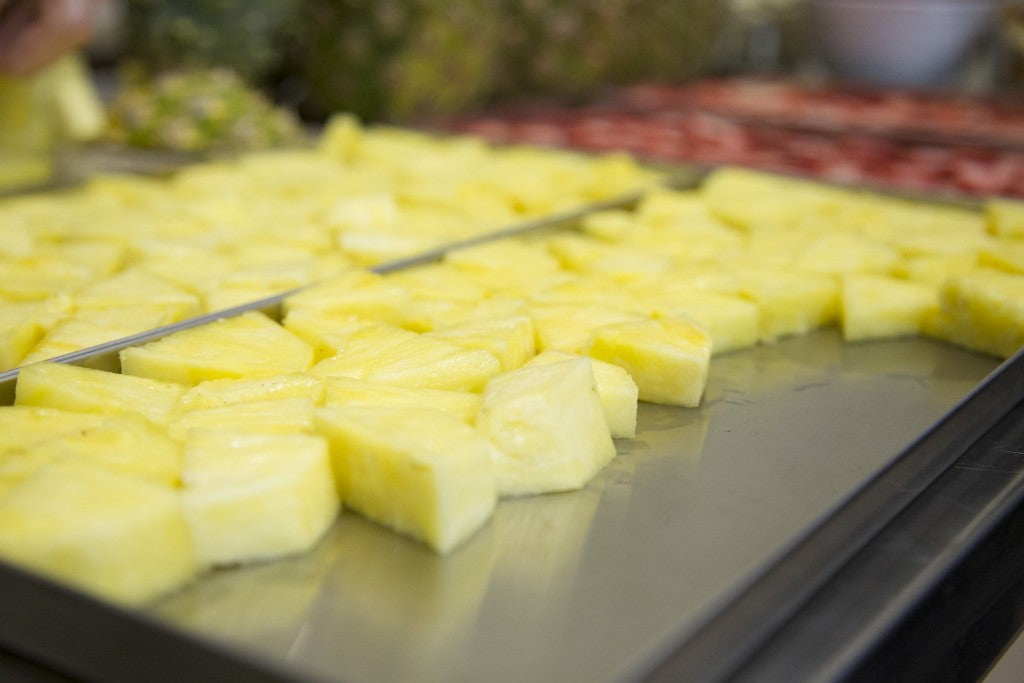
Schneiden Sie die Ananas in relativ gleichmäßige Scheiben oder Stücke.
Gleichmäßige Stücke sorgen dafür, dass die Ananas gleichmäßiger gefriert und trocknet. Vermeiden Sie nach Möglichkeit, sehr dicke und sehr dünne Stücke auf demselben Blech zu mischen.
Sie können auch bereits geschnittene und vorbereitete Ananas verwenden.

So gefriertrocknet man Ananas
Sobald die Ananas vorbereitet ist, verteilen Sie die Stücke in einer einzigen, gleichmäßigen Schicht auf den Schalen Ihres Gefriertrockners.
Vermeiden Sie möglichst große Stapel oder stark überlappende Stücke. Eine gleichmäßige Anordnung der Ananasstücke trägt dazu bei, dass die Gefriertrocknung in der gesamten Charge gleichmäßig verläuft.
Legen Sie die Schalen in Ihren Harvest Right-Gefriertrockner ein und starten Sie den Zyklus gemäß der Bedienungsanleitung Ihres Geräts.
Ananas enthält viel Wasser und natürlichen Zucker, daher kann die Trocknungszeit von verschiedenen Faktoren abhängen, wie zum Beispiel:
Dicke und Größe der Stücke
Reifegrad und Feuchtigkeitsgehalt
Menge an Ananas auf jedem Tablett
Ob die Ananas zuvor eingefroren war
Gefriertrocknermodell und Betriebsbedingungen
Anstatt sich auf eine festgelegte Stundenzahl zu verlassen, sollten Sie immer das Lebensmittel selbst prüfen, um festzustellen, ob die Charge vollständig getrocknet ist.
Woran erkennt man, wann gefriergetrocknete Ananas fertig ist?
Bevor Sie die Ananas zur Lagerung verpacken, sollten Sie einige der größten und dicksten Stücke überprüfen.
Brechen oder schneiden Sie einige Stücke auf und untersuchen Sie das Innere. Richtig gefriergetrocknete Ananas sollte durch und durch trocken sein und im Inneren keine nassen, kalten, vereisten oder spürbar feuchten Stellen aufweisen.
Wenn Sie sich nicht sicher sind, ob die Ananas vollständig getrocknet ist, lassen Sie sie noch etwas länger trocknen und prüfen Sie sie dann erneut.
Dieser Schritt ist wichtig. Das Verpacken von Lebensmitteln, die noch Feuchtigkeit enthalten, kann deren Haltbarkeit und Qualität beeinträchtigen.
Wie schmeckt gefriergetrocknete Ananas?
Eine der auffälligsten Veränderungen ist die Textur.
Frische Ananas ist saftig und fest. Gefriergetrocknete Ananas wird leicht und knusprig, während ihr natürlich süß-säuerlicher Ananasgeschmack besonders gut zur Geltung kommt.
Diese Kombination macht es zu einem großartigen Snack für zwischendurch – eine Zubereitung mit Wasser ist nicht erforderlich.
So lagert man gefriergetrocknete Ananas
Wie Sie Ihre Ananas verpacken, sollte davon abhängen, wie lange Sie sie aufbewahren möchten.
Wenn Sie Ananas zubereiten, die Sie bald verzehren möchten, bewahren Sie sie in einem sauberen, luftdichten Behälter auf und schützen Sie sie vor Feuchtigkeit.
Verwenden Sie für die längerfristige Lagerung von Lebensmitteln Verpackungen, die gefriergetrocknete Lebensmittel vor Feuchtigkeit und Sauerstoff schützen, wie beispielsweise ordnungsgemäß verschlossene Mylar-Beutel mit geeigneten Sauerstoffabsorbern.
Verpacken Sie die gefriergetrocknete Ananas umgehend nach Abschluss des Zyklus. Gefriergetrocknete Lebensmittel nehmen leicht Feuchtigkeit aus der Umgebungsluft auf, insbesondere in feuchten Umgebungen.
Achten Sie stets darauf, dass die Ananas vollständig trocken ist, bevor Sie sie zur Aufbewahrung verschließen.

Verwendung von gefriergetrockneter Ananas
Vielleicht stellen Sie fest, dass das meiste davon schon als Snack verzehrt wird, aber es gibt noch viele andere Verwendungsmöglichkeiten.
Probieren Sie doch einmal gefriergetrocknete Ananas:
Direkt aus der Tüte als knuspriger Snack
In Studentenfutter untergemischt
Über Joghurt gestreut
Zu Haferflocken oder Müsli hinzufügen
Zu Pulver zermahlen, um damit Aromen zu verleihen
Wird zu Muffins und anderen Backwaren hinzugefügt
Wird in Desserts verwendet
Ideal für Wanderungen, Camping oder Reisen
Eingeweicht für Rezepte, bei denen eine weichere Konsistenz bevorzugt wird
Gefriergetrocknetes Ananaspulver verleiht Glasuren, Smoothies, Desserts und anderen Rezepten ebenfalls einen Ananasgeschmack, ohne dabei so viel Flüssigkeit hinzuzufügen wie frische Ananas.
So rehydriert man gefriergetrocknete Ananas
Gefriergetrocknete Ananas muss nicht wieder mit Wasser aufgeweicht werden, wenn man sie als knusprigen Snack genießen möchte.
Wenn Sie eine weichere Konsistenz wünschen, geben Sie nach und nach Wasser hinzu und lassen Sie der Ananas Zeit, dieses aufzunehmen. Die benötigte Wassermenge und die benötigte Zeit hängen von der Größe und Dicke der Stücke ab.
Bei Rezepten wie Salsa oder gekochten Gerichten können Sie die gefriergetrocknete Ananas möglicherweise auch direkt hinzufügen, sofern das Rezept genügend Flüssigkeit enthält, damit sie diese aufnehmen kann.
Kann man Ananas aus der Dose gefriertrocknen?
Auch Ananas aus der Dose kommt für die Gefriertrocknung in Frage, verhält sich jedoch möglicherweise anders als frische Ananas – insbesondere, wenn sie in zuckerhaltigem Sirup verpackt ist oder Zuckerzusätze enthält.
Da Lebensmittel mit höherem Zuckergehalt möglicherweise länger zum Gefriertrocknen benötigen und eine andere Endkonsistenz aufweisen können, lassen sich frische Ananas oder Ananas ohne Zuckersirup möglicherweise leichter verarbeiten.
Wenn Sie Ananas aus der Dose verwenden, lassen Sie die überschüssige Flüssigkeit ablaufen, bevor Sie die Stücke auf die Bleche legen.
Kann man tiefgefrorene Ananas gefriertrocknen?
Ja. Tiefgefrorene Ananas kann eine praktische Alternative sein, da ein Großteil der Zubereitung bereits erledigt ist.
Verteilen Sie die gefrorenen Stücke gleichmäßig auf den Tabletts und befolgen Sie die Bedienungsanleitung Ihres Harvest Right-Gefriertrockners.
Vorgefrorenes Obst kann zudem den Gefrieraufwand verringern, den das Gerät während des Zyklus aufbringen muss.
Muss Ananas vor der Gefriertrocknung vorbehandelt werden?
Im Gegensatz zu einigen Obstsorten, die üblicherweise vorbehandelt werden, um die Bräunung einzudämmen, erfordert die Ananas vor dem Gefriertrocknen in der Regel keine aufwendige Vorbehandlung.
Bei den meisten Chargen ist die Zubereitung ganz einfach: schälen, entkernen, in gleichmäßige Stücke schneiden, auf den Blechen anordnen und gefriertrocknen.
Warum Ananas gefriertrocknen?
Durch Gefriertrocknung können Sie Ananas konservieren und dabei ein Produkt herstellen, das sich deutlich von Obst aus der Dose, aus der Tiefkühltruhe oder getrocknetem Obst unterscheidet.
Sie können es als knusprigen Snack genießen, zu Pulver verarbeiten, zu Rezepten hinzufügen, mit Wasser aufweichen oder für den späteren Gebrauch verpacken.
Das kann auch nützlich sein, wenn Ananas im Angebot ist oder man mehr frisches Obst hat, als man verbrauchen kann, bevor es verdirbt.
Anstatt überschüssige Ananas verkommen zu lassen, können Sie sie einmachen und später genießen.
Häufig gestellte Fragen
Wie dick sollte eine Ananas für die Gefriertrocknung sein?
Schneiden Sie die Ananas in relativ kleine, gleichmäßige Stücke, damit diese gleichmäßig gefrieren und trocknen. Bei sehr dicken Stücken kann es länger dauern, bis sie vollständig getrocknet sind.
Warum dauert das Gefriertrocknen von Ananas manchmal länger?
Ananas enthält viel Wasser und natürlichen Zucker. Die Dicke der Früchte, ihr Reifegrad, die Beladung der Fächer und die Betriebsbedingungen können sich alle auf die benötigte Zeit auswirken.
Sollte gefriergetrocknete Ananas knusprig sein?
Richtig gefriergetrocknete Ananas hat in der Regel eine leichte, trockene und knackige Konsistenz. Überprüfen Sie vor dem Verpacken der Charge stets die dicksten Stücke auf verbleibende Feuchtigkeit.
Kann man gefriergetrocknete Ananas essen, ohne sie vorher wieder zu befeuchten?
Ja. Gefriergetrocknete Ananas kann trocken als knuspriger Snack gegessen oder rehydriert werden, wenn man eine weichere Konsistenz bevorzugt.
Kann man gefriergetrocknete Ananas zu Pulver verarbeiten?
Ja. Völlig getrocknete Ananas kann zerkleinert oder zu Ananaspulver gemahlen werden, das sich für Smoothies, zum Backen, für Desserts, zum Aromatisieren und für andere Rezepte eignet.
Eine einfache Frucht für den Einstieg in die Gefriertrocknung
Ananas ist ein hervorragendes Beispiel dafür, warum das Gefriertrocknen zu Hause so vielseitig ist. Aus einer bekannten frischen Frucht wird ein knackiger Snack, eine leichte Zutat, eine Ergänzung für Rezepte oder ein Lebensmittel, das man für später verpacken kann.
Und der grundlegende Ablauf ist einfach: Bereiten Sie es vor, gefriertrocknen Sie es, überprüfen Sie, ob es vollständig trocken ist, und verpacken Sie es entsprechend der geplanten Verwendung.
Teilen:
Gefriertrocknung von Äpfeln
Der Oktober ist der nationale Monat „Besser essen / Gemeinsam essen“