

Quick Answer
If your goal is preserving food that can later be rehydrated into meals that closely resemble the original, freeze drying is the clear choice.
Because freeze drying removes moisture while helping preserve much of the food's internal structure, many foods absorb water more readily during rehydration.
Dehydrated foods can also be rehydrated successfully, but they often retain a firmer texture and may not return as closely to their original state.
The difference isn't about one method being "good" and the other being "bad."
It's about understanding which foods are intended to be rehydrated and which are intended to be enjoyed in their dried form.
What Does Rehydration Mean?
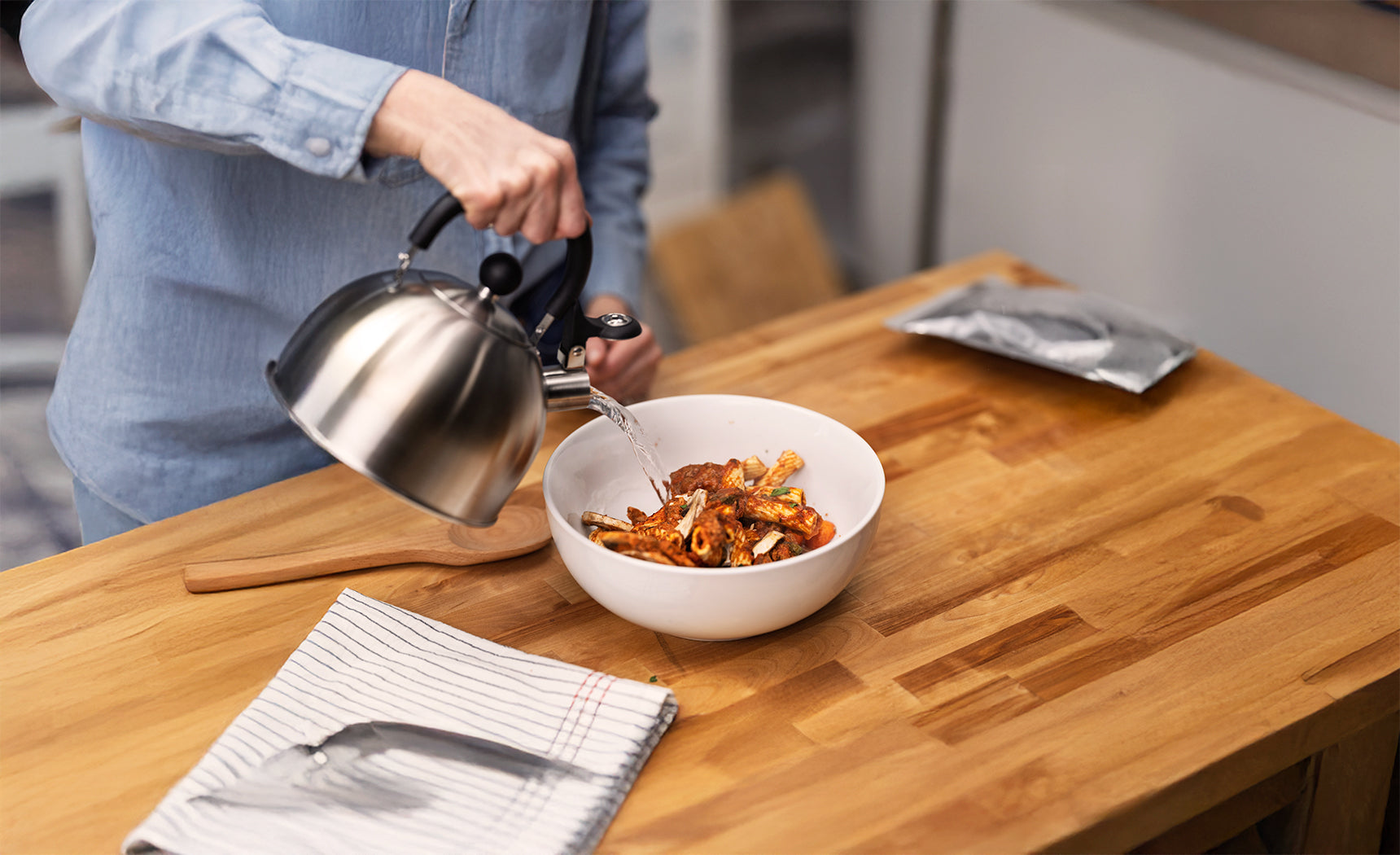
Rehydration simply means adding water back to preserved food before eating or cooking it.
Freeze drying was specifically developed to preserve foods that can later be rehydrated successfully. While many dehydrated foods can also absorb water, they're often intended to be enjoyed just as they are.
Some preserved foods are specifically designed for this purpose..
Examples include:
-
Soups
-
Pasta dishes
-
Rice meals
-
Vegetables
-
Fruits used in baking
-
Cooked meats
Other foods, such as jerky, dried fruit, and fruit leather, are usually enjoyed without adding water.
Understanding this difference helps explain why rehydration is such an important part of comparing preservation methods.
Why Freeze-Dried Foods Often Rehydrate More Easily
One of the defining characteristics of freeze drying is that much of the food's internal structure remains intact during the preservation process.
As ice leaves the food through sublimation, countless tiny pathways remain where the moisture once existed.
When water is added back later, those pathways help water move through the food more easily.
For many foods, this allows them to regain much of their original shape and texture. This is why freeze-dried fruits, vegetables, meats, and complete meals often return remarkably close to their original appearance, texture, and flavor after water is added.
The exact result depends on the food itself, how it was prepared before preservation, and how it is rehydrated, but preserving that internal structure is one of freeze drying's greatest strengths.
How Dehydrated Foods Rehydrate
Dehydrated foods can also absorb water, but the experience is often different.
Because dehydration relies on warm air, many foods shrink as moisture leaves the cells.
When water is added back, they may soften, but they often remain firmer or denser than they were originally.
This doesn't reduce their usefulness.
In fact, many dehydrated foods are intended to be added directly to recipes where texture naturally changes during cooking.
Examples include:
-
Dried onions in soups
-
Dried mushrooms in sauces
-
Dried peppers in chili
-
Herbs in seasoning blends
For these foods, complete restoration isn't always necessary.
Complete Meals
This is one of the clearest distinctions between the two preservation methods.
Freeze drying is the standard for preserving complete meals that will later be rehydrated.
Examples include:
-
Beef stew
-
Chicken and rice
-
Pasta dishes
-
Breakfast skillets
-
Chili
-
Curry
-
Vegetable soups
For families preparing meals ahead of time, outdoor enthusiasts, and those building long-term food storage, this capability is often one of the primary reasons they choose freeze drying.
It's Not Just Meals
Rehydration isn't limited to soups and dinners. Freeze-dried fruits can be added to muffins, pancakes, oatmeal, smoothies, and desserts. Vegetables can go directly into soups, casseroles, pasta dishes, and side dishes. Even eggs and dairy products can be rehydrated for cooking. That versatility is one of the reasons many people choose freeze drying.
Foods That Are Usually Enjoyed Without Rehydration
Not every preserved food is intended to return to its original state.
Many foods are preserved specifically because people enjoy their dried texture.
Examples include:
-
Beef jerky
-
Apple chips
-
Banana chips
-
Kale chips
-
Fruit leather
-
Dried mango
Adding water back to these foods would actually reduce the qualities that make them enjoyable.
This is another reminder that preservation methods are designed for different purposes.
Freeze-dried foods can also be enjoyed without rehydrating, giving you the flexibility to eat many fruits, vegetables, yogurt, candy, and even ice cream as ready-to-eat snacks.
Rehydration Depends on the Food
Rather than asking,
"Which method rehydrates better?"
it's often more helpful to ask,
"Do I want this food to rehydrate at all?"
A freeze-dried strawberry and a dehydrated strawberry serve different purposes.
A freeze-dried strawberry can be enjoyed as a crisp snack or rehydrated for baking and recipes. A dehydrated strawberry is typically enjoyed as a chewy snack. Both have their place, but they aren't intended to create the same experience.
A freeze-dried soup and beef jerky serve different purposes.
Neither preservation method is trying to create the same experience.
Common Misconception
"All Preserved Foods Should Return to Their Fresh State"
One of the biggest misconceptions is expecting every preserved food to behave exactly like fresh food after water is added.
Some foods rehydrate exceptionally well.
Others improve only partially.
Some aren't intended to be rehydrated at all.
The preservation method, the food itself, preparation before preservation, and the way the food is rehydrated all influence the final result.
Understanding those expectations leads to much greater satisfaction with preserved foods.
If your goal is preserving foods that can later be rehydrated into meals that closely resemble the originals, freeze drying is the better choice. If your goal is making chewy snacks such as jerky, dried fruit, or fruit leather, dehydration remains an excellent option.
If your goal is creating foods that are enjoyable exactly as they are—such as jerky, dried fruit, herbs, or snack foods—dehydration remains an excellent choice.
The best preservation method depends on the role the food will play after it leaves the pantry.
Key Takeaways
-
Rehydration is important for foods intended to become future meals.
-
Freeze drying often preserves food structure in a way that supports more effective rehydration.
-
Dehydrated foods can also be rehydrated but often produce a different texture.
-
Many dehydrated foods are intentionally enjoyed without rehydration.
-
Choosing the right preservation method starts with deciding how you plan to eat the food.
FREQUENTLY ASKED QUESTIONS
Which rehydrates better, freeze-dried or dehydrated food?
Freeze-dried food generally rehydrates better because its porous structure allows water to move back into the food more easily. As a result, many fruits, vegetables, meats, and complete meals return remarkably close to their original appearance, texture, and flavor.
Can dehydrated vegetables be rehydrated?
Yes. Many dehydrated vegetables work well in soups, stews, sauces, casseroles, and other recipes, although their texture may remain firmer than the original food.
How long does rehydration take?
It varies by food, piece size, water temperature, preparation, and preservation method. Thin or porous foods may rehydrate faster than dense pieces.
Should I use hot or cold water?
Either may be appropriate depending on the food and recipe. Hot water often speeds rehydration for meals, while cold water may be preferred for some fruits and ingredients.
Can freeze-dried meat be rehydrated?
Yes. Many cooked and raw meats rehydrate very well. Results vary by the type of meat, fat content, piece size, and rehydration method.
Why does some rehydrated food remain tough?
Possible causes include large pieces, insufficient soaking or cooking time, food composition, drying conditions, storage changes, or expecting a food to return completely to its fresh texture.
Share:
Which Costs More? Freeze Drying vs. Dehydrating
Which Food Preservation Method Is Right for You?