

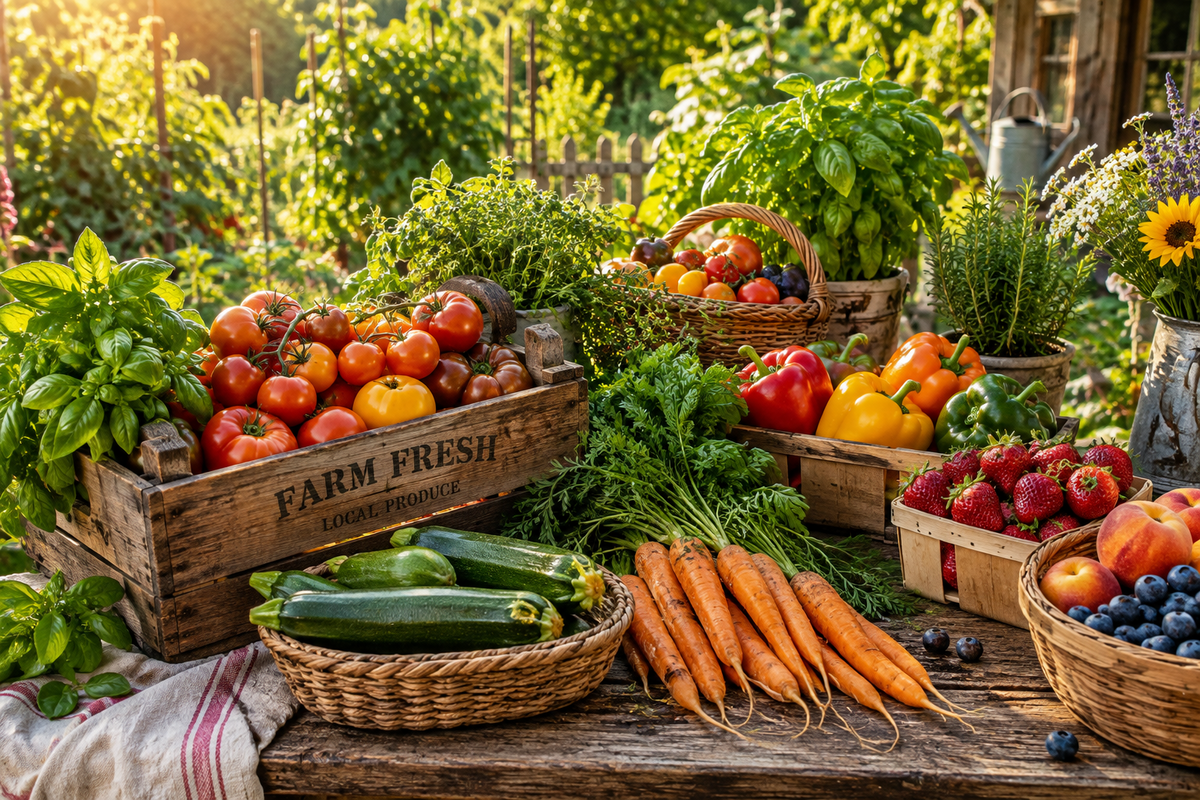
Families preserve food for all kinds of reasons.
You may want to waste less food. Save leftovers. Buy groceries in bulk when prices are low. Preserve produce from a garden. Make weeknight meals easier. Store seasonal foods. Prepare for emergencies. Or simply have more control over what your family eats.
There are also more ways to preserve food than you might realize.
Freezing, canning, dehydrating, fermenting, vacuum sealing, cool storage, and freeze drying can all be useful.
So which food preservation method is best for a family?
If you want one method that can preserve the widest variety of foods for the widest variety of uses, freeze drying is hard to beat.
Freeze drying can be used for fruits, vegetables, meat, eggs, dairy, leftovers, complete meals, snacks, garden produce, bulk purchases, and more. The finished food is lightweight, doesn't require refrigeration, and can often be eaten dry, rehydrated, or added directly to meals.
That doesn't mean every food needs to be freeze dried.
Freezing can be the easiest answer for tonight's leftovers. Canning makes sense for foods such as salsa or tomato sauce. Dehydrating is inexpensive and works particularly well for certain foods. Fermentation creates foods you can't make any other way. Some foods may simply need appropriate cool storage.
For many families, the best approach uses more than one method, with freeze drying providing the greatest versatility across the foods they preserve throughout the year.
The Short Answer
If you're trying to decide where to start:
-
Choose freeze drying if you want the greatest versatility across a wide variety of foods, especially if you preserve substantial amounts of food throughout the year or want longer-term shelf-stable storage.
-
Choose freezing if you want a simple, familiar way to preserve everyday foods and have adequate freezer space.
-
Choose canning for foods that can be safely processed using tested canning methods when shelf-stable storage is important.
-
Choose dehydrating when you want an affordable way to make lightweight dried foods, herbs, powders, snacks, fruit leather, or jerky.
-
Choose fermentation when you specifically want fermented foods and flavors.
-
Choose cool storage for suitable foods that naturally keep well without much processing.
And don't feel that you have to choose only one.
Your freezer might be perfect for food you'll eat next week, while your freeze dryer handles a bulk purchase, garden surplus, complete meals, or foods you want to keep much longer.

Which Sounds Most Like Your Family?
The best preservation method becomes easier to identify when you start with the problem you're trying to solve.
“We throw away too much food.”
If you're occasionally left with two extra portions of soup or chili, the simplest solution may be to put them in the freezer.
But if food waste is a regular problem, it may be worth thinking beyond individual leftovers.
Maybe produce goes bad before you use it. You cook more than your family eats. You buy a large package because it's less expensive per pound but don't finish it in time. Or your freezer is already full.
Freeze drying gives families another way to preserve food before it goes to waste, particularly when they don't expect to use it right away.
The goal isn't to use the most sophisticated preservation method every time.
It's to make sure good food gets eaten instead of thrown away.
“We buy food in bulk when it's on sale.”
Bulk buying can save money, but only if you actually use the food.
Buying 30 pounds of chicken at a great price isn't a bargain if part of it eventually gets freezer burned or discarded.
A sale only saves you money if you're able to use what you buy.
Families that shop sales or buy in bulk may freeze foods they'll use soon and freeze dry foods they want to keep much longer.
That can apply to:
-
Meat
-
Fruit
-
Vegetables
-
Eggs
-
Dairy
-
Prepared meals
-
Seasonal foods
Freeze drying can make it easier to take advantage of a good price without needing to eat everything quickly or find room for all of it in the freezer.
“We grow a garden.”
A productive garden can give you far more food than your family can eat fresh.
Different preservation methods still have their place. You may dehydrate herbs, can salsa, store onions and winter squash, or freeze vegetables you'll use relatively soon.
But freeze drying is especially useful for gardeners because of the wide variety of foods it can preserve.
Vegetables, fruit, berries, herbs, sauces, soups, and complete meals made with garden produce can all become part of what you preserve.
Related Learning Center guide: What Is the Best Way to Preserve Garden Vegetables?
“We have very little freezer space.”
Freezer capacity is easy to overlook when comparing preservation methods.
Frozen food requires freezer space for as long as it remains stored. A large garden harvest, bulk meat purchase, or several months of prepared meals can fill a freezer quickly.
Freeze-dried food doesn't require refrigeration after it has been dried and packaged for storage.
That allows you to reserve valuable freezer space for the foods you specifically want to keep frozen while moving other foods into shelf-stable storage.
For families that already have a full freezer, that can be a significant advantage.
“We want an emergency food supply.”
Emergency food storage creates different priorities than preserving next week's leftovers.
You may care more about:
-
Shelf stability
-
Storage life
-
Portability
-
Nutrition
-
Preparation
-
Storage without refrigeration
-
Food your family will actually eat
Freeze-dried food can be particularly useful because it's lightweight, shelf-stable, and can include many of the foods and meals your family already knows and likes.
Other shelf-stable foods can certainly be part of an emergency food supply too, including canned foods, dry staples, and dehydrated foods.
One important principle is easy to overlook:
Store foods your family will actually eat.
A long shelf life isn't very useful if nobody in your household wants the food.

“We want to preserve complete meals and leftovers.”
This is one area where freeze drying offers families a significant amount of flexibility.
Food preservation isn't only about individual foods such as tomatoes, green beans, apples, or meat.
Families eat meals.
That may include:
-
Soup
-
Chili
-
Casseroles
-
Pasta dishes
-
Cooked meat
-
Breakfast foods
-
Leftovers from dinner
Freezing is extremely convenient for many of these foods when you expect to eat them relatively soon.
Freeze drying gives you another option when you want suitable meals and leftovers to be shelf-stable and available much later.
It also lets you preserve foods your family already eats rather than building a food supply entirely around foods purchased specifically for storage.
Comparing Food Preservation Methods for Families
|
Method |
Upfront Cost |
Shelf-Stable |
Especially Useful For |
Main Tradeoff |
|
Freeze Drying |
High |
Yes, when completely dried and appropriately packaged |
Wide variety of foods, meals, bulk purchases, garden produce, longer-term storage |
Higher equipment cost and processing time |
|
Freezing |
Low if freezer already owned |
No |
Everyday foods, leftovers, meat, vegetables, meals |
Requires continuous freezer space and electricity |
|
Canning |
Low–Moderate |
Yes |
Sauces, salsa, fruits, vegetables, and foods with tested canning methods |
More labor-intensive and requires correct recipes and processing |
|
Dehydrating |
Low–Moderate |
Yes, when sufficiently dried and stored |
Herbs, fruits, vegetables, snacks, powders, jerky, fruit leather |
Changes texture and produces different results from fresh food |
|
Fermenting |
Low |
Depends on food and storage |
Foods intentionally preserved through fermentation |
Changes flavor and characteristics of food |
|
Cool Storage |
Very Low |
No refrigeration, but environment matters |
Suitable storage crops |
Limited to certain foods and conditions |
|
Vacuum Sealing |
Low–Moderate |
Not by itself |
Protecting food quality when combined with appropriate storage |
Does not make perishable food shelf-stable |
Each method has useful applications. What distinguishes freeze drying for families is the number of different foods and situations one method can handle.
Freezing: Often the Easiest Starting Point
For many families, freezing is the simplest preservation method.
It's familiar and works with a wide variety of foods, including:
-
Leftovers
-
Meat
-
Vegetables
-
Fruit
-
Bread
-
Sauces
-
Soups
-
Prepared meals
If you have freezer space and expect to use the food relatively soon, freezing may be all you need.
Its biggest limitation is that frozen food remains dependent on freezer space and continuous electricity.
As the amount of food you preserve grows, that limitation becomes more noticeable.
Canning: Useful for Specific Shelf-Stable Foods
Canning has been used for generations to preserve food without refrigeration.
It's particularly useful when you want a specific finished food such as salsa, tomato sauce, jam, or safely canned fruits and vegetables.
Canning also involves heat and can noticeably change the texture of some foods.
Food safety is critical. The correct canning method depends on the food being preserved, and low-acid foods require appropriate pressure-canning procedures. Always use current, research-tested recipes and processing instructions.
For foods that are well suited to canning, it can be an excellent addition to a family's preservation options.
Dehydrating: Affordable and Useful for Certain Foods
Dehydration is one of the more accessible ways to create shelf-stable foods at home.
It works especially well for:
-
Fruits
-
Herbs
-
Snacks
-
Fruit leather
-
Jerky
Removing water also reduces the weight and often the volume of food.
Dehydrating creates different results from freeze drying, and sometimes those differences are exactly what you want.
Fruit leather and beef jerky, for example, are products of dehydration rather than substitutes for freeze-dried fruit or meat.
If you mainly want to dry herbs or make jerky, an inexpensive dehydrator may be exactly the right tool.

Freeze Drying: The Most Versatile Option for Many Families
Freeze drying first freezes food and then removes frozen water primarily through sublimation under vacuum.
The finished food is very dry and lightweight.
But one of the biggest reasons freeze drying can be useful for families is simply how many different foods it can handle.
Depending on the food and preparation, families can freeze dry:
-
Fruits
-
Vegetables
-
Eggs
-
Leftovers
-
Complete meals
-
Snacks
-
Garden produce
-
Bulk grocery purchases
Freeze-dried foods can often be eaten dry, rehydrated, added directly to recipes, or used as part of complete meals.
And unlike a freezer, a freeze dryer doesn't require the finished food to remain refrigerated once it has been dried and packaged for storage.
The equipment does cost more upfront than many other home-preservation tools, and batches require electricity and time.
But the value of that investment changes significantly depending on how much food you preserve and how often you use it.
A freeze dryer doesn't have to be equipment you pull out once a year during garden season. It can be used throughout the year for grocery purchases, meals, leftovers, snacks, bulk foods, and more.
That's where its versatility becomes especially valuable for families.
Vacuum Sealing: Useful, but Not a Preservation Method by Itself
Vacuum sealing deserves special clarification because it's frequently misunderstood.
Removing air from a package can help protect food quality and complement other storage methods.
But vacuum sealing alone does not make perishable foods shelf-stable.
A vacuum-sealed piece of raw meat still requires appropriate refrigeration or freezing.
Vacuum sealing is better thought of as a packaging and storage tool that can complement preservation methods rather than a replacement for freezing, canning, dehydrating, or freeze drying.
What About Nutrition?
Families understandably want preservation methods that retain as much nutritional value as possible.
There isn't one preservation method that always retains the most nutrients in every food.
Different nutrients respond differently to heat, oxygen, light, water, processing, and storage.
Freezing generally preserves nutrients well.
Freeze drying can also retain many qualities of the original food because moisture removal occurs differently from conventional heat drying.
Canning uses heat and can reduce some heat-sensitive nutrients, although canned foods can still provide significant nutritional value.
Dehydration can affect nutrients differently depending on the food and drying conditions.
Related Learning Center guide: Does Freeze Drying Remove Nutrients?
What About Cost?
Freeze drying has a higher upfront cost than most other home food-preservation methods.
If you already own a freezer, freezing may require little additional equipment. A basic dehydrator can be relatively inexpensive. Canning equipment can also have a comparatively low upfront cost.
A home freeze dryer is a larger investment.
But equipment price isn't the entire calculation.
A family can use a freeze dryer to preserve food that might otherwise go to waste, take advantage of sales, buy larger quantities when prices are good, and preserve foods they might otherwise purchase already prepared or freeze dried.
That can include:
-
Meat bought on sale
-
Bulk grocery purchases
-
Seasonal fruit and vegetables
-
Garden produce
-
Leftovers
-
Extra portions of meals
-
Snacks
-
Camping and backpacking meals
-
Pet treats
Buying something in bulk or on sale only saves money if your family eventually uses it.
Freeze drying gives you more time to do that.
Over years of regular use, the value of food preserved instead of wasted, along with foods purchased at good prices instead of later at higher prices, can help offset the initial cost of the freeze dryer.
The more food a family preserves and the more consistently the freeze dryer is used, the greater the opportunity for that initial investment to pay you back over time.
What Is the Best Food Preservation Approach for a Family?
For many families, the most practical answer is still a combination.
Imagine a household that gardens, buys groceries in bulk, cooks most meals at home, and wants some emergency food storage.
They might use:
Refrigerator:
Food they'll eat soon.
Freezer:
Meat, bread, vegetables, leftovers, and meals intended for relatively near-term use.
Pantry:
Commercially shelf-stable foods and safely home-canned foods.
Dehydrator:
Herbs, fruit leather, jerky, and foods they specifically want dehydrated.
Cool storage:
Onions, winter squash, potatoes, and other suitable crops.
Freeze dryer:
Garden produce, bulk purchases, meat, eggs, dairy, leftovers, complete meals, snacks, and foods they want shelf-stable for longer-term use.
These methods don't have to compete with one another.
But freeze drying can cover more of those categories than any of the other individual methods.
Six Questions to Ask Before Choosing a Preservation Method
1. What foods does our family actually eat?
Don't preserve food simply because you can.
Preserve food your family will actually use.
2. How long do we want to store it?
Food for next month and food you want available much later may call for different preservation methods.
3. Do we need it to be shelf-stable?
If not, freezing may be all you need.
If freezer space is limited or longer-term shelf-stable storage is important, freeze drying, canning, dehydrating, or another shelf-stable method may make more sense depending on the food.
4. How much food do we preserve every year?
Volume changes the economics.
A family preserving a few pounds of seasonal produce is making a different decision from one preserving a large garden, bulk grocery purchases, meat, leftovers, and meals throughout the year.
5. How much storage space do we have?
Consider freezer space, pantry shelves, jars, bags, buckets, and other storage requirements.
6. What are we trying to accomplish?
Reducing waste?
Saving money?
Preserving a garden?
Taking advantage of bulk prices?
Making meals easier?
Preparing for emergencies?
Creating longer-term food storage?
Once the goal is clear, the best preservation method usually becomes easier to identify.
So, Which Food Preservation Method Is Best for Your Family?
If your family wants one preservation method that can handle the widest variety of foods and uses, freeze drying is hard to beat.
It can preserve garden produce, bulk grocery purchases, meat, eggs, dairy, leftovers, complete meals, snacks, and foods for longer-term storage.
The finished food doesn't require freezer space and can often be eaten dry, rehydrated, or added directly to meals.
That doesn't mean you need to stop freezing tonight's leftover soup, canning salsa, dehydrating herbs, making jerky, or storing winter squash.
Use those methods where they make sense.
But for families that preserve food regularly and want one appliance they can use throughout the year for many different purposes, freeze drying offers a level of versatility that's difficult to match with any other single preservation method.
Frequently Asked Questions
What is the easiest food preservation method for beginners?
For many families, freezing is the easiest place to start because most households already own a freezer and the process is familiar. If you want to preserve larger quantities, reduce dependence on freezer space, or create longer-term shelf-stable food, you may want to consider additional preservation methods.
What is the cheapest way to preserve food?
Using equipment you already own is usually the least expensive place to start. Freezing, appropriate cool storage, and simple dehydration can have relatively low upfront costs. But long-term cost also depends on how much food you preserve, food waste prevented, electricity, packaging, and how frequently you use the equipment.
What is the best preservation method for long-term food storage?
Freeze drying can be particularly useful for longer-term storage because it works with a wide variety of foods and creates lightweight, shelf-stable food when the food is completely dried and packaged appropriately. Canning, dehydrating, dry-food storage, and commercially packaged shelf-stable foods can also be part of a family's long-term food supply.
Is freeze drying worth it for a family?
It depends on how much food your household preserves and how often you'll use the freeze dryer. Families that preserve large garden harvests, buy food in bulk, preserve leftovers and meals, or maintain longer-term food storage have more opportunities to get value from a home freeze dryer.
Is canning better than freeze drying?
Canning may be the better choice for specific foods such as salsa, tomato sauce, or other foods you specifically want canned. It also has a much lower upfront equipment cost. Freeze drying can preserve a much broader variety of foods and is particularly useful when versatility, lightweight food, rehydration, and longer-term shelf-stable storage are priorities.
Can I use more than one food preservation method?
Absolutely. Most families don't need to choose only one. You can freeze foods you'll use soon, can foods that make sense canned, dehydrate foods you specifically want dried, and use a freeze dryer for the broad range of foods you want to preserve for later.
Share:
Does Freeze Drying Kill Bacteria? Food Safety Explained