

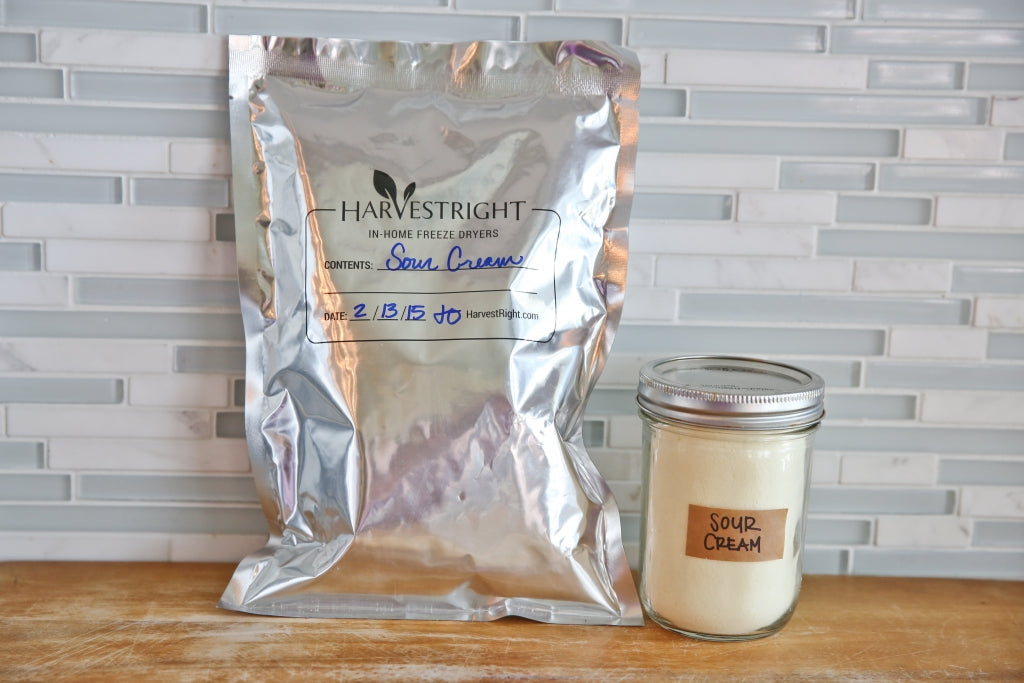
So verpacken Sie gefriergetrocknete Lebensmittel für die Langzeitlagerung
Die Gefriertrocknung ist nicht erst nach Abschluss des Zyklus beendet. Eine sachgemäße Verpackung schützt Ihre Lebensmittel vor Feuchtigkeit, Sauerstoff, Licht und Umwelteinflüssen, die die Qualität im Laufe der Zeit beeinträchtigen können.
Eine gute Verpackung schützt die Arbeit, die Sie bereits in die Zubereitung und Gefriertrocknung Ihrer Lebensmittel gesteckt haben. Die Wahl einer geeigneten Verpackung, eine deutliche Kennzeichnung und die Lagerung unter den richtigen Bedingungen tragen dazu bei, die Qualität zu erhalten, bis Sie die Lebensmittel genießen möchten.
Dieser Leitfaden erläutert die Grundprinzipien der Verpackung von gefriergetrockneten Lebensmitteln und gibt praktische Tipps, die Ihnen helfen sollen, gute Aufbewahrungsgewohnheiten zu entwickeln.

Kurze Antwort
So verpacken Sie gefriergetrocknete Lebensmittel für die Langzeitlagerung:
Vergewissern Sie sich, dass die Lebensmittel vollständig getrocknet sind.
Verpacken Sie es umgehend, um den Kontakt mit Luft und Feuchtigkeit zu minimieren.
Wählen Sie eine Verpackung, die Ihren Lagerungsanforderungen entspricht.
Beschriften Sie jedes Paket deutlich.
Bewahren Sie verpackte Lebensmittel an einem kühlen, trockenen Ort auf.
Jeder dieser Schritte trägt dazu bei, die Lebensmittel nach Abschluss des Gefriertrocknungsprozesses zu schützen.
Stellen Sie sich vor, Sie verbringen Stunden damit, Essen zuzubereiten, es sorgfältig gefriertrocknen zu lassen und es dann unbedeckt auf der Küchenarbeitsplatte liegen zu lassen.
Es würde nicht lange dauern, bis die Umgebung beginnt, die Qualität zu beeinträchtigen.
Gefriergetrocknete Lebensmittel nehmen leicht Feuchtigkeit aus der Umgebungsluft auf, weshalb die richtige Verpackung einer der wichtigsten Faktoren für eine erfolgreiche Langzeitlagerung ist.
Schritt 1: Vergewissern Sie sich, dass das Essen fertig ist
Vergewissern Sie sich vor dem Verpacken, dass der Gefriertrocknungsvorgang abgeschlossen ist und die Lebensmittel zur Lagerung bereit sind.
Da verschiedene Lebensmittel unterschiedliche Trocknungszeiten erfordern können, sollten Sie den Vorgang nicht überstürzen.
Das Verpacken von Lebensmitteln, bevor sie vollständig getrocknet sind, kann die Qualität bei der Langzeitlagerung beeinträchtigen.
Wenn Sie sich nicht sicher sind, lesen Sie bitte die Anleitung von Harvest Right zur Beurteilung des Trocknungsgrades vor dem Verpacken.
Tipp für die richtige Ernte
Entwickeln Sie nach jeder Charge eine einfache Routine. Vergewissern Sie sich, dass die Speisen fertig sind, legen Sie Ihre Verpackungsmaterialien bereit, bevor Sie die Maschine öffnen, und verpacken Sie die Speisen kurz nach Abschluss des Garvorgangs.
Schritt 2: Lebensmittel umgehend verpacken
Gefriergetrocknete Lebensmittel kommen von Natur aus mit der Umgebungsluft in Kontakt, sobald sie aus der Maschine genommen werden.
Je länger Lebensmittel offen liegen, desto größer ist die Gefahr, dass Feuchtigkeit und Luftfeuchtigkeit sie beeinträchtigen.
Wenn Sie Ihre Materialien bereits vor dem Entladen der Tabletts bereithalten, geht der Vorgang schneller von der Hand und trägt dazu bei, unnötigen Kontakt zu minimieren.
Lassen Sie die Schalen während der Vorbereitung Ihrer Verpackungsmaterialien nicht länger als nötig unbedeckt stehen.
Tipp für die richtige Ernte
Legen Sie Ihre Beutel, Gläser, Etiketten, Sauerstoffabsorber und Verschlussutensilien bereit, bevor Sie den Gefriertrockner öffnen. Wenn Sie alles bereitstehen haben, können Sie die Zeit verkürzen, in der die Lebensmittel der Luft ausgesetzt sind.
Schritt 3: Wählen Sie eine Verpackung, die Ihren Anforderungen entspricht
Es gibt keine einzige perfekte Aufbewahrungslösung, die für jede Situation geeignet ist.
Die beste Wahl hängt davon ab, wie Sie die Lebensmittel verwenden möchten.
Manche Leute verpacken:
Einzelportionen
Mahlzeiten in Familiengröße
Zutaten für das Rezept
Notvorräte an Lebensmitteln
Mahlzeiten beim Camping
Grundnahrungsmittel für die Vorratskammer
Mylar-Beutel, Einmachgläser, vakuumversiegelte Behälter und andere Verpackungsmethoden bieten je nach Ihren Lagerungszielen unterschiedliche Vorteile. Wenn Sie Mylar-Beutel verwenden, wählen Sie einen hochwertigen Beutel, der für die langfristige Lagerung von Lebensmitteln ausgelegt ist. Wir werden diese Verpackungsmöglichkeiten sowie ihre Vorteile und optimalen Anwendungsbereiche in speziellen Ratgebern näher beleuchten.
Die richtige Verpackung ist die, die zu Ihrer tatsächlichen Verwendung der Lebensmittel passt.
Tipp für die richtige Ernte
Wenn Sie Sauerstoffabsorber verwenden, halten Sie Ihre Beutel bereit, bevor Sie die Verpackung öffnen. Sobald die Verpackung geöffnet ist, beginnen die Sauerstoffabsorber sofort zu wirken. Verschließen Sie nicht verwendete Absorber so schnell wie möglich wieder in einem luftdichten Behälter oder Beutel, damit ihre Wirksamkeit für den späteren Gebrauch erhalten bleibt.

Schritt 4: Jedes Paket beschriften
Es kann überraschend schwierig sein, sich noch nach mehreren Monaten daran zu erinnern, was in einem Paket enthalten war.
Deutliche Etiketten sorgen für Ordnung in Ihrer Vorratskammer.
Erwägen Sie, Folgendes aufzunehmen:
Name des Lebensmittels
Verpackungsdatum
Portionsgröße
Anmerkungen zur Vorbereitung (falls hilfreich)
Chargennummer (optional)
Ein paar Sekunden, die man für die Beschriftung aufwendet, können später viel Verwirrung ersparen.
Tipp für die richtige Ernte
Richten Sie für jede Charge ein einheitliches Beschriftungssystem ein. Ganz gleich, ob Sie handgeschriebene oder gedruckte Etiketten verwenden – durch Einheitlichkeit lassen sich Ihre Vorratsregale leichter organisieren und die Mahlzeitenplanung vereinfachen.
Schritt 5: Lebensmittel unter den richtigen Bedingungen lagern
Wo man Lebensmittel aufbewahrt, ist genauso wichtig wie die Art und Weise, wie man sie verpackt.
Suchen Sie generell nach einem Lagerort, der folgende Eigenschaften aufweist:
Cool
Trocken
Sauber
Vor direkter Sonneneinstrahlung geschützt
Übersichtlich und leicht zugänglich
Vermeiden Sie Orte, an denen sich Temperatur oder Luftfeuchtigkeit häufig ändern, wie beispielsweise Garagen, Schuppen oder feuchte Kellerräume.
Eine gut organisierte Vorratskammer erleichtert zudem den Verzehr der Lebensmittel und hilft dabei, das Gesuchte schnell zu finden.
Tipp für die richtige Ernte
Wenn Sie Lebensmittel in Mylar-Beuteln aufbewahren, sollten Sie die verschlossenen Beutel in stabilen Tragekörben oder Aufbewahrungsbehältern verstauen. Diese sorgen für Ordnung in Ihrem Vorratsbereich und bieten gleichzeitig zusätzlichen Schutz vor Schädlingen, versehentlichen Beschädigungen und allgemeiner Abnutzung während der Lagerung. Ein weiterer Vorteil ist, dass sich die Lebensmittel mit Hilfe der Tragekörbe bei Bedarf leichter bewegen oder transportieren lassen.
So organisieren Sie Ihre Vorratskammer für den Erfolg
Je größer Ihre Sammlung wird, desto wichtiger wird es, sie gut zu organisieren.
Viele Menschen ordnen ihre Sachen nach folgenden Kriterien:
Lebensmittelkategorie
Art der Mahlzeit
Verpackungsdatum
Lieblingsgerichte der ganzen Familie
Notfallvorräte
Bewahren Sie Lebensmittel, die Sie regelmäßig verbrauchen, möglichst getrennt von Ihren langfristigen Notvorräten auf.
Egal, für welches System Sie sich entscheiden: Durch ein einheitliches System lässt sich Ihre Vorratskammer leichter organisieren.

Denken Sie über die reine Lagerung hinaus
Bei Verpackungen geht es nicht nur um die Konservierung.
Es geht auch um Bequemlichkeit.
Stellen Sie sich vor, Sie öffnen Ihre Speisekammer und finden dort:
Ein komplettes Taco-Abendessen
Ein fertiges Smoothie-Set zum Mixen
Bereits portionierte Suppenzutaten
Einzelpackungen mit Obstsnacks
Campingmahlzeiten, nach Tagen verpackt
Eine durchdachte Verpackung kann das tägliche Kochen genauso bequem machen wie die langfristige Lagerung.
Bei einer guten Verpackung geht es nicht nur darum, Lebensmittel haltbar zu machen – sie soll auch dazu beitragen, dass man sie später leichter genießen kann.
Fazit
Die Verpackung ist einer der wichtigsten Schritte für eine erfolgreiche Lebensmittelkonservierung.
Eine zeitnahe Verpackung, eine eindeutige Kennzeichnung, eine durchdachte Organisation und geeignete Lagerbedingungen tragen dazu bei, die Qualität von gefriergetrockneten Lebensmitteln nach Abschluss des Trocknungsvorgangs zu gewährleisten.
Wenn man sich schon heute gute Gewohnheiten beim Verpacken aneignet, können zukünftige Mahlzeiten einfacher, besser organisiert und angenehmer werden.
Das Wichtigste auf einen Blick
Die Verpackung ist Teil des Konservierungsprozesses – und kein nachträglicher Einfall.
Vergewissern Sie sich, dass die Lebensmittel vor dem Verpacken vollständig trocken sind.
Verpacken Sie die Lebensmittel kurz nach dem Gefriertrocknen.
Wählen Sie die Verpackung entsprechend der Art und Weise, wie Sie die Lebensmittel verwenden werden.
Beschriften Sie jedes Paket deutlich.
Bewahren Sie Lebensmittel an einem kühlen, trockenen und übersichtlichen Ort auf.
Häufig gestellte Fragen
Warum sollte ich Lebensmittel kurz nach dem Gefriertrocknen verpacken?
Durch eine umgehende Verpackung lässt sich die Zeit verkürzen, in der Lebensmittel Feuchtigkeit und der Umgebungsluft ausgesetzt sind.
Welche Angaben sollte ich auf das Etikett schreiben?
Viele Menschen geben den Namen des Lebensmittels, das Verpackungsdatum und die Portionsgröße an. Manche fügen außerdem Zubereitungshinweise oder Angaben zur Charge hinzu.
Soll ich Mahlzeiten oder Zutaten verpacken?
Beide Vorgehensweisen können gut funktionieren. Überlegen Sie sich, wie Sie die Lebensmittel später verwenden möchten, und verpacken Sie sie entsprechend.
Ist die Organisation der Vorratskammer wichtig?
Ja. Ein einheitliches Ordnungssystem erleichtert das Auffinden von Lebensmitteln, den Lagerumschlag und die Mahlzeitenplanung.
Warum ist der Lagerort wichtig?
Umgebungsbedingungen wie Hitze, Feuchtigkeit und Licht können die Qualität von Lebensmitteln im Laufe der Zeit beeinträchtigen. Die Wahl eines geeigneten Lagerortes trägt dazu bei, Ihre konservierten Lebensmittel zu schützen.
Kann ich alles auf die gleiche Weise verpacken?
Nicht unbedingt. Je nach Lebensmittel und Verwendungszweck sind unterschiedliche Verpackungsmethoden angebracht. Wählen Sie die Methode, die am besten zu Ihrer Verwendung des Lebensmittels passt.
Schützen Sie das Ergebnis Ihrer harten Arbeit
Jede Charge gefriergetrockneter Lebensmittel stellt eine Investition an Zeit, Zutaten und Aufwand dar. Eine ordnungsgemäße Verpackung sorgt dafür, dass sich diese Investition über Jahre hinweg auszahlt.
Durch die Wahl der richtigen Verpackungsmaterialien, den Einsatz von Sauerstoffabsorbern, das sorgfältige Verschließen von Lebensmitteln und die Lagerung unter geeigneten Bedingungen können Sie die Qualität Ihres Obsts, Gemüses, Ihrer Fertiggerichte und Ihrer Lieblingsrezepte langfristig erhalten.
Ganz gleich, ob Sie sich auf Notfälle vorbereiten, die Ernte aus dem Garten konservieren oder einfach nur die tägliche Essensplanung erleichtern möchten – eine durchdachte Verpackung ist der letzte Schritt, der dazu beiträgt, dass Ihre Lebensmittel frisch bleiben und jederzeit griffbereit sind, wenn Sie sie brauchen.
Teilen:
Gefriertrocknung und Rehydrierung eines kompletten Nudelgerichts
25 einzigartige Lebensmittel, die man gefriertrocknen kann