

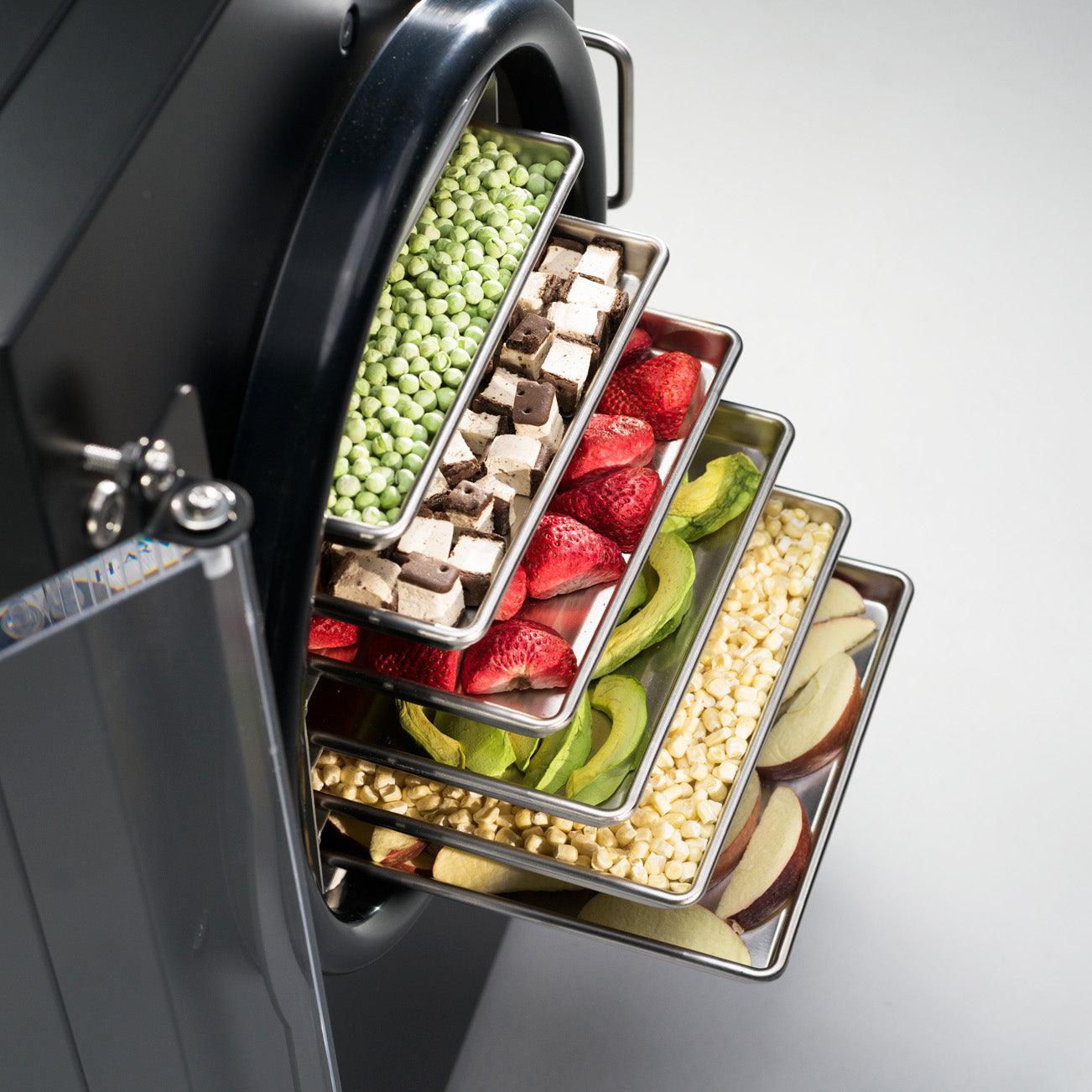
Die Gefriertrocknung ist ein einzigartiges Konservierungsverfahren, bei dem Lebensmitteln Feuchtigkeit entzogen wird, während sie gefroren bleiben. Im Gegensatz zu herkömmlichen Trocknungsmethoden, bei denen Wasser durch Hitze verdampft wird, nutzt die Gefriertrocknung eine sorgfältig kontrollierte Kombination aus Gefrieren, Unterdruck und sanfter Energie, um das Eis durch einen Prozess zu entfernen, der als Sublimation.
Obwohl die wissenschaftlichen Grundlagen der Gefriertrocknung komplex sind, ist das Verständnis des grundlegenden Verfahrens überraschend einfach. Wenn Sie wissen, wie die Gefriertrocknung funktioniert, können Sie Lebensmittel besser vorbereiten, verstehen, warum sich verschiedene Lebensmittel unterschiedlich verhalten, und gleichmäßigere Ergebnisse erzielen.
In diesem Leitfaden gehen wir die einzelnen Phasen des Gefriertrocknungsprozesses durch und erläutern, warum jeder Schritt wichtig ist.
Kurze Antwort
Die Gefriertrocknung erfolgt in drei Hauptschritten:
Die Lebensmittel sind gefroren.
Im Inneren des Gefriertrockners wird ein Vakuum erzeugt.
Das gefrorene Wasser wird durch Sublimation entfernt, wobei sich das Eis direkt in Wasserdampf umwandelt, anstatt zu flüssigem Wasser zu schmelzen.
Da beim Gefriertrocknen die Feuchtigkeit entzogen wird, während die Lebensmittel während eines Großteils des Prozesses gefroren bleiben, trägt dieses Verfahren dazu bei, viele Lebensmittel für die spätere Lagerung und Verwendung zu konservieren.
Auf den ersten Blick klingt Gefriertrocknung fast unmöglich.
Wie können Tiefkühlprodukte Wasser verlieren, ohne vorher aufzutauen?
Die Antwort liegt in der Wissenschaft von Druck und Temperatur.
Durch die sorgfältige Steuerung beider Faktoren schafft ein Gefriertrockner Bedingungen, unter denen Eis direkt in Wasserdampf übergehen kann. Dieser Prozess ermöglicht es, dass Feuchtigkeit aus den Lebensmitteln entweicht, während gleichzeitig ein Großteil ihrer ursprünglichen Struktur erhalten bleibt.
Auch wenn die Technologie im Inneren eines Gefriertrockners hochentwickelt ist, kann das Verständnis der grundlegenden Schritte jedem helfen zu verstehen, warum die Gefriertrocknung zu anderen Ergebnissen führt als die Dehydrierung oder das herkömmliche Einfrieren.
Schritt 1: Einfrieren der Lebensmittel
Jeder Gefriertrocknungszyklus beginnt mit dem Einfrieren der Lebensmittel.
Durch das Einfrieren verwandelt sich das Wasser im Inneren der Lebensmittel in Eis, wodurch sie für den nächsten Schritt des Verfahrens vorbereitet werden.
Dieser Schritt ist wichtig, da beim Gefriertrocknen gefrorenes Wasser und nicht flüssiges Wasser entfernt wird.
Verschiedene Lebensmittel gefrieren je nach Feuchtigkeitsgehalt, Dichte und Zusammensetzung unterschiedlich, doch das Ziel bleibt dasselbe: ein stabiles Tiefkühlprodukt herzustellen, bevor mit dem Entzug der Feuchtigkeit begonnen wird.
Tipp für die richtige Ernte
Bei vielen Lebensmitteln kann das Zerschneiden der Stücke in gleich große Stücke vor dem Gefriertrocknen dazu beitragen, gleichmäßigere Chargen zu erhalten. Gleichmäßige Stücke gefrieren und trocknen in der Regel gleichmäßiger, was die Verpackung nach Abschluss des Vorgangs erleichtert.
Schritt 2: Erzeugen eines Vakuums
Sobald die Lebensmittel gefroren sind, erzeugt der Gefriertrockner eine Unterdruckumgebung.
Wenn man den Druck senkt, verändert sich das Verhalten des Wassers.
Anstatt zuerst zu schmelzen, kann das gefrorene Wasser unter den richtigen Bedingungen direkt vom festen Zustand (Eis) in den gasförmigen Zustand (Wasserdampf) übergehen.
Gerade diese kontrollierte Umgebung unterscheidet die Gefriertrocknung grundlegend von anderen Konservierungsmethoden.
Phase 3: Sublimation
Die Sublimation ist das Herzstück der Gefriertrocknung.
Anstatt zu flüssigem Wasser zu schmelzen, verwandelt sich das Eis im Inneren der Lebensmittel direkt in Wasserdampf.
Wenn der Dampf aus den Lebensmitteln entweicht, bleibt deren Gesamtstruktur weitgehend intakt.
Dies ist ein Grund dafür, dass gefriergetrocknete Lebensmittel oft ihre ursprüngliche Form behalten und sich gut rehydrieren lassen, wenn später wieder Wasser hinzugefügt wird.
Auch wenn „Sublimation“ kompliziert klingen mag, ist es doch lediglich die wissenschaftliche Bezeichnung für diesen direkten Übergang von Eis zu Dampf.
Warum ist die Feuchtigkeitsentfernung so wichtig?
Feuchtigkeit spielt eine wichtige Rolle beim Verderben von Lebensmitteln.
Viele der natürlichen Prozesse, die die Lebensmittelqualität beeinflussen, hängen vom Vorhandensein von Wasser ab.
Durch die Entfernung des größten Teils der Feuchtigkeit schafft die Gefriertrocknung Bedingungen, die eine langfristige Lagerung ermöglichen, sofern die Lebensmittel ordnungsgemäß verpackt und gelagert werden.
Man sollte nicht vergessen, dass die Gefriertrocknung nur ein Teil einer erfolgreichen Lebensmittelkonservierung ist. Auch die Verpackung, die Lagerbedingungen und der Umgang mit den Lebensmitteln beeinflussen die Qualität der konservierten Lebensmittel im Laufe der Zeit.
Wie lange dauert die Gefriertrocknung?
Die Antwort hängt von mehreren Faktoren ab, darunter:
Die Art der Lebensmittel
Die darin enthaltene Feuchtigkeitsmenge
Die Größe der Stücke
Die erhaltene Größe
Manche Lebensmittel benötigen naturgemäß längere Zyklen als andere.
Anstatt den Fokus auf die Geschwindigkeit zu legen, ist es besser, darauf zu achten, dass der Vorgang vollständig abgeschlossen wird, damit die Lebensmittel vor dem Verpacken richtig getrocknet sind.
Tipp für die richtige Ernte
Geduld ist eines der wertvollsten Hilfsmittel bei der Gefriertrocknung. Wenn man einen Zyklus vollständig ablaufen lässt, stellt man sicher, dass die Lebensmittel ordnungsgemäß getrocknet sind, bevor sie zur Lagerung verpackt werden.
Warum sich verschiedene Lebensmittel unterschiedlich verhalten
Kein Lebensmittel gleicht dem anderen.
Eine Erdbeere verhält sich anders als gekochter Reis.
Hähnchen verhält sich anders als Joghurt.
Lebensmittel unterscheiden sich hinsichtlich ihres Feuchtigkeitsgehalts, ihrer Dichte, ihres Fettgehalts, ihres Zuckergehalts und ihrer Struktur.
Das Verständnis dieser Unterschiede hilft zu erklären, warum die Zubereitungsmethoden und Trocknungszeiten von Lebensmittel zu Lebensmittel variieren können.
Mit zunehmender Erfahrung werden Sie erkennen, wie unterschiedlich verschiedene Lebensmittel während des Gefriertrocknungsprozesses reagieren.
Bei der Gefriertrocknung werden Gefrieren, Vakuum und Sublimation kombiniert, um Lebensmitteln Feuchtigkeit zu entziehen und gleichzeitig ihre Struktur zu erhalten.
Obwohl die Technologie hinter diesem Verfahren hochentwickelt ist, sind die Grundprinzipien leicht zu verstehen.
Wenn man versteht, wie die Gefriertrocknung funktioniert, schafft man eine solide Grundlage für die Zubereitung von Lebensmitteln, das Verständnis der unterschiedlichen Ergebnisse und gewinnt mit jeder Charge mehr Selbstvertrauen.
Das Wichtigste auf einen Blick
Die Gefriertrocknung beginnt mit dem Einfrieren der Lebensmittel.
Ein Vakuum schafft Bedingungen, unter denen sich Eis in Wasserdampf verwandeln kann.
Durch Sublimation wird Feuchtigkeit entzogen, ohne dass das Eis zuvor schmilzt.
Verschiedene Lebensmittel erfordern unterschiedliche Trocknungszeiten und Zubereitungsarten.
Auch nach Abschluss des Trocknungsprozesses sind eine ordnungsgemäße Verpackung und Lagerung nach wie vor unerlässlich.
Häufig gestellte Fragen
Was ist Sublimation?
Sublimation ist der Vorgang, bei dem sich Eis direkt in Wasserdampf umwandelt, ohne zuvor in flüssiges Wasser überzugehen. Dies ist der entscheidende Vorgang, der die Gefriertrocknung ermöglicht.
Werden die Lebensmittel beim Gefriertrocknen gegart?
Nein. Die Gefriertrocknung ist ein Konservierungsverfahren und keine Garmethode. Lebensmittel sollten vor der Gefriertrocknung entsprechend zubereitet werden, wenn sie aus Sicherheits- oder Qualitätsgründen gegart werden müssen.
Warum ist ein Vakuum notwendig?
Das Vakuum erzeugt die für einen effizienten Sublimationsprozess erforderliche Unterdruckumgebung.
Warum dauert das Gefriertrocknen bei manchen Lebensmitteln länger?
Feuchtigkeitsgehalt, Dichte, Portionsgröße und Zusammensetzung der Lebensmittel beeinflussen die Trocknungszeit.
Lassen sich alle Lebensmittel auf die gleiche Weise gefriertrocknen?
Nein. Verschiedene Lebensmittel erfordern oft unterschiedliche Zubereitungsmethoden und können sich während des Trocknungsprozesses unterschiedlich verhalten.
Warum werden gefriergetrocknete Lebensmittel so leicht?
Dem Lebensmittel wurde der größte Teil des Wassers entzogen, wodurch sein Gewicht deutlich reduziert wurde, während ein Großteil seiner Struktur erhalten blieb.
Teilen:
So funktioniert ein Gefriertrockner von Harvest Right tatsächlich
Häufige Mythen über Gefriertrocknung und Dehydrierung