

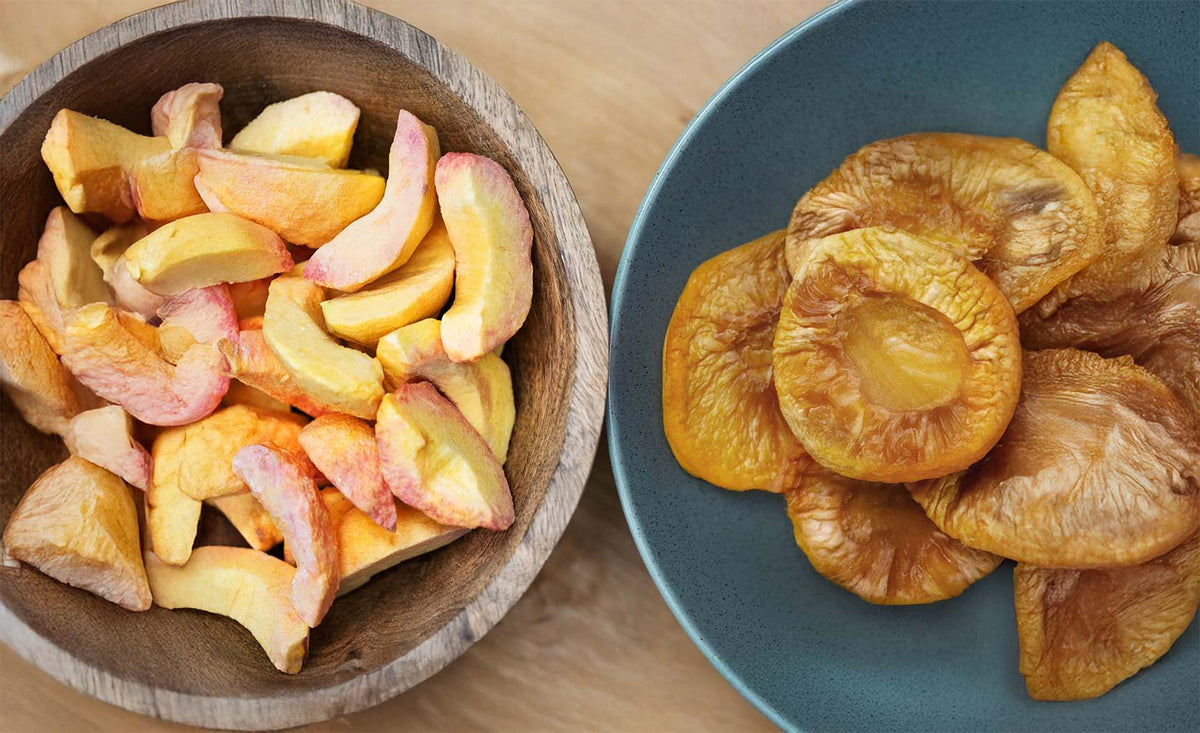
Gefriertrocknung vs. Dehydrierung: Welche Methode zur Lebensmittelkonservierung ist die beste?
Wenn Sie nach der besten Methode zur Konservierung von Lebensmitteln suchen, haben Sie sich wahrscheinlich dieselbe Frage gestellt, die sich viele Hobbygärtner, Outdoor-Fans und Familien stellen:
Soll ich meine Lebensmittel gefriertrocknen oder dehydrieren?
Beide Methoden tragen dazu bei, die Haltbarkeit von Lebensmitteln zu verlängern, Abfall zu reduzieren und es einfacher zu machen, saisonale Zutaten das ganze Jahr über zu genießen. Sie funktionieren jedoch auf sehr unterschiedliche Weise und führen zu unterschiedlichen Ergebnissen.
Wenn Sie diese Unterschiede verstehen, können Sie die für Ihre Ziele passende Konservierungsmethode auswählen – ganz gleich, ob Sie eine Notvorratskammer anlegen, die Ernte aus Ihrem Garten einmachen, Mahlzeiten für den Campingurlaub zubereiten oder einfach nur beim Lebensmitteleinkauf Geld sparen möchten.
In diesem Leitfaden vergleichen wir die Gefriertrocknung und die Dehydrierung direkt miteinander und erläutern, wie die jeweiligen Methoden funktionieren, welche Vor- und Nachteile sie haben und welche Lebensmittel sich am besten für die jeweilige Methode eignen.
Was ist Gefriertrocknung?
Die Gefriertrocknung ist ein Konservierungsverfahren, bei dem gefrorenen Lebensmitteln mithilfe eines Vakuums Feuchtigkeit entzogen wird. Anstatt zu flüssigem Wasser zu schmelzen, geht das Eis im Inneren der Lebensmittel durch einen als Sublimation bezeichneten Prozess direkt in Dampf über.
Da die Lebensmittel während des größten Teils des Prozesses gefroren bleiben, trägt die Gefriertrocknung dazu bei, Folgendes zu erhalten:
- Form
- Textur
- Geschmack
- Aroma
- Farbe
- Ein Großteil des ursprünglichen Nährwerts
Das Ergebnis sind leichte, lange haltbare Lebensmittel, die sich bei Zugabe von Wasser bemerkenswert gut rehydrieren lassen.
Was ist Dehydrieren?
Beim Dörren werden Lebensmittel konserviert, indem warme Luft um sie herum zirkuliert, um die Feuchtigkeit durch Verdunstung zu entziehen.
Dieses Verfahren wird seit Jahrhunderten zur Konservierung von Lebensmitteln wie beispielsweise folgenden angewendet:
- Äpfel
- Bananen
- Kräuter
- Trockenfleisch
- Tomaten
- Paprika
Zwar ist das Trocknen ein einfaches und wirksames Verfahren, doch die dabei entstehende Hitze verändert die Konsistenz und kann den Geschmack und das Aussehen einiger Lebensmittel beeinträchtigen.
Gefriertrocknung vs. Dehydrierung auf einen Blick
| Funktion | Gefriertrocknung | Trocknen |
|---|---|---|
| Feuchtigkeit entfernt | Bis zu etwa 98–99 % | In der Regel 80–95 % (je nach Lebensmittel) |
| Haltbarkeit | Bis zu 25 Jahre oder länger, wenn das Produkt ordnungsgemäß verpackt und gelagert wird | Häufig 1–15 Jahre, je nach Lebensmittel und Lagerbedingungen |
| Textur | Leicht, knackig, luftig | Zäh, ledrig oder fest |
| Geschmack | Fast wie frisch | Oft stärker konzentriert oder gekocht |
| Rehydrierung | Hervorragend | Gut, aber die Textur kehrt möglicherweise nicht vollständig zurück |
| Ernährung | Behält einen Großteil des ursprünglichen Nährwerts bei | Einige hitzeempfindliche Nährstoffe können beim Trocknen abnehmen |
| Gewicht | Extrem leicht | Leicht |
| Ausrüstungskosten | Höhere Anfangsinvestition | Geringere Anfangsinvestition |
Vergleich der Haltbarkeitsdauer
Einer der größten Unterschiede zwischen den beiden Methoden besteht darin, wie lange Lebensmittel haltbar sind.
Wenn sie ordnungsgemäß gefriergetrocknet, mit Sauerstoffabsorbern verpackt und an einem kühlen, trockenen Ort gelagert werden, sind viele Lebensmittel jahrzehntelang haltbar.
Getrocknete Lebensmittel lassen sich ebenfalls gut lagern, sind jedoch in der Regel weniger lange haltbar, da sie mehr Feuchtigkeit enthalten, was ihre langfristige Haltbarkeit beeinträchtigen kann.
Fettreiche Lebensmittel bilden hier eine Ausnahme. Da Fette mit der Zeit oxidieren können, sind Lebensmittel wie Käse, Speck, Butter, Erdnussbutter und Lachs in der Regel unabhängig von der Konservierungsmethode weniger lange haltbar.
Geschmack und Konsistenz
Hier bemerken die Menschen oft den größten Unterschied.

Gefriergetrocknete Lebensmittel
Gefriergetrocknete Lebensmittel behalten einen Großteil ihrer ursprünglichen Form und haben oft eine leichte, knusprige Konsistenz, wenn man sie trocken isst.
Beispiele hierfür sind:
- Erdbeeren
- Mais
- Erbsen
- Äpfel
- Joghurt-Bonbons
Viele Menschen genießen diese Lebensmittel, ohne sie vorher wieder mit Wasser zu befeuchten.
Trockenprodukte
Getrocknete Lebensmittel neigen dazu, … zu werden:
- Zäh
- Dicht
- Flexibel
- Lederartig
Diese Konsistenz eignet sich besonders gut für Lebensmittel wie:
- Trockenfleisch
- Getrocknete Mango
- Apfelringe
- Fruchtleder
Keine der beiden Konsistenzen ist grundsätzlich besser – es kommt darauf an, wie Sie das Lebensmittel verwenden möchten.
Ernährung
Sowohl das Gefriertrocknen als auch das Dehydrieren sind hervorragende Alternativen dazu, frische Lebensmittel verderben zu lassen, und beide Verfahren können einen Großteil des Nährwerts der Lebensmittel erhalten.
Da beim Gefriertrocknen sehr niedrige Temperaturen zum Einsatz kommen, bleiben hitzeempfindliche Nährstoffe in der Regel besser erhalten als bei der herkömmlichen Heißlufttrocknung. Die genauen Unterschiede im Nährstoffgehalt hängen von der jeweiligen Lebensmittelart und dem Trocknungsverfahren ab.
Keine Konservierungsmethode kommt frischen Lebensmitteln ganz gleich, doch beide können eine wichtige Rolle in einer gesunden Ernährung spielen.
Welche Lebensmittel eignen sich am besten für die Gefriertrocknung?
Das Gefriertrocknen eignet sich besonders gut für Lebensmittel, deren ursprüngliche Form, Geschmack und Konsistenz erhalten bleiben sollen.
Zu den beliebtesten Optionen gehören:
Obst
- Erdbeeren
- Heidelbeeren
- Ananas
- Äpfel
- Pfirsiche
- Mango
Gemüse
- Mais
- Erbsen
- Grüne Bohnen
- Spargel
- Brokkoli
- Paprika
Milchprodukte
- Joghurt
- Hüttenkäse
- Geriebener Käse
Vollwertige Mahlzeiten
- Chili
- Nudeln
- Suppen
- Eintöpfe
- Frühstücksaufläufe
Desserts
- Eiscreme-Sandwiches
- Käsekuchen
- Joghurt-Bonbons
- Marshmallows
Welche Lebensmittel eignen sich am besten zum Dörren?
Das Trocknen eignet sich hervorragend für Lebensmittel, die von Natur aus eine zähe Konsistenz haben oder nicht wieder ihre ursprüngliche Konsistenz annehmen müssen.
Beispiele hierfür sind:
- Trockenfleisch
- Fruchtleder
- Kräuter
- Apple-Chips
- Bananenchips
- Getrocknete Tomaten
- Pilze
- Zitrusscheiben
Mit welcher Methode lässt sich mehr Geld sparen?
Die Antwort hängt davon ab, wie man es einsetzt.
Ein Dörrgerät ist in der Anschaffung meist günstiger und eignet sich hervorragend zum Konservieren von Kräutern, Obstscheiben und Trockenfleisch.
Ein Gefriertrockner für den Hausgebrauch erfordert zwar eine höhere Anfangsinvestition, bietet aber mehr Flexibilität, da sich damit eine viel größere Vielfalt an Lebensmitteln konservieren lässt, darunter komplette Mahlzeiten, Milchprodukte, gekochtes Fleisch, Essensreste und Zutaten, die sich nicht gut trocknen lassen.
Viele Familien stellen fest, dass sich regelmäßige Maßnahmen – wie das Einmachen von Gartenernten, der Einkauf von Lebensmitteln in Großpackungen, die Reduzierung von Abfall und die Zubereitung hausgemachter Fertiggerichte – langfristig als sinnvoll erweisen.

Welche Methode eignet sich besser für die Notfallvorsorge?
Für die langfristige Lagerung von Notvorräten ist die Gefriertrocknung in der Regel die bevorzugte Methode, da dabei mehr Feuchtigkeit entzogen wird und die Lebensmittel bei korrekter Verpackung deutlich länger haltbar sind.
Gefriergetrocknete Lebensmittel nehmen beim Aufbereiten zudem wieder eine Textur an, die ihrer ursprünglichen sehr nahekommt, wodurch sie sich gut für vollständige Mahlzeiten und die tägliche Zubereitung von Speisen eignen.
Trockenprodukte können nach wie vor eine wichtige Rolle bei der Notfallvorsorge spielen, insbesondere bei Lebensmitteln wie Kräutern, Obst und Trockenfleisch.
Welche Methode eignet sich besser für Camping und Rucksacktouren?
Beide Methoden haben ihre Vorteile.
Entscheiden Sie sich für die Gefriertrocknung, wenn Sie Folgendes möchten:
- Leichte Fertiggerichte
- Schnelle Rehydrierung
- Große Vielfalt an Zutaten
- Selbstgemachte Mahlzeiten für Rucksacktouren
Wählen Sie die Option „Trocknen“, wenn Sie möchten:
- Snacks für unterwegs
- Trockenfleisch
- Fruchtleder
- Getrocknete Kräuter und Gewürze
Viele Outdoor-Fans nutzen je nach den zuzubereitenden Speisen beide Methoden.
Häufig gestellte Fragen
Ist Gefriertrocknung besser als Dehydrierung?
Keine der beiden Methoden ist grundsätzlich besser. Die Gefriertrocknung bietet in der Regel eine längere Haltbarkeit, eine bessere Rehydrierung und größere Vielseitigkeit, während das Trocknen kostengünstiger ist und sich gut für viele Obst- und Gemüsesorten, Kräuter und Fleisch eignet.
Sind gefriergetrocknete Lebensmittel länger haltbar?
In vielen Fällen ja. Richtig verpackte gefriergetrocknete Lebensmittel sind in der Regel länger haltbar als dehydrierte Lebensmittel, da sie weniger Restfeuchtigkeit enthalten.
Was bewahrt mehr Nährstoffe?
Beide Verfahren bewahren einen Großteil des Nährwerts der Lebensmittel, doch beim Gefriertrocknen bleiben im Allgemeinen mehr hitzeempfindliche Nährstoffe erhalten, da dabei niedrige Temperaturen anstelle von warmer Umluft zum Einsatz kommen.
Kann ich Lebensmittel gefriertrocknen, die sich nicht dehydrieren lassen?
Ja. Lebensmittel wie Joghurt, Hüttenkäse, Fertiggerichte, gekochte Eier und viele Milchprodukte werden häufig gefriergetrocknet, lassen sich jedoch mit herkömmlichen Trocknungsverfahren in der Regel nicht so gut konservieren.
Sollte ich mir beide zulegen?
Viele, die zu Hause Lebensmittel konservieren, tun dies. Ein Dörrgerät eignet sich hervorragend für Trockenfleisch, Kräuter, Fruchtleder und bestimmte Obstsorten, während ein Gefriertrockner viel mehr Flexibilität bei der Konservierung von kompletten Mahlzeiten, Milchprodukten, Gemüse, Obst und Essensresten bietet.
Welche Methode ist die richtige für Sie?
Die beste Methode zur Lebensmittelkonservierung hängt von Ihren Zielen ab.
Wenn Sie nach einer kostengünstigen Möglichkeit suchen, Trockenfleisch herzustellen, Kräuter zu trocknen oder zähe Fruchtsnacks zuzubereiten, ist ein Dörrgerät eine ausgezeichnete Wahl.
Wenn Sie ganze Mahlzeiten konservieren, Lebensmittelverschwendung reduzieren, einen langfristigen Vorrat an Lebensmitteln anlegen oder Lebensmittel genießen möchten, die nach dem Aufbereiten einen hervorragenden Geschmack und eine ausgezeichnete Konsistenz aufweisen, bietet die Gefriertrocknung Möglichkeiten, mit denen herkömmliche Trocknungsverfahren nicht mithalten können.
Viele Familien stellen fest, dass sich die beiden Methoden gut ergänzen. Ein Dörrgerät eignet sich ideal für bestimmte Lebensmittel, während ein Harvest Right-Gefriertrockner die Möglichkeit bietet, eine noch größere Vielfalt an Zutaten, Gerichten und Rezepten haltbar zu machen – so können Sie das ganze Jahr über mehr von den Lebensmitteln genießen, die Sie lieben.
Teilen:
Wie man durch Gefriertrocknung Geld spart
Warum Sie sich für die Gefriertrocknung entscheiden sollten