

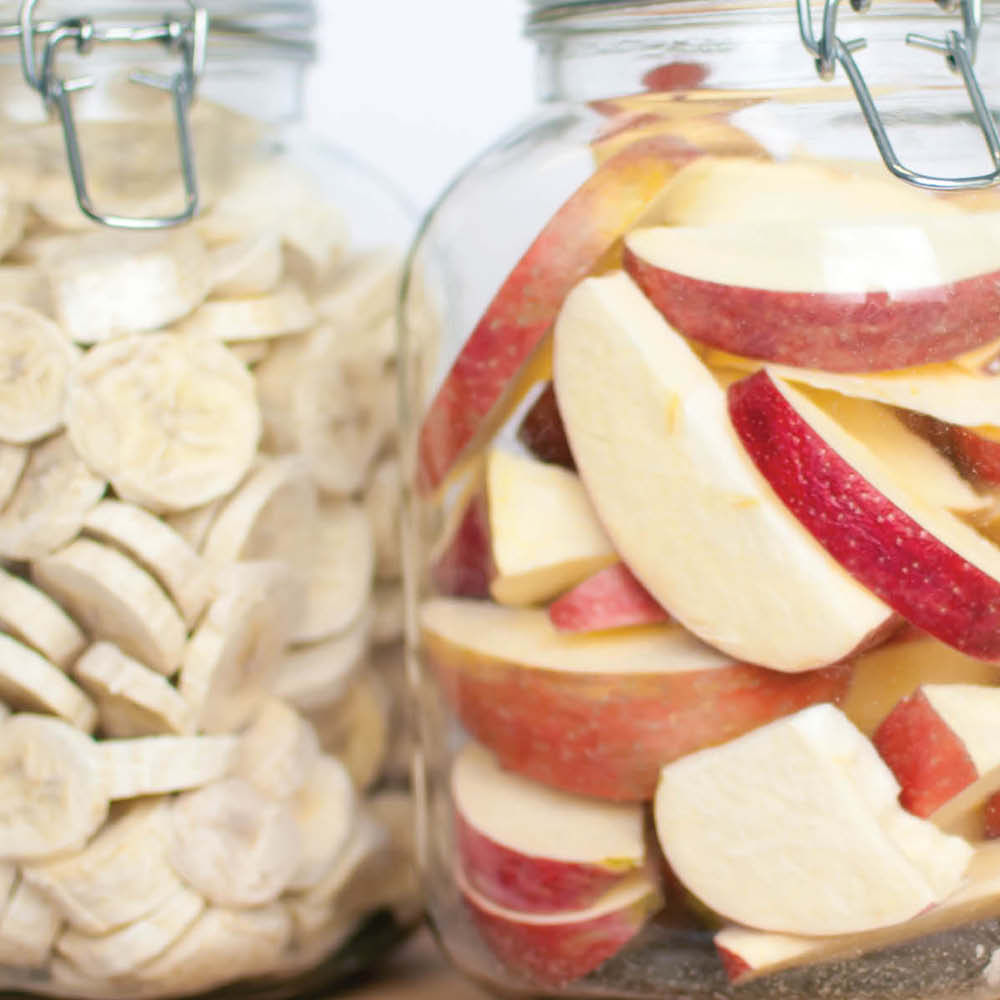
Every March 11th, Johnny Appleseed Day celebrates John Chapman, the real person behind the legend, who spent decades planting apple orchards across the American frontier.
From Root Cellars to Freeze Dryers
Before modern preservation, keeping apples required a root cellar — a cool, dark, dry space where apples could last a few extra weeks at best. Canning and dehydrating came later and extended that window further, though the heat involved in both methods does reduce some heat-sensitive nutrients along the way.
Freeze-drying skips the heat problem entirely. Freeze-dried apples keep essentially the same nutritional profile as fresh apples and, properly stored, can last up to 25 years — a dramatic upgrade from a few weeks in a root cellar.
Ways to Use Freeze-Dried Apples
A few favorite ways to put freeze-dried apples to use:
- As a crunchy, better-for-you snack straight out of the bag
- Added to smoothies, oatmeal, cereal, or yogurt
- Baked into pies, cobblers, and muffins
- Ground into powder for extra apple flavor in other recipes
More on Freeze-Drying Apples
Freeze drying apples has more on texture, flavor retention, and additional ways to enjoy them year-round. Healthy bran muffins with powdered freeze-dried apples is a good next read if the powder idea appeals to you.
Frequently Asked Questions
When is Johnny Appleseed Day?
March 11th, honoring John Chapman, the real historical figure behind the Johnny Appleseed legend.
Do freeze-dried apples retain their nutrition?
Yes — freeze-drying avoids the heat used in canning and dehydrating, so freeze-dried apples keep essentially the same nutritional profile as fresh apples.
How long do freeze-dried apples last in storage?
Properly packaged, freeze-dried apples can last up to 25 years.
What are some ways to use freeze-dried apples?
As a snack, mixed into smoothies or oatmeal, baked into pies and muffins, or ground into powder for baking and recipes.
Share:
Why Milk Is Worth Freeze-Drying at Home
Why Milk Is Worth Freeze-Drying at Home