

A heavy backpack is one of the fastest ways to ruin a hiking trip. There's no single formula for the perfect pack weight, but a commonly cited starting guideline is that a loaded multi-day backpacking pack shouldn't exceed about 20% of your body weight, and a day-hiking pack shouldn't exceed about 10%. For a 150-pound hiker, that works out to roughly 30 pounds or less for a multi-day trip and 15 pounds or less for a day hike. It's a rough baseline, not a hard rule, but it's a useful place to start trimming from.
1. Replace Old Gear With Lighter Gear
Weigh what you're currently carrying. Outdoor gear gets lighter almost every year, so if budget allows, start by replacing your heaviest few items with modern, lighter equivalents — that's often where the biggest single weight savings come from.
2. Cut What You Don't Actually Need
Go through your pack item by item and ask whether each one earns its weight. Extra clothing "just in case," duplicate tools, and comfort items that never get used are easy, no-cost weight to drop.
3. Repackage and Share the Load
A full-size tube of toothpaste doesn't make sense for a weekend trip — repackage toiletries and consumables into smaller containers sized for the actual trip length. If you're hiking with others, split shared gear like a map, cookware, or a tent across the group instead of everyone carrying their own.
4. Pack for the Actual Weather
Choose gear and clothing suited to the season and conditions you'll actually face. Layering is both lighter and more effective than one bulky coat or sweater, since you can add or remove layers as conditions change through the day.
5. Pack Freeze-Dried Food
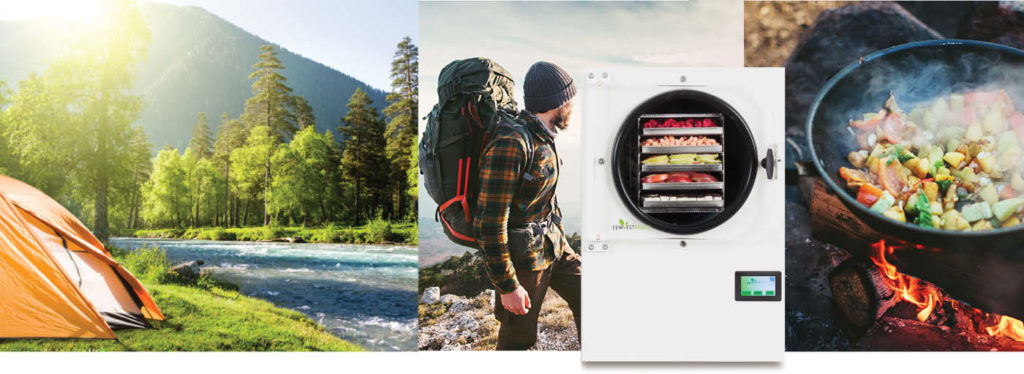
This is usually the single biggest weight win available. Swapping canned stew or boxed mac and cheese for freeze-dried meals cuts a meaningful amount of weight immediately. Store-bought freeze-dried meals tend to run higher in sodium and preservatives than homemade, which can sit less well after a long day on the trail. Freeze-drying your own meals at home with a Harvest Right lets you control exactly what goes in — genuinely useful if you're managing food allergies or dietary restrictions — while still getting food that's dramatically lighter than its fresh or canned equivalent.
More on Lightening Your Load
8 ways to lighten your camping load extends this same thinking to camping gear beyond just food.
Frequently Asked Questions
How heavy should a backpacking pack be?
A commonly cited guideline is about 20% of your body weight for a multi-day pack and about 10% for a day-hiking pack — for a 150-pound hiker, that's roughly 30 pounds or 15 pounds, respectively. It's a starting baseline, not a strict rule.
What's the single easiest way to cut backpack weight?
Swapping canned or boxed food for freeze-dried meals usually produces the biggest weight reduction of any single change, especially compared to canned goods or bulky boxed meals.
Is homemade freeze-dried food better than store-bought for hiking?
It can be lighter on sodium and preservatives since you control the ingredients, and it lets you tailor meals around food allergies or dietary needs in a way pre-made commercial options don't.
Share:
Did Astronauts Really Eat Freeze-Dried Ice Cream?
Can You Freeze-Dry a Water-Damaged Book?