

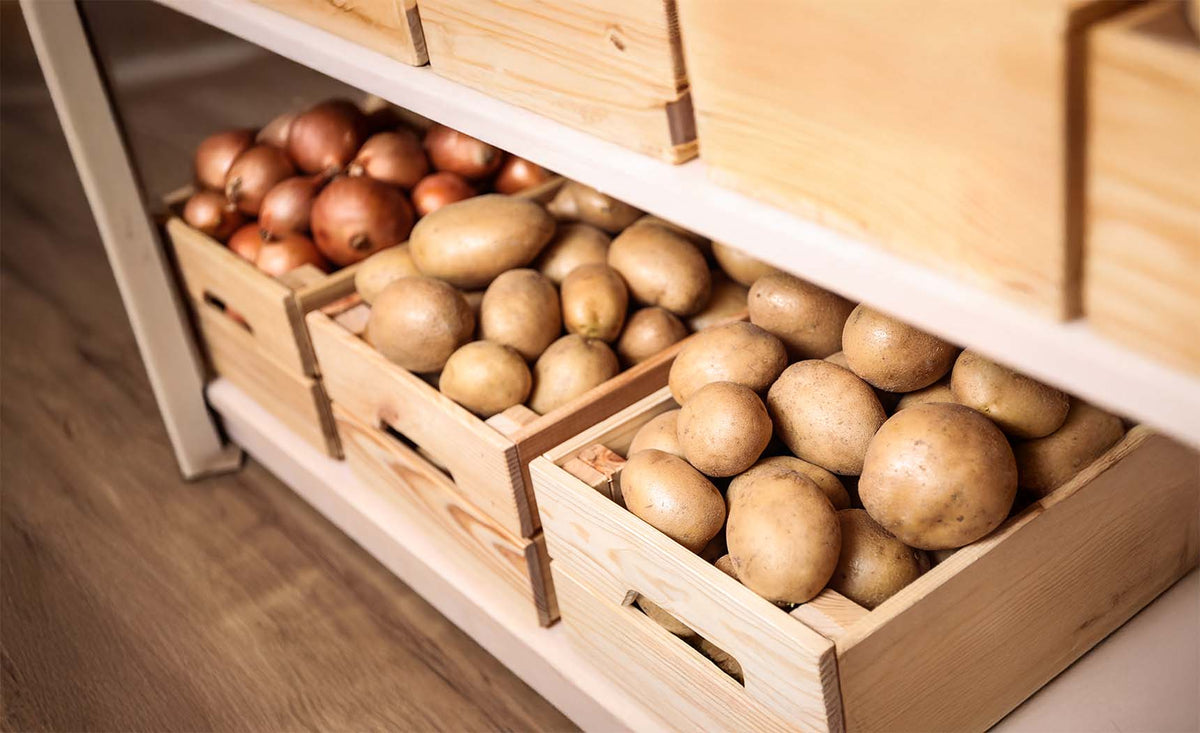
Most root vegetables don't actually belong in the refrigerator crisper drawer — the humidity in there causes rot, and storing different root vegetables together can affect each other's flavor. Here's how to store the most common ones properly, vegetable by vegetable.
Potatoes
Store in a ventilated container — even a sturdy cardboard box with holes poked in the sides works. Cover with newspaper to block out light, since exposure to light is what causes potatoes to turn green. Keep the temperature consistently low and steady.

Onions
Keep onions separate from other produce, in a mesh bag or open basket, somewhere low-light and cool. A wicker basket with a lid and a dispensing hole at the bottom is a nice option if you want to rotate stock without letting light or humidity in every time you grab one.
Garlic
Garlic keeps longest away from other root vegetables, in total darkness, somewhere cool. A ventilated terra cotta container works well — enough airflow to prevent moisture buildup without exposing it to light.
Squash
High humidity causes squash to decay quickly, so keep it cool, dark, and at a constant temperature. Squash tolerates slightly warmer conditions than potatoes or onions — up to about 60°F — but quality drops off above that.
Carrots
Carrots are the most forgiving of the group and can actually stay in the crisper drawer for months, as long as the humidity setting is at its lowest. Store them in gallon bags with the air pressed out, one layer per bag, rather than piled together.
Choosing a Storage Container
Wicker, natural fiber, and ventilated metal containers all work well for root vegetable storage. Avoid older wooden bins (common from the 1970s and 80s) that don't allow enough airflow — modern perforated metal drawers are a good, if less rustic, substitute if you can't find a well-ventilated natural-fiber option.

When You've Got More Than You Can Store Fresh
Good storage buys you weeks to months, but if you're working through a bulk buy or a big harvest, freeze-drying is what extends it from there — preserving your garden harvest covers which root vegetables (potatoes included) hold up well to freeze-drying, and storing freeze-dried food picks up once it's dried and ready to shelve long-term.
Frequently Asked Questions
Should potatoes and onions be stored in the refrigerator?
No — the humidity in a refrigerator's crisper drawer promotes rot in most root vegetables. Potatoes, onions, and garlic all do better in a cool, dry, well-ventilated spot outside the fridge.
Why do potatoes turn green in storage?
Light exposure causes it. Covering stored potatoes with newspaper or keeping them in an opaque, ventilated container prevents it.
Is it okay to store carrots in the refrigerator?
Yes — carrots are the exception here and store well in the crisper drawer for months, as long as the humidity setting is at its lowest and they're bagged with the air removed.
What's the best container for storing onions and garlic?
Ventilated, opaque containers — a mesh bag or basket for onions, and a ventilated terra cotta container for garlic — kept somewhere cool and dark.
Share:
How Freeze-Drying Can Improve Your Quality of Life
What to Freeze-Dry Now to Save for Winter (or Eat Today)