

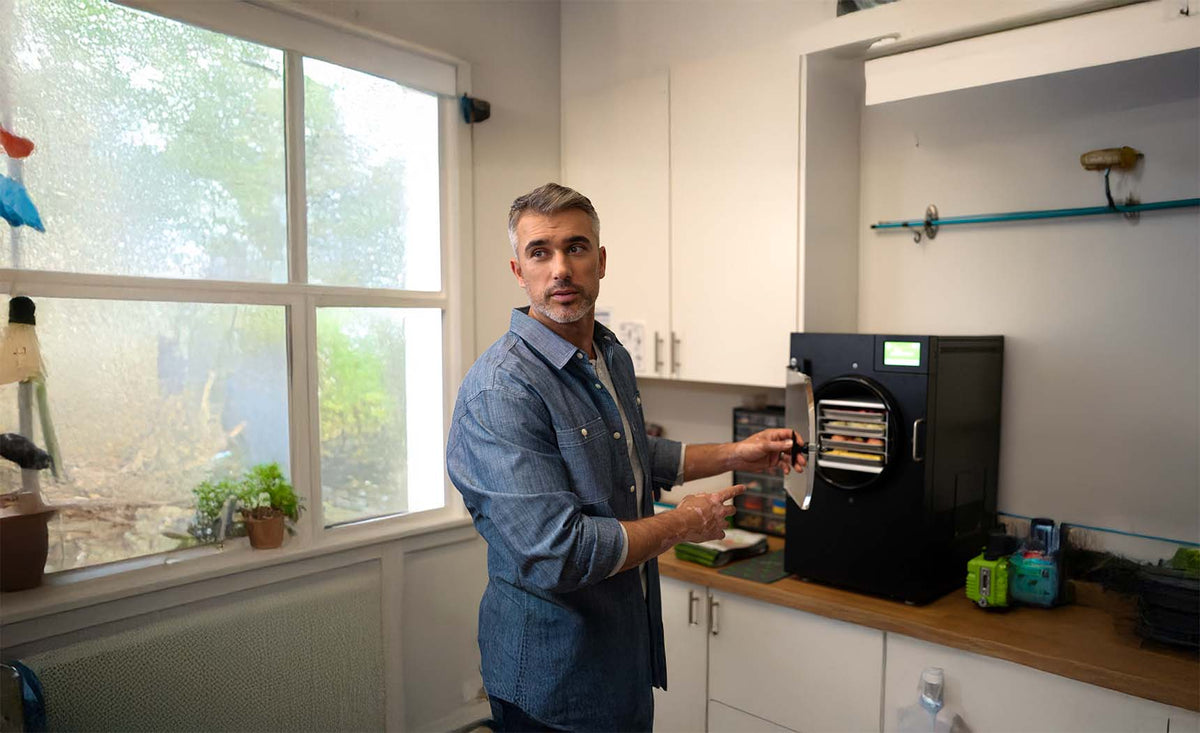
A home freeze dryer preserves food by removing nearly all of its moisture without using heat — which is why freeze-dried food keeps its original shape, color, and much of its flavor and nutrition, and why it rehydrates back to something close to fresh. The process breaks down into three stages.
1. Freezing
The food is frozen solid first, right in the machine. This step matters because it's what allows the next stage — sublimation — to work at all.
2. Vacuum Drying (Sublimation)
Under a strong vacuum, the machine gently warms the frozen food just enough for the ice inside it to turn directly into vapor, skipping the liquid stage entirely. That vapor is pulled away and condensed elsewhere in the machine. Because the food never re-enters a liquid state, it keeps its structure instead of collapsing or turning mushy the way heat-dehydrated or frozen-then-thawed food often does.
3. Packaging for Long-Term Storage
Once the cycle finishes, what's left is dry, lightweight, and shelf-stable — but only if it's packaged correctly afterward. Freeze-dried food is still highly attracted to moisture in the air, so it needs to go into an airtight container (mylar bags with oxygen absorbers, or vacuum-sealed jars) fairly soon after drying. How to package freeze-dried food so it keeps for 25 years covers that step in detail.
Where to Go From Here
If you're deciding whether home freeze-drying is worth it, or you just got a machine and aren't sure where to start, new to home freeze-drying: tips for beginners is the more detailed starting point — it walks through the practical side (what to run first, what to expect) that this overview doesn't. And if you're wondering what's actually worth freeze-drying, 4 unique foods you can freeze dry and foods you can freeze dry are both good next reads.
Frequently Asked Questions
What are the three stages of home freeze-drying?
Freezing the food solid, vacuum drying (where ice turns directly to vapor without melting), and then packaging the finished product airtight for long-term storage.
Why does freeze-dried food keep its shape better than dehydrated food?
Because the ice inside it sublimates directly to vapor under vacuum instead of melting first — the food's structure never collapses the way it can with heat-based dehydrating.
Does freeze-dried food need special packaging?
Yes — it's still moisture-attracting even after drying, so it needs an airtight container like a mylar bag with an oxygen absorber or a vacuum-sealed jar soon after the cycle finishes to actually reach its long shelf life.
How long does freeze-dried food last if packaged correctly?
Properly packaged freeze-dried food can last up to 25 years in storage, depending on the food type and packaging method.
Share:
Freeze-Drying Sour Cream (and Other Dairy) at Home
How to Freeze-Dry Zucchini for Year-Round Use