

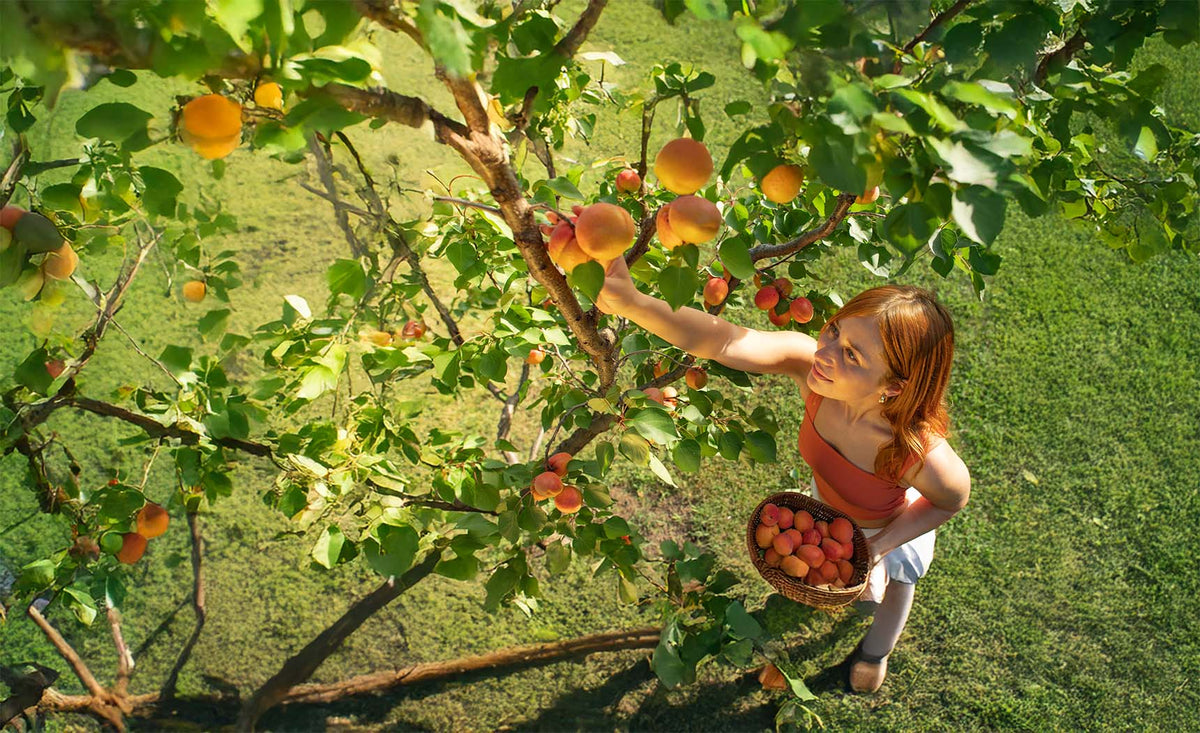
If you live somewhere like Hawaii, fruit trees are almost an afterthought — plant one and it thrives outdoors year-round. Most of the country needs to be more deliberate about it, choosing dwarf or cold-hardy varieties that actually match their climate zone. Here's what tends to work where, by USDA hardiness zone.
(Not sure which zone you're in? Zones can vary even within a single state, so it's worth checking the USDA's zone map for your specific location rather than going by state alone.)
Zones 7–9 (Warmer, Southern Climates)
This is the most flexible range for fruit trees. Dwarf nectarines, apricots, cherries, peaches, figs, and almonds all do well here, along with berries and nearly every variety of grape. Bananas and avocados are generally still not realistic outside of truly tropical or subtropical spots.
Zone 6
Certain dwarf peach, cherry, and apricot varieties can work here, and apple trees do particularly well. Grapes and berries are also reliable — good news if you're planning to freeze-dry some of the harvest into fruit leather later.
Zone 5
Dwarf peaches and nectarines are more limited, but hardy seedless grapes and nearly every kind of berry do well, along with cherries and a range of apple varieties.
Zone 4
Peach trees become a stretch this far north, but cherries, berries, and apples are all realistic outdoor options. This is also where growing citrus indoors, in containers, starts to make more sense than trying to push an outdoor tree past its limits.

Indoor Citrus (Any Zone)
A few compact citrus varieties do well in containers regardless of your outdoor zone:
- Meyer lemon — needs good humidity and drainage indoors.
- Trovita orange — a compact variety that can bud indoors before moving outside to finish ripening.
- Kaffir lime — the zest is a staple in Thai cooking, especially curry pastes.
- Oro Blanco grapefruit — a compact plant that produces sweet, white-fleshed fruit.
Once You've Got a Harvest
Whatever you're able to grow, freeze-drying is one of the better ways to make a good fruit year stretch further — into granola, trail mix, or just as a shelf-stable snack, plus freeze-dried fruit holds its color well enough for wreaths and other crafts if you want to use some of it decoratively. Growing fruits in your garden year-round goes deeper on the growing side, preserving your garden harvest covers what to do with a bigger harvest generally, and rehydrating freeze-dried fruits and vegetables picks up once you've actually freeze-dried what you grew.
Frequently Asked Questions
What fruit trees grow best in colder climates (zone 4-5)?
Cherries, berries, and cold-hardy apple varieties are the most reliable outdoor options; peaches and nectarines become more limited to specific dwarf varieties as zones get colder.
Can you grow citrus trees if you don't live in a warm climate?
Yes — compact varieties like Meyer lemon, Trovita orange, Kaffir lime, and Oro Blanco grapefruit can be grown indoors in containers regardless of your outdoor hardiness zone.
What should I do with a large fruit harvest?
Freeze-drying is one of the most practical ways to preserve a big fruit harvest — it holds up well in granola, trail mix, and snacking, and lasts far longer than fresh or even frozen fruit.
How do I find out what hardiness zone I live in?
Check the USDA's plant hardiness zone map for your specific location — zones can vary even within a single state, so it's more accurate than going by state or region alone.
Share:
Average U.S. Grocery Budgets: Where Do You Land?
Average U.S. Grocery Budgets: Where Do You Land?