

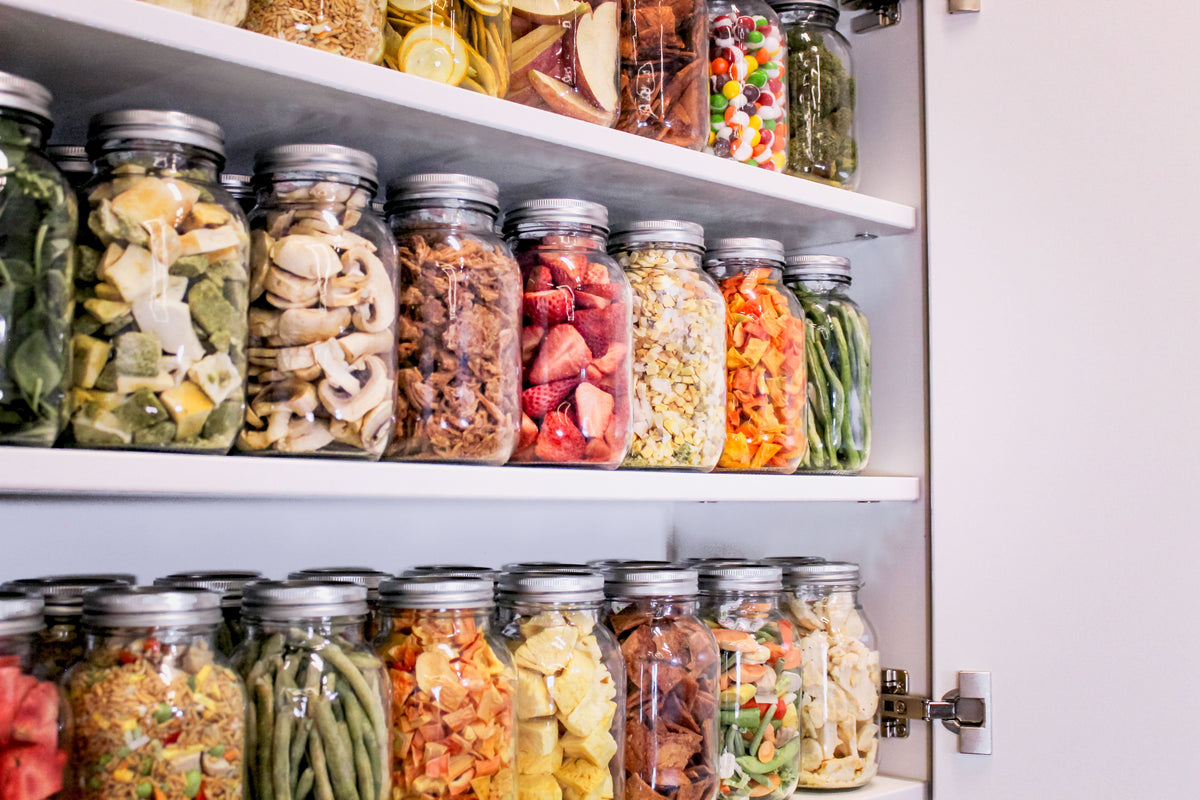
Store-bought freeze-dried food is convenient, but it comes at a real premium compared to freeze-drying the same food yourself. Home freeze-drying can cost as little as one-fifth as much, which works out to roughly $20 to $50 in savings on every #10 (gallon-sized) can equivalent you make instead of buy.
It's Not Just Cheaper — It's More Your Own
Cost is only part of the case. Freeze-drying at home also means you're not limited to whatever a commercial emergency-food brand happens to offer. You can freeze-dry your own favorite meals, meats, fruits, vegetables, dairy, eggs, and desserts — food you and your family actually like to eat, made with ingredients you choose, rather than a pre-set menu of shelf-stable products.
Where to Go Deeper
How fast does a freeze dryer pay for itself? breaks down a real cost test with specific breakeven timelines based on how often you use the machine, and is it cheaper to freeze-dry eggs at home or buy them freeze-dried? narrows the comparison down to one specific food if you want a more concrete, single-product example.
Frequently Asked Questions
Is it cheaper to freeze-dry food at home than to buy it freeze-dried?
Yes — home freeze-drying can cost as little as one-fifth as much as store-bought freeze-dried food, roughly $20 to $50 in savings per #10 can equivalent.
What's the advantage of home freeze-drying beyond cost?
Full control over ingredients and essentially unlimited variety — you can freeze-dry your own favorite meals, meats, fruits, vegetables, dairy, eggs, and desserts rather than choosing from a fixed commercial product lineup.
Is store-bought freeze-dried food lower quality than homemade?
Store-bought emergency food is typically formulated for maximum shelf stability across a wide product line, while home freeze-drying lets you preserve food made exactly the way you'd cook it fresh.
Share:
Meet Stacy Lyn Harris, Harvest Right Guest Chef
Garlicky Shrimp Scampi with Stacy Lyn Harris