

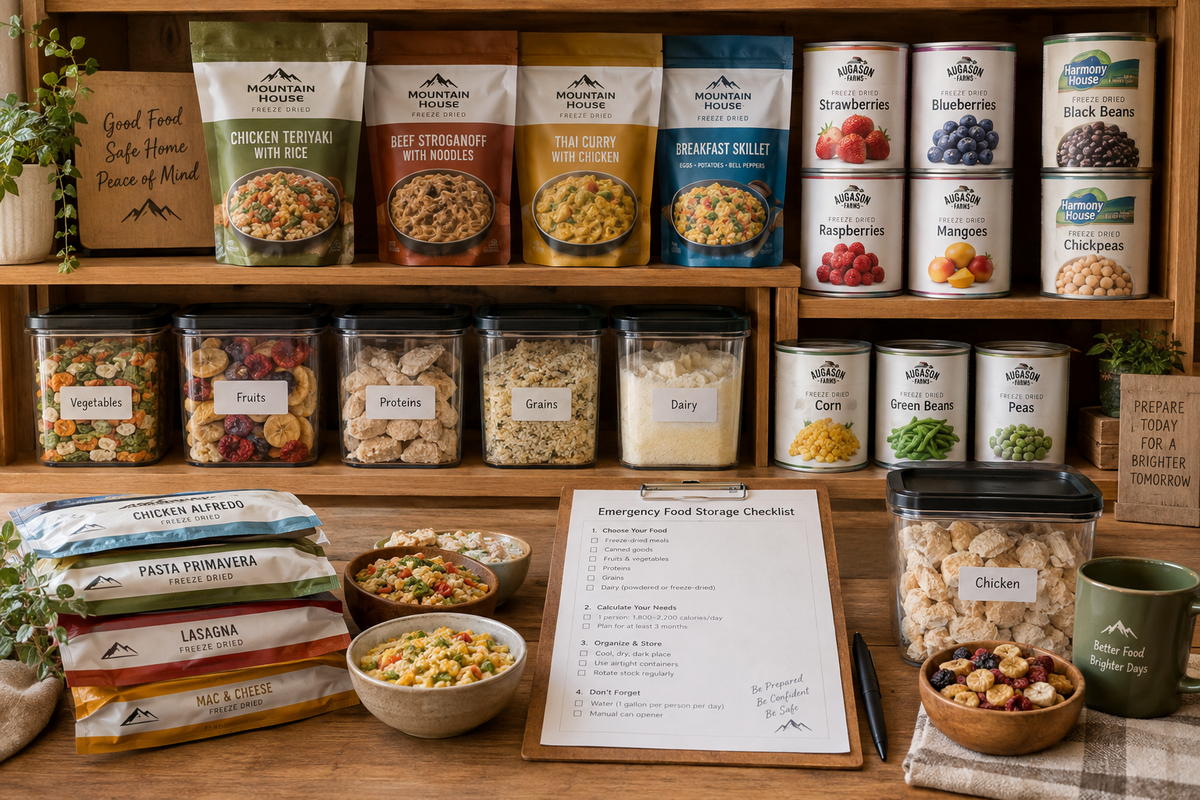
Hurricanes Harvey, Maria, and Irma, along with major wildfires across the western U.S. in 2017, were a stark reminder of how much day-to-day things like grocery store shelves and food supply chains get taken for granted. Disasters like these tend to follow a seasonal cycle — hurricane season, wildfire season, winter storm season — which means there's always a quieter stretch between them. That quiet stretch is exactly when an emergency food plan should get built, not during the week a storm is already forecast.
Take Advantage of the Lull
Anyone who's lived through a disaster knows the real lesson: build food storage now, not when a storm is already headed your way. Demand spikes right before a disaster hit, and spiking demand means scarcity and inflated prices. Start with a week or two of stored food and build from there gradually. A home freeze dryer makes this dramatically easier — you can save leftovers, take advantage of bulk sales when they come up, and skip the constant rotation that canned and dried goods require.
Skip the Rotation Treadmill
In hurricane country, plenty of households keep a stash of "non-perishables" like peanut butter and canned tuna through the June-to-November season. The truth is these foods aren't really non-perishable — they just perish slowly. That's why so many coastal households spend every December working through endless peanut butter and tuna salad sandwiches before the food actually goes bad, only to restock the same stash six months later. Freeze-dried food sidesteps that cycle entirely: stored properly, it can last up to 25 years, with no rotation treadmill required.
Plan for Comfort, Not Just Calories
One thing that becomes obvious the hard way: during an actual disaster, or something as ordinary as a bad winter storm, nobody wants an endless run of canned tuna. You and your kids will want real comfort food, and variety matters more than it seems like it should. When building a food stash, include the meals and snacks that are genuinely comforting to eat, not just calorically sufficient.
How Freeze-Drying Makes This Work
Freeze-drying removes the water from food while leaving behind its nutrition and flavor. To bring it back, just spritz, soak, or add water until it returns to its original texture — most foods are forgiving enough that it's hard to add too much. Since water is most of what makes food heavy and bulky, freeze-dried food ends up far more compact and lighter than its canned equivalent, with no rows of canning jars taking up shelf space. And if you ever need to leave home quickly, a freeze-dried food supply is easy to grab and take with you.
Frequently Asked Questions
When is the best time to build an emergency food plan?
During the quiet stretch between disaster seasons — not the week a storm is forecast, when demand spikes and prices climb along with it.
Why do "non-perishable" foods like peanut butter and tuna still need rotating?
They perish slowly rather than not at all, which means a stash still needs to be used and replaced roughly every six months — something freeze-dried food avoids since it can last up to 25 years when properly stored.
Should an emergency food stash include comfort food, not just basics?
Yes — going through an actual emergency makes clear how much variety and comfort food matter, not just having enough calories on hand.
Share:
How Fast Does a Freeze Dryer Pay for Itself?
Peas and Beans: Protein for Disaster Cleanup