

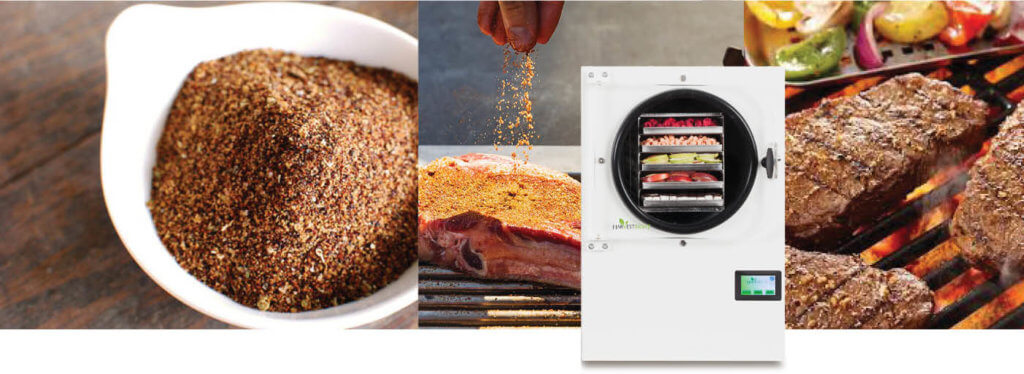
A great steak often only needs salt and pepper. Plainer cuts of meat need more help — and that's exactly where a homemade dry rub, built from your own freeze-dried herbs and vegetables, earns its keep.
The Three S's of a Good Rub
A dry rub is a mix of spices, sugar, dried vegetables, and herbs worked into the surface of meat before cooking. The best rubs tend to balance three things: sweet, savory, and spicy.
- Sweet: Brown sugar is the simplest way to add it.
- Savory: Freeze-dried onion, garlic, or other aromatics, ground into a fine powder, do the heavy lifting here.
- Spicy: Freeze-dry a batch of your favorite peppers and grind them into powder for as much heat as you want.
Notice salt isn't one of the three. Many cooks prefer to salt meat separately, before applying the rub — it gives the salt time to penetrate properly, and it lets each person control their own salt level rather than baking a fixed amount into the mix.
A Simple Starter Formula
There's no single "right" rub, but here's a basic starting point using freeze-dried ingredients, meant for about two pounds of meat:
- 2 tablespoons brown sugar
- 1 tablespoon freeze-dried onion powder
- 1 tablespoon freeze-dried garlic powder
- 1 teaspoon freeze-dried chili powder (more or less to taste)
- 1 teaspoon black pepper
- 1 teaspoon smoked paprika
Mix, adjust the ratios to taste, and use it as a base to build your own signature blend.
Applying It Safely
Spoon out only the amount of rub you need for the meat in front of you — never dip raw meat directly into a container of rub you intend to reuse later, since that contaminates the whole batch. Use one hand to sprinkle the rub over the meat and the other hand to work it in, keeping raw-meat contact off the hand that's touching your spice supply.
Once the meat is rubbed, let it rest in the refrigerator for a few hours, or overnight for deeper flavor, before cooking.
Why Freeze-Dried Ingredients Make a Better Rub
Freeze-drying preserves more of an herb's original aromatic oils than heat-based dehydrating does, since there's no heat involved to drive them off — which is part of why many home cooks find freeze-dried herbs taste noticeably more potent than their dehydrated counterparts. And because you're building the rub yourself from freeze-dried herbs and vegetables, there's no added salt, anti-caking agents, or other preservatives sneaking in the way there often is in store-bought blends.
More on Freeze-Drying Herbs and Flavor
Stop wasting fresh herbs: freeze-dry the extra covers the basics of freeze-drying your own herb supply. Cooking with freeze-dried herbs: pesto & more has more ways to put that supply to use beyond rubs.
Frequently Asked Questions
What are the three components of a good dry rub?
Sweet, savory, and spicy — typically brown sugar for sweetness, freeze-dried onion or garlic for savory depth, and freeze-dried peppers for heat.
Should salt be mixed into a dry rub?
Many cooks prefer to salt the meat separately before applying the rub, since it lets the salt penetrate properly and gives each person control over how much salt they get.
Why use freeze-dried herbs and vegetables in a rub instead of store-bought spices?
Freeze-drying preserves more of an herb's natural aromatic oils than heat-based dehydrating, and making the rub yourself avoids the added salt and preservatives common in store-bought blends.
How long should meat rest after applying a dry rub?
A few hours in the refrigerator is enough to build flavor; resting overnight develops it further.
Share:
Real Owner Story: One Texas Kitchen's Freeze Dryer Haul
Why Preparedness Is One Less Thing to Worry About