

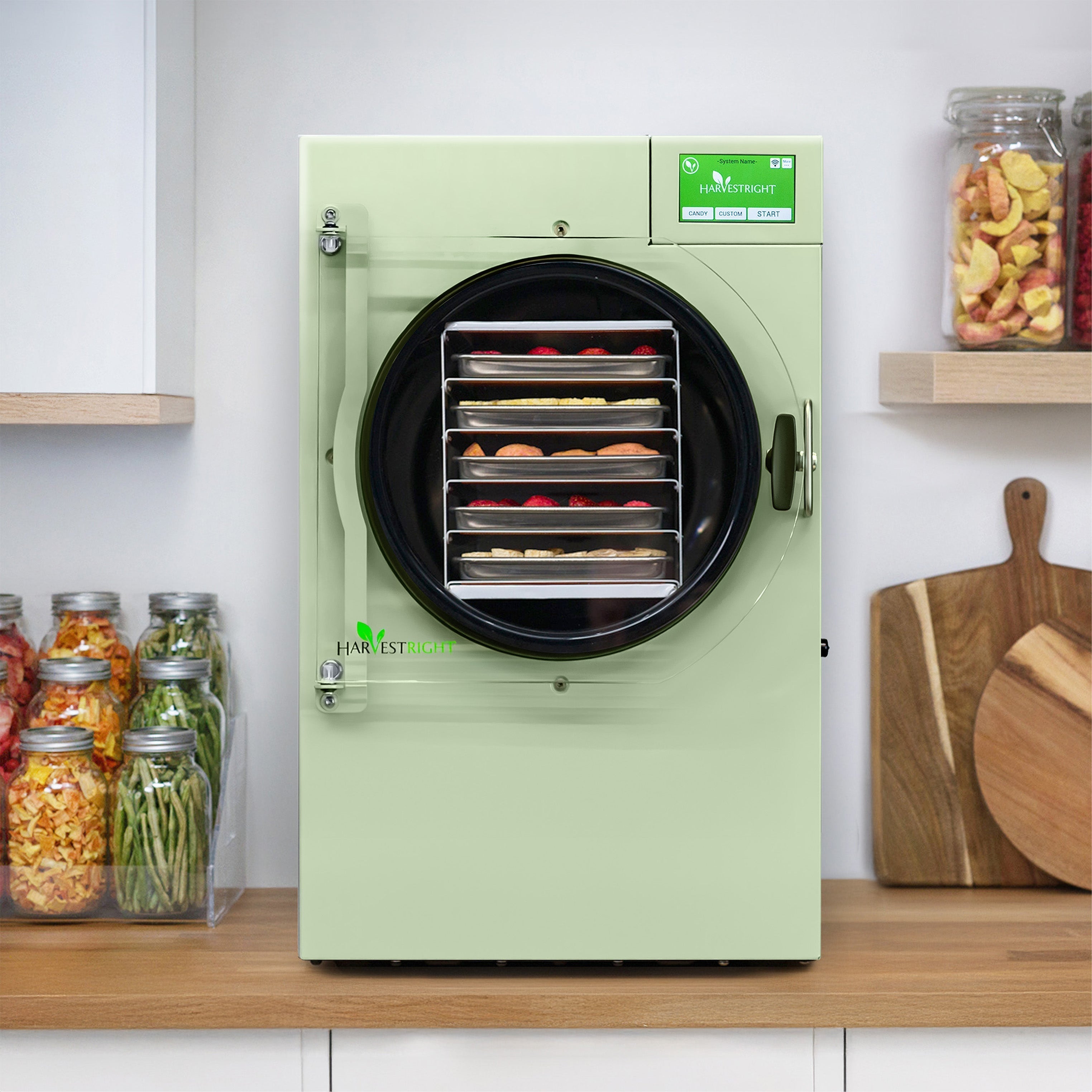
Tout le monde fait des erreurs lorsqu'on apprend une nouvelle technique, et la lyophilisation ne fait pas exception.
La bonne nouvelle, c'est que la plupart des problèmes liés à la lyophilisation peuvent être évités. En adoptant quelques habitudes simples et en comprenant mieux le processus, vous pouvez améliorer la régularité de vos résultats, réduire le gaspillage et obtenir de meilleurs résultats à chaque lot.
Ce guide passe en revue certaines erreurs courantes commises par les nouveaux propriétaires de lyophilisateurs et propose des solutions pratiques pour les éviter.
L'objectif n'est pas la perfection, mais la compréhension de quelques principes clés qui vous aideront à obtenir des résultats constants.

Réponse rapide
De nombreux problèmes courants liés à la lyophilisation trouvent leur origine dans la préparation, le chargement des plateaux, le séchage ou le conditionnement.
Parmi les erreurs courantes, on peut citer :
Ne pas préparer les plats en fonction des aliments
Couper les aliments en morceaux de tailles inégales
Surcharge ou sous-charge des plateaux
Emballer les aliments avant qu'ils ne soient complètement secs
Attendre trop longtemps avant de conditionner les aliments
Oublier les absorbeurs d’oxygène ou les étiquettes
S'attendre à ce que tous les aliments se comportent de la même manière
Quelques habitudes simples peuvent permettre d'éviter bon nombre de ces problèmes.
Erreur n° 1 : négliger la préparation spécifique à chaque aliment
Bien que le processus de lyophilisation soit globalement le même, certains aliments nécessitent une préparation spécifique avant d'être introduits dans le lyophilisateur.
Les œufs, les produits laitiers, les plats complets et les aliments riches en sucre ne sont que quelques exemples où la préparation peut faire une différence notable tant au niveau du processus que du résultat final.
Avant de goûter un nouvel aliment pour la première fois, vérifiez si Harvest Right propose des conseils de préparation dans l'application. Quelques minutes supplémentaires consacrées à la préparation peuvent vous éviter un nettoyage inutile et vous permettre d'obtenir des résultats plus réguliers.
Conseil pour une récolte réussie
Les guides spécifiques à chaque aliment disponibles dans l'application Harvest Right contiennent souvent des conseils de préparation qui permettent d'améliorer les résultats et d'éviter les problèmes courants. Si vous procédez à la lyophilisation d'un aliment pour la première fois, il est conseillé de vérifier s'il existe des recommandations particulières.
Erreur n° 2 : une préparation des repas irrégulière
Les aliments dont la taille ou l'épaisseur varient considérablement risquent de ne pas être séchés en même temps.
Par exemple :
Des tranches d' fraises épaisses mélangées à des tranches fines
De gros cubes de pommes de terre mélangés à de petits cubes
Portions inégales dans les plats préparés
Couper les aliments en morceaux de taille similaire permet d'obtenir un résultat plus homogène après séchage.
Pour les liquides, les repas complets et les autres aliments répartis sur le plateau, essayez de maintenir une profondeur relativement uniforme.

Erreur n° 3 : surcharger (ou sous-charger) les plateaux
Chaque lyophilisateur est conçu pour éliminer une certaine quantité d'humidité à chaque cycle.
Le fait de charger plus d'aliments que la machine n'est pas conçue pour traiter peut allonger la durée du cycle, nécessiter un temps de séchage supplémentaire ou empêcher la bonne exécution du cycle. La surcharge augmente également le risque d'erreurs au cours du processus.
Le contraire peut également se produire. Certaines personnes répartissent une très petite quantité d'aliments sur chaque plateau, par crainte d'en mettre trop. Bien que cela n'endommage pas le lyophilisateur, cela ne permet pas forcément d'optimiser l'utilisation d'un lot.
Pour la plupart des aliments :
Veillez à ce que les aliments ne dépassent pas le bord supérieur du plateau.
« À environ trois quarts » est une règle générale utile.
Dans la mesure du possible, disposez les aliments en une seule couche afin que l'humidité puisse s'évacuer.
Répartissez les aliments de manière homogène sur chaque plateau.
Si vous n'avez pas assez d'aliments pour remplir tous les plateaux, congelez ce qui est prêt et attendez d'en avoir suffisamment pour préparer une fournée complète.
Les bonbons font exception à cette règle, car ils gonflent pendant le processus de lyophilisation. Veillez à leur laisser suffisamment d’espace pour qu’ils puissent se dilater. Consultez l’application pour découvrir des astuces sur la manière de traiter ces exceptions amusantes à la règle.
Le respect des consignes de chargement recommandées permet au lyophilisateur de fonctionner efficacement et d'obtenir des résultats plus homogènes.
Erreur n° 4 : emballer les aliments avant qu'ils ne soient complètement secs
Avant de les emballer, vérifiez toujours que les aliments sont parfaitement secs.
Si de l'humidité subsiste, les aliments risquent de ramollir après leur conditionnement, ce qui pourrait nuire à leur conservation.
Vérifiez plusieurs des plus gros morceaux provenant de différentes parties du plateau. Cassez-les pour vérifier s'il reste des cristaux de glace ou des zones encore froides. En cas de doute, prolongez le temps de séchage avant de les emballer. Certains éleveurs choisissent également d'utiliser un humidimètre numérique comme moyen supplémentaire de vérifier la cuisson.
Conseil « Harvest Right »
Ne vous fiez pas uniquement à un seul petit morceau lorsque vous contrôlez un lot. Les morceaux plus gros et plus épais sont plus susceptibles de contenir de l'humidité résiduelle.
Erreur n° 5 : attendre trop longtemps avant de conditionner les aliments
Les aliments lyophilisés commencent à interagir avec l'air ambiant dès qu'ils sont retirés de la machine.
Plus il reste exposé longtemps, plus le risque que l'humidité l'altère est grand.
Préparez vos sacs, vos absorbeurs d'oxygène, vos étiquettes et votre matériel de scellage avant de décharger les barquettes afin de pouvoir emballer les aliments sans tarder.
Erreur n° 6 : emballer sans stratégie
Avant de choisir le format d'un emballage, réfléchissez à la façon dont vous allez utiliser ces aliments par la suite.
Un grand emballage peut sembler pratique au moment de l'achat, mais si vous n'avez besoin que d'une petite quantité, vous exposerez les restes à l'air chaque fois que vous ouvrirez l'emballage.
Envisagez de conditionner les aliments comme suit :
Portions individuelles
Portions familiales
Quantités adaptées aux recettes
Repas complets
Repas de camping ou d'urgence
Ingrédients de base
Conditionner les aliments en portions adaptées à votre consommation rend les repas plus pratiques et permet de réduire le gaspillage. Si vous ouvrez un sachet et n’utilisez qu’une partie de son contenu, retirez le ou les anciens absorbeurs d’oxygène et remplacez-les par des neufs avant de refermer le sachet.
Conseil pour une récolte réussie
De nombreux utilisateurs expérimentés de lyophilisateurs conditionnent les ingrédients en portions prêtes à l'emploi. Il est souvent plus simple d'ouvrir un sachet pour le dîner que de reconditionner les restes après avoir ouvert un grand sachet.
Erreur n° 7 : oublier les absorbeurs d'oxygène ou les étiquettes
On a tendance à négliger ces deux aspects lorsqu'on se concentre sur le conditionnement des aliments.
Les absorbeurs d'oxygène commencent à agir dès qu'ils sont exposés à l'air ; veillez donc à ce que vos sachets en Mylar soient remplis et prêts avant d'ouvrir l'emballage. Retirez les absorbeurs dont vous avez besoin, puis refermez immédiatement ceux qui restent dans un récipient ou un sachet hermétique.
N'oubliez pas d'étiqueter chaque emballage en indiquant le nom de l'aliment, la date d'emballage et toute autre information qui vous aidera à l'identifier et à l'utiliser par la suite.
Erreur n° 8 : s'attendre à ce que tous les aliments se comportent de la même manière
Les différents aliments contiennent des quantités variables d'eau, de sucre, de matières grasses et d'air.
Une banane ne se lyophilise pas comme du brocoli.
Le chili n'aura ni l'aspect ni la texture d'un cheesecake.
Les plats complets peuvent également présenter des comportements différents selon leurs ingrédients.
En apprenant à reconnaître ce qui est normal pour les aliments que vous conservez le plus souvent, vous serez en mesure de déterminer avec plus d'assurance si vos préparations sont réussies.
Erreur n° 9 : négliger l'organisation
Une bonne organisation commence dès le conditionnement des aliments.
Regrouper les aliments similaires, placer les emballages les plus anciens à l'avant et conserver les aliments dans des récipients ou des bacs solides peut faciliter la gestion de votre espace de rangement tout en contribuant à protéger les aliments emballés contre tout dommage inutile.
Un peu d'organisation aujourd'hui peut vous faire gagner du temps et vous éviter des tracas plus tard.
Erreur n° 10 : trop réfléchir au processus
La lyophilisation est conçue pour être simple.
La plupart des cycles se résument en effet à préparer les aliments, à remplir les plateaux et à appuyer sur « Démarrer ».
Au fur et à mesure que vous gagnerez en expérience, vous apprendrez naturellement quelques techniques qui vous permettront d'obtenir des résultats encore meilleurs, mais ne vous sentez pas obligé de maîtriser tous les aliments dès le premier jour.
Conclusion
La plupart des erreurs liées à la lyophilisation sont faciles à éviter dès lors que l'on en comprend quelques principes de base.
Préparez correctement les aliments, remplissez les plateaux en respectant la capacité recommandée, assurez-vous que les aliments sont parfaitement secs, puis emballez-les rapidement en respectant les bonnes pratiques de conservation.
Ces étapes simples vous aideront à obtenir des résultats plus réguliers et à profiter en toute confiance des avantages de la lyophilisation.

Points clés à retenir
Vérifiez les recommandations de préparation spécifiques à chaque aliment.
Coupez les aliments en morceaux de taille similaire.
Évitez de surcharger ou de sous-charger inutilement les plateaux.
Assurez-vous que les aliments sont parfaitement secs avant de les emballer.
Emballez rapidement les aliments.
Utilisez correctement les absorbeurs d'oxygène et étiquetez chaque colis.
Conditionnez les aliments en portions adaptées à votre consommation.
N'oubliez pas que les aliments se comportent différemment lors de la lyophilisation.
Foire aux questions
Quelle est la plus grande erreur que commettent les débutants ?
La surcharge des plateaux est l'une des erreurs les plus courantes. Le respect des capacités recommandées pour les plateaux permet au lyophilisateur de fonctionner efficacement et d'obtenir des résultats plus homogènes.
Dois-je bien espacer les aliments sur les plateaux ?
Pas nécessairement. Pour de nombreux aliments, les morceaux peuvent être placés assez près les uns des autres, à condition qu’ils soient disposés en une seule couche dans la mesure du possible et que le plateau ne soit pas surchargé. Les bonbons font exception à cette règle : ils gonflent pendant le processus de lyophilisation et ont besoin d’espace supplémentaire pour se dilater.
À quel point les plateaux doivent-ils être remplis ?
Remplir le plateau aux trois quarts environ constitue une règle générale utile pour de nombreux aliments. Veillez à ce que les aliments ne dépassent pas le bord supérieur du plateau et respectez la capacité recommandée pour votre lyophilisateur.
Comment savoir si les aliments sont complètement secs ?
Vérifiez plusieurs des plus gros morceaux provenant de différentes zones du plateau. Cassez-les pour voir s'il y a des cristaux de glace, des zones froides ou des traces d'humidité. Prolongez le temps de séchage si vous avez un doute.
Pourquoi faut-il emballer rapidement les aliments ?
Les aliments lyophilisés commencent à absorber l'humidité de l'air ambiant dès qu'ils sont retirés du lyophilisateur. Disposer de matériel d'emballage à portée de main permet de limiter cette exposition inutile.
Est-ce que tous les aliments se lyophilisent de la même manière ?
Non. Les aliments présentent des teneurs en eau, en matières grasses et en sucre, ainsi qu'une densité et des exigences de préparation différentes ; il est donc normal qu'ils se comportent différemment lors de la lyophilisation.
Partager:
Comment réhydrater des aliments lyophilisés pour obtenir les meilleurs résultats
Pourquoi mes aliments lyophilisés sont-ils encore mous ?