

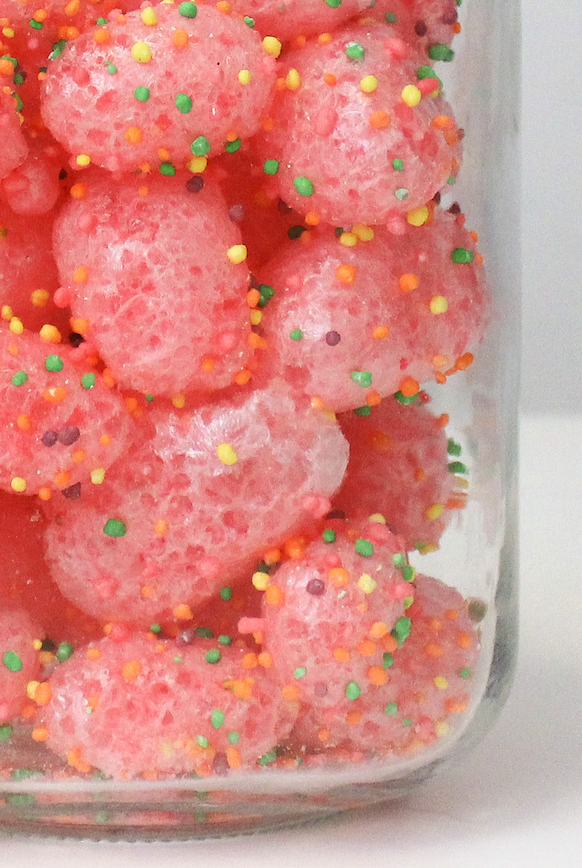
Les bonbons lyophilisés constituent l'une des façons les plus amusantes de s'essayer à la lyophilisation à domicile.
Une gomme moelleuse peut devenir légère et croquante. Un caramel mou peut gonfler de manière spectaculaire. Un bonbon dur peut devenir aéré et plus facile à croquer. Et certains bonbons deviennent presque méconnaissables par rapport à leur état d'origine.
Mais les différents bonbons se comportent de manière très différente dans un lyophilisateur.
Certains gonflent énormément. D’autres doivent être coupés en petits morceaux. Certains deviennent croustillants et légers, tandis que d’autres ne changent pratiquement pas. Et certains bonbons ne se prêtent tout simplement pas à la lyophilisation.
Si vous avez envie de tenter l'expérience, ces cinq bonbons constituent un excellent point de départ.
5 bonbons à tester avec la lyophilisation
| Bonbons | Que se passe-t-il ? | Préparation | Expansion | Convient-il aux débutants ? |
|---|---|---|---|---|
| Nerds Gummy Clusters | Le cœur moelleux devient léger et croustillant | Généralement minime | Élevé | Oui |
| Caramels mous à l'eau de mer | Il gonfle et devient léger et croustillant | Coupez-le en petits morceaux | Très élevé | Oui |
| Jolly Ranchers | Gonfler, devenir plus léger et croustillant | Entier ou coupé en morceaux | Élevé | Oui |
| Milk Duds | Le cœur au caramel se répand sous l'enrobage de chocolat | Généralement minime | Modéré à élevé | Ça vaut le coup d'essayer |
| Oursons en gomme | Se gonfle et passe d'une texture moelleuse à une texture légère et croustillante | Généralement minime | Élevé | Oui |
Un conseil important avant de commencer :
Laissez suffisamment d'espace pour que les bonbons puissent gonfler.
Contrairement à de nombreux aliments qui peuvent être disposés assez près les uns des autres sur les plateaux du lyophilisateur, certains bonbons peuvent augmenter considérablement de volume pendant le traitement. Laisser un espace supplémentaire entre les morceaux peut aider à éviter qu’ils ne se collent les uns aux autres.
Voyons ce qui arrive à chaque bonbon.
1. Nerds Gummy Clusters
Les « Nerds Gummy Clusters » sont des bonbons particulièrement intéressants à lyophiliser, car ils allient deux textures très différentes.
L'extérieur est déjà recouvert d'une couche croustillante de sucre, tandis que l'intérieur est d'abord moelleux et gommeux.
Lors de la lyophilisation, la partie gélatineuse gonfle et devient beaucoup plus légère et croustillante.
Au lieu du cœur moelleux d'origine entouré de morceaux de bonbons croquants, on se retrouve avec un produit croustillant de bout en bout.
Comment préparer des bonbons gélifiés Nerds en grappes
La préparation est simple.
Disposez les grappes sur les plateaux de votre lyophilisateur en une seule couche et laissez de l'espace entre elles pour permettre leur expansion.
Un tapis en silicone ou du papier sulfurisé peut faciliter le nettoyage et empêcher les bonbons collants d'adhérer directement à la plaque.
Comme la composition et la taille des bonbons peuvent varier, surveillez votre première fournée et notez l'espace dont les grappes ont besoin dans votre machine.
À quoi s'attendre
Avant : Un cœur moelleux enrobé d'une couche de bonbon croquante
Après : Léger, aéré et croustillant
Extension : Important
Niveau de difficulté : Adapté aux débutants
Voici un bon exemple qui explique pourquoi les bonbons lyophilisés sont devenus si populaires : ce procédé ne se contente pas de conserver les bonbons. Il permet de créer une expérience gustative totalement différente.

2. Caramels mous à l'eau salée
Le caramel à l'eau salée est un autre grand favori, car la transformation peut être spectaculaire.
Le taffy traditionnel est dense, élastique et moelleux.
Après la lyophilisation, il peut devenir beaucoup plus léger, plus gonflé et plus croustillant.
Et comme le taffy se décline en une multitude de saveurs, il est facile de composer un plateau haut en couleur avec toute une variété de bonbons déjà préparés.
Comment préparer des caramels mous à l'eau salée
Nous vous recommandons de couper les morceaux les plus gros en deux ou en quatre avant la lyophilisation.
Cette démarche présente deux avantages.
Tout d'abord, cela permet d'obtenir des éléments plus faciles à gérer, de taille plus réduite.
Deuxièmement, le caramel mou peut gonfler considérablement ; il est donc préférable de commencer par de petites portions pour mieux contrôler la taille finale des bonbons.
Laissez suffisamment d'espace autour de chaque pièce.
Ne disposez pas les bonbons au caramel aussi serrés que vous le feriez avec des tranches de fruits ou de légumes.
À quoi s'attendre
Avant : Dense, élastique et moelleux
Après : Moelleux, léger et croustillant
Extension : Très élevé
Niveau de difficulté : Adapté aux débutants
Si vous présentez la lyophilisation à quelqu'un pour la première fois, le caramel mou est un choix amusant, car la différence entre l'avant et l'après est flagrante.

3. Les Jolly Ranchers
Les Jolly Ranchers sont à l'origine des bonbons durs et denses ; leur transformation est donc très différente de celle des caramels mous ou des bonbons gélifiés.
Lors de la lyophilisation, ils peuvent gonfler et acquérir une texture plus légère et plus poreuse.
Une fois préparé, ce bonbon reste croustillant, mais il est beaucoup plus facile à croquer que le bonbon dur d'origine.
Comment préparer des Jolly Ranchers
Vous pouvez essayer avec des bonbons entiers ou en petits morceaux.
Si vous utilisez des Jolly Ranchers entiers, laissez suffisamment d'espace entre eux, car ils peuvent gonfler considérablement.
Il peut être difficile de couper des bonbons durs ; utilisez donc un outil adapté et faites attention lorsque vous les découpez en petits morceaux.
Vous pouvez également tester différentes saveurs au sein d'une même fournée.
À quoi s'attendre
Avant : Bonbon dur et compact
Après : Plus volumineux, plus léger et croustillant
Extension : Élevé
Niveau de difficulté : Facile, en respectant un espacement approprié
Les Jolly Ranchers sont un autre bon exemple qui montre que la lyophilisation ne se limite pas aux aliments contenant des quantités évidentes d'humidité.
La structure finale peut être radicalement différente de celle de la confiserie d'origine.

4. Milk Duds
Les Milk Duds constituent une expérience intéressante, car ils associent du caramel à un enrobage au goût de chocolat.
Les aliments riches en chocolat ne font généralement pas partie des meilleurs candidats à la lyophilisation, car, contrairement à l'eau, la graisse ne s'échappe pas des aliments lors de ce processus.
Mais les Milk Duds peuvent tout de même subir une transformation intéressante en raison de ce qui se passe à l'intérieur de leur enrobage.
Le cœur au caramel peut gonfler et devenir croustillant, ce qui donne une texture très différente de celle du bonbon moelleux d'origine.
Comment préparer des Milk Duds
Disposez les bonbons en une seule couche, en laissant un peu d'espace entre chacun d'eux.
Comme ils sont composés d'une enveloppe et d'un cœur au caramel, ne vous attendez pas à ce qu'ils aient exactement la même texture qu'un ourson en gomme ou qu'un morceau de caramel mou.
C'est l'un de ces bonbons pour lesquels l'expérimentation fait partie du plaisir.
À quoi s'attendre
Avant : Caramel moelleux enrobé d'une couche au goût de chocolat
Après : Un cœur plus gonflé et plus croustillant, tout en conservant l'enrobage
Extension : Variable
Niveau de difficulté : Expérimental
Les Milk Duds illustrent également un principe important :
Il n'est pas nécessaire qu'un bonbon soit lyophilisé de manière homogène pour que sa texture change.
Les différents ingrédients d'un même bonbon peuvent se comporter différemment.
5. Oursons en gomme
Les oursons en gomme font partie des bonbons classiques à tester dans un lyophilisateur.
Au début, elles sont moelleuses, denses et fondantes.
Lors de la lyophilisation, ils peuvent gonfler considérablement et devenir légers et croustillants.
La saveur peut également paraître plus intense en raison du changement radical de texture et de la perte d'eau.
Comment préparer des oursons en gélatine
Disposez les oursons en gélatine sur des plaques recouvertes de papier sulfurisé en les espaçant les uns des autres.
En général, il n'y a pas grand-chose à faire comme préparation, à part séparer les morceaux.
Cependant, les bonbons gélifiés varient considérablement selon la marque et la composition.
Un type de bonbon gélifié peut prendre un beau volume, tandis qu'un autre se comporte différemment.
C'est pourquoi il est utile de noter les produits que vous avez utilisés lorsque vous trouvez une marque ou un type de produit qui vous donne des résultats particulièrement satisfaisants.
À quoi s'attendre
Avant : Moelleux et fondant
Après : Moelleux, léger et croustillant
Extension : Élevé
Niveau de difficulté : Adapté aux débutants
Les oursons en gomme constituent un excellent premier bonbon pour ceux qui souhaitent découvrir à quel point la lyophilisation peut transformer radicalement la texture d'un aliment.

Comment lyophiliser des bonbons ?
Les bonbons se distinguent quelque peu de la lyophilisation des fruits, des légumes, des plats complets et d'autres aliments à forte teneur en eau.
Vos réglages spécifiques et vos options de cycle peuvent varier en fonction de votre lyophilisateur et du type de bonbons que vous traitez ; veillez donc à toujours respecter les instructions en vigueur pour votre appareil.
Mais le déroulement général des opérations est simple.
1. Choisissez vos bonbons
Commencez par un ou deux bonbons qui ont la réputation de bien se transformer.
Les caramels mous et les bonbons gélifiés constituent un bon choix pour une première expérience, car les changements de texture qu'ils subissent peuvent être spectaculaires.
2. Préparer les bonbons
Retirez les emballages.
Découpez les morceaux trop grands si nécessaire.
Utilisez des tapis en silicone ou du papier sulfurisé si les bonbons risquent de coller.
3. Disposer les plateaux
Disposez les bonbons en une seule couche.
Ne surchargez pas les plateaux.
Certains bonbons gonflent bien plus que vous ne le pensez ; veillez donc à laisser davantage d'espace que d'habitude lorsque vous procédez à la lyophilisation d'aliments.
4. Sélectionnez le cycle approprié
Suivez le mode d'emploi actuel de votre lyophilisateur Harvest Right et utilisez les réglages appropriés ou les options spécifiques aux bonbons disponibles sur votre appareil.
Les bonbons contiennent des quantités variables d'eau, de sucre, de matières grasses, de gélatine, d'amidon et d'autres ingrédients ; ne partez donc pas du principe que tous les bonbons se comportent de la même manière.
5. Vérifiez les bonbons une fois prêts
La confiserie finie doit présenter la texture attendue pour ce type de confiserie.
Les bonbons gélifiés et les caramels mous ont tendance à devenir légers et croustillants plutôt que de rester moelleux.
Si un bonbon qui devrait être croustillant présente encore des parties molles ou caoutchouteuses, déterminez s'il convient de le soumettre à un traitement supplémentaire avant de le conditionner.
6. Laissez refroidir, puis emballez-le
Une fois que la confiserie est prête et que vous êtes satisfait du résultat, emballez-la de manière adaptée à l'usage que vous comptez en faire.
Si vous comptez le consommer rapidement, un récipient hermétique devrait suffire.
Pour une conservation prolongée, utilisez un emballage adapté aux aliments secs et à la durée de conservation prévue.
Pourquoi les bonbons gonflent-ils lorsqu'ils sont lyophilisés ?
C'est l'une des étapes les plus intéressantes de la lyophilisation des bonbons.
La lyophilisation permet d'éliminer l'eau sous vide.
Dans les aliments dont la structure est susceptible de se dilater, la combinaison des variations de pression et de température, ainsi que la perte d'humidité, peut modifier considérablement la structure physique de la confiserie.
Au lieu de rester denses et moelleux, certains bonbons développent une structure interne poreuse.
C'est ce qui donne ce croquant léger et aérien que l'on associe généralement aux bonbons lyophilisés.
Mais l'ampleur de cette expansion dépend fortement de la composition du bonbon.
La concentration en sucre, la teneur en eau, la gélatine, l'amidon, les matières grasses et d'autres ingrédients peuvent tous influencer le résultat.
C'est pourquoi deux bonbons qui semblent identiques dans leur emballage peuvent se comporter de manière très différente dans un lyophilisateur.
Quels sont les bonbons qui se prêtent le mieux à la lyophilisation ?
En général, ce sont les bonbons qui contiennent suffisamment d'humidité et dont la structure leur permet de gonfler qui produisent les transformations les plus spectaculaires.
Cela en comprend beaucoup :
Bonbons gélifiés
Caramels mous
Bonbons moelleux
Certains bonbons durs
Bonbons de type guimauve
Mais il n'y a pas de règle universelle.
Les recettes et les compositions varient d'un fabricant à l'autre, et ceux-ci peuvent modifier ces compositions au fil du temps.
C'est en partie ce qui rend les expériences avec les bonbons si amusantes.

Quels sont les bonbons qui ne se prêtent pas bien à la lyophilisation ?
Tous les bonbons ne sont pas forcément un bon choix.
Chocolat
Le chocolat pur ne subit généralement pas la transformation spectaculaire que l'on observe avec les bonbons gélifiés ou les caramels mous.
Le chocolat contient une quantité importante de matières grasses, et la lyophilisation élimine l'eau, mais pas les matières grasses.
Les bonbons enrobés de chocolat peuvent tout de même être intéressants lorsque leur fourrage contient suffisamment d'humidité pour se transformer, comme c'est le cas avec les Milk Duds, mais il ne faut pas s'attendre à ce que la couche de chocolat elle-même gonfle comme un bonbon gélifié.
Bonbons à très forte teneur en matières grasses
Les aliments à forte teneur en matières grasses ne se prêtent généralement pas bien à la lyophilisation.
Encore une fois, la raison est simple :
La lyophilisation élimine l'eau. Elle n'élimine pas les matières grasses.
Bonbons extrêmement secs
Si un bonbon contient très peu d'eau au départ, il se peut tout simplement qu'il y en ait moins à éliminer lors du processus de lyophilisation.
Cela ne veut pas dire qu'il ne se passera rien, mais la transformation pourrait être bien moins radicale.
Bonbons aux compositions originales
Parfois, la seule façon de le savoir, c'est de l'essayer.
Si vous avez des doutes, commencez par une petite quantité plutôt que de consacrer toute une fournée à un bonbon que vous ne connaissez pas.
Problèmes courants liés aux bonbons lyophilisés
C'est amusant de faire des expériences avec des bonbons, mais les résultats ne sont pas toujours parfaits du premier coup.
Voici quelques problèmes courants.
Mon bonbon n'a pas gonflé
Tous les bonbons ne gonflent pas de manière spectaculaire.
Le résultat peut dépendre des ingrédients de la confiserie, de sa teneur en humidité, de sa taille, de sa préparation et des conditions de fabrication.
Essayez un autre type ou une autre marque avant de conclure que votre lyophilisateur présente un dysfonctionnement.
Mon bonbon est toujours moelleux
Demandez-vous d'abord si ce bonbon-là est censé devenir complètement croustillant.
Si vous avez déjà lyophilisé ce même bonbon avec succès et que ce lot reste étonnamment moelleux, il faudra peut-être le traiter davantage.
Vérifiez plusieurs éléments plutôt que de vous fier à un seul.
Mon bonbon s'est étendu aux morceaux voisins
La prochaine fois, laisse un peu plus de place.
Les bonbons constituent l'une des exceptions à la volonté habituelle d'optimiser l'espace disponible dans les plateaux.
Certaines pièces peuvent prendre des proportions considérables.
Mes bonbons se sont collés au plateau
Des tapis en silicone ou du papier sulfurisé peuvent faciliter le démoulage des bonbons collants.
Ils peuvent également faciliter le nettoyage après des expériences particulièrement salissantes.
Certaines pièces ont fonctionné, d'autres non
La composition des bonbons a son importance.
Mélanger des types de bonbons très différents sur le même plateau ou dans la même fournée peut donner des résultats inégaux.
Lorsque vous apprenez comment se comporte un bonbon en particulier, le fait de traiter ensemble des bonbons similaires vous permet d'évaluer plus facilement ce qui a fonctionné.
Peut-on lyophiliser différents bonbons ensemble ?
Vous pouvez essayer différents bonbons dans une même fournée, mais il y a des avantages à regrouper des bonbons similaires.
Selon les bonbons, il peut arriver que :
se développer à des rythmes différents
nécessitent des espaces de tailles différentes
se terminer différemment
devenir collant à différents stades
réagissent différemment aux mêmes conditions de traitement
Si vous goûtez un nouveau bonbon pour la première fois, pensez à opter pour un assortiment relativement simple.
Une fois que vous savez comment fonctionnent vos favoris, il devient plus facile de les combiner.
Faut-il congeler les bonbons au préalable ?
Les bonbons se distinguent de nombreux autres aliments que vous pourriez mettre dans votre lyophilisateur.
Suivez les instructions en vigueur pour votre modèle Harvest Right et le cycle que vous utilisez.
Pour les aliments classiques, la congélation préalable peut réduire la durée totale du cycle de traitement, mais elle n'est généralement pas nécessaire, car le lyophilisateur Harvest Right congèle les aliments dans le cadre de son processus.
La préparation des bonbons peut nécessiter un traitement spécifique ; par conséquent, suivez les recommandations d'utilisation en vigueur pour votre appareil plutôt que de partir du principe que les instructions valables pour les fraises ou les repas complets s'appliquent également aux bonbons.
Combien de temps faut-il pour lyophiliser des bonbons ?
Il n'y a pas de durée de cuisson unique valable pour tous les bonbons.
Le délai de traitement peut varier en fonction des éléments suivants :
type de bonbon
taille
formulation
teneur en humidité
montant chargé
modèle de machine
cycle/paramètres utilisés
Les bonbons peuvent être traités différemment des aliments à forte teneur en eau, tels que les fruits ou les repas complets.
La meilleure approche consiste à suivre les instructions en vigueur pour votre lyophilisateur et à évaluer la texture du produit fini, plutôt que de se fier à une durée universelle indiquée sur Internet.
Comment conserver les bonbons lyophilisés ?
Si vous préparez des bonbons pour une fête, un goûter en famille ou pour les manger assez rapidement, des boîtes hermétiques peuvent vous aider à préserver leur texture croustillante.
Le plus grand ennemi, c'est l'humidité.
Les aliments lyophilisés absorbent facilement l'humidité présente dans l'air, et les bonbons qui absorbent cette humidité risquent de perdre la texture que vous avez mis tant de soin à obtenir.
Pour une conservation plus longue, choisissez un emballage adapté aux aliments secs et à la durée de conservation que vous envisagez.
Quel que soit leur emballage, conservez les bonbons dans un endroit frais et sec et évitez de les exposer inutilement à l'humidité.
Encore plus de bonbons à tester
Une fois que vous aurez goûté aux cinq premiers, le vrai plaisir commencera.
En fonction de la disponibilité et de la composition, vous pouvez essayer :
Skittles
guimauves
bonbons aux fruits
vers en gomme
rondelles de pêche
bonbons gélifiés acidulés
bonbons au caramel
bonbons aux fruits moelleux
Prenez des notes.
Les fabricants de bonbons modifient parfois les ingrédients, les tailles ou les compositions, et différentes marques d'un même type de bonbon peuvent donner des résultats différents.
C'est souvent en les essayant soi-même qu'on découvre ses produits préférés.
Faites-en un test de dégustation
Si vous faites de la lyophilisation de bonbons avec des enfants, des amis ou votre famille, rendez l'expérience plus intéressante.
Conservez un bonbon de chaque sorte avant la lyophilisation.
Comparez ensuite côte à côte la version originale et la version lyophilisée.
Évaluez chacun d'entre eux selon les critères suivants :
Crunch
Saveur
Expansion
Aspect
Le favori absolu
Vous serez peut-être surpris de découvrir quel bonbon remportera la victoire.
Et vous commencerez en même temps à apprendre quelque chose d'utile :
Les différents aliments réagissent différemment lors de la lyophilisation.
C'est l'un des aspects les plus intéressants du fait de posséder un lyophilisateur à domicile.
Quels sont les meilleurs bonbons à lyophiliser ?
Il n'y a pas de vainqueur unique.
Si vous souhaitez opérer un changement radical, les bonbons gélifiés et les caramels mous à l'eau salée constituent un excellent point de départ.
Les « Nerds Gummy Clusters » allient des textures croquantes et moelleuses et peuvent varier considérablement.
Les Jolly Ranchers offrent une transformation intéressante en bonbons durs.
Les Milk Duds illustrent ce qui peut se passer lorsque différents composants d'un même bonbon réagissent différemment.
Et les oursons en gélatine restent une expérience classique pour les débutants.
Et le meilleur dans tout ça ?
Tu n'es pas obligé de t'arrêter à cinq.
Essayez différents bonbons, prévoyez suffisamment de place pour qu'ils gonflent, notez ce qui fonctionne et constituez votre propre liste de favoris.
Foire aux questions
Quels sont les meilleurs bonbons à lyophiliser ?
Les bonbons gélifiés et les caramels mous constituent d'excellents points de départ, car ils peuvent gonfler considérablement et prendre une texture légère et croquante. Les « Nerds Gummy Clusters », les oursons en gélatine, les caramels mous salés et certains bonbons durs font partie des choix les plus populaires.
Peut-on lyophiliser des oursons en gélatine ?
Oui. De nombreux oursons en gomme gonflent lors de la lyophilisation et passent d'une texture moelleuse et tendre à une texture légère et croquante. Les résultats varient selon la marque et la composition.
Peut-on lyophiliser des Jolly Ranchers ?
Oui. Les Jolly Ranchers peuvent gonfler et devenir plus légers et plus poreux lors de la lyophilisation. Prévoyez suffisamment d'espace entre les bonbons pour permettre leur expansion.
Peut-on lyophiliser du chocolat ?
Le chocolat pur n'est généralement pas un candidat idéal pour la lyophilisation, car il contient relativement peu d'eau et une quantité importante de matières grasses. Les bonbons enrobés de chocolat peuvent toutefois donner des résultats intéressants lorsque leur fourrage contient suffisamment d'humidité pour subir une transformation.
Pourquoi les bonbons lyophilisés grossissent-ils ?
Certains bonbons développent une structure expansée et poreuse lorsque la pression, la température et l'humidité varient au cours de leur fabrication. L'ampleur de cette expansion dépend de la composition et de la structure du bonbon.
Pourquoi mes bonbons lyophilisés sont-ils encore moelleux ?
Certains bonbons présentent naturellement des différences par rapport aux autres après leur transformation. Si un bonbon qui devient normalement croustillant reste étonnamment moelleux ou caoutchouteux, vérifiez plusieurs exemplaires et déterminez s’il convient de procéder à une transformation supplémentaire.
Puis-je mettre différents types de bonbons ensemble dans le lyophilisateur ?
Vous pouvez essayer de mélanger les lots, mais les bonbons peuvent gonfler et se comporter différemment selon leur type. Il est souvent plus facile de regrouper les bonbons similaires lorsque vous commencez à comprendre comment chaque type se comporte.
Dois-je congeler les bonbons avant de les lyophiliser ?
Suivez les instructions en vigueur pour votre lyophilisateur et le cycle que vous utilisez. Le traitement spécifique aux confiseries peut différer de celui de la lyophilisation alimentaire classique ; ne partez donc pas du principe que les instructions de préparation destinées aux aliments à forte teneur en eau s'appliquent aux confiseries.
Comment faire pour que les bonbons lyophilisés restent croustillants ?
Protégez-les de l'humidité. Conservez les bonbons une fois préparés dans un emballage ou un récipient hermétique adapté et limitez au maximum leur exposition à l'air humide.
Continuez à faire des essais
La lyophilisation des bonbons ne vise pas tant à assurer la conservation à long terme des aliments qu’à découvrir à quel point ce procédé peut transformer radicalement des aliments familiers.
Commencez par quelques bonbons dont vous savez qu'ils font leur effet.
Laissez-leur beaucoup d'espace.
Observez comment ils évoluent.
Et n'oubliez pas de noter vos favoris.
Une fois que vous aurez vu un bonbon gélifié moelleux se transformer en une friandise légère et croquante, ou observé un petit morceau de caramel s'étaler sur le plateau, vous vous poserez sans doute la même question que de nombreux propriétaires de lyophilisateurs :
Que devrais-je essayer ensuite ?
Partager:
Muffins aux myrtilles avec des myrtilles lyophilisées
Gagnant d'un petit lyophilisateur