

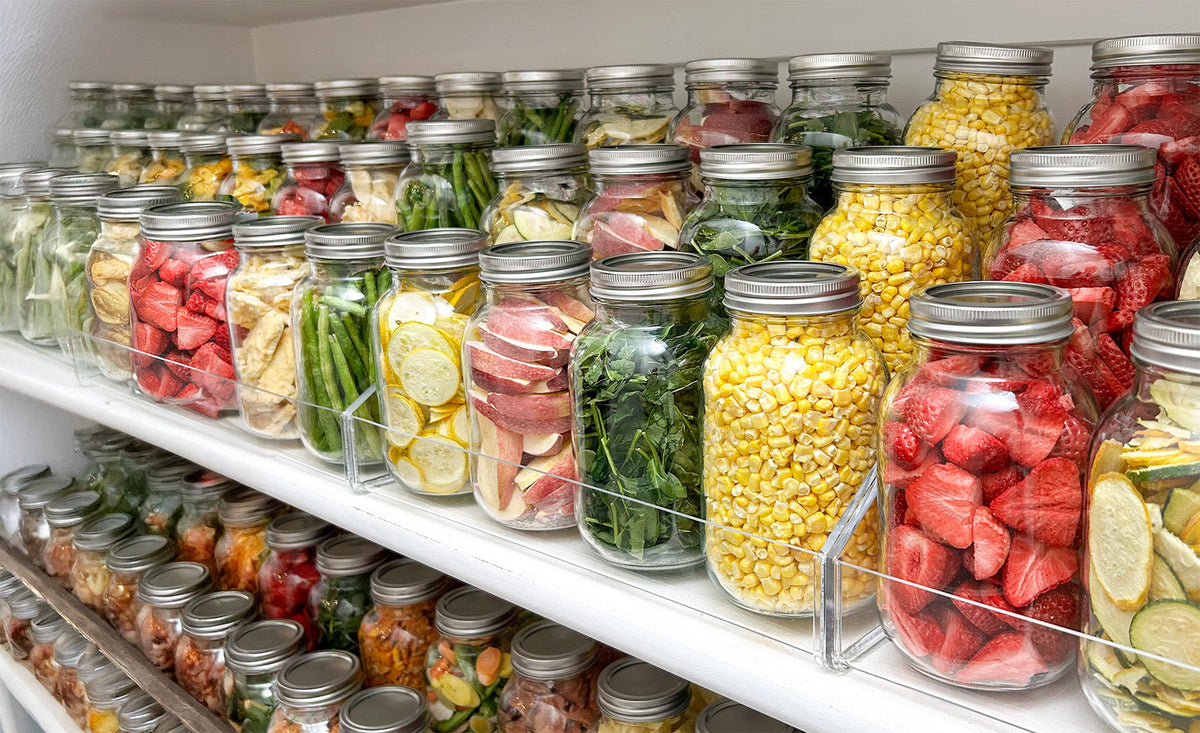
Eine der häufigsten Fragen, die Menschen vor dem Kauf eines Gefriertrockners stellen, lautet in etwa: „Aber was passiert, wenn der Strom ausfällt?“ Das ist eine berechtigte Sorge – und die Antwort ist beruhigend, sobald man den Unterschied zwischen dem Betrieb des Gefriertrockners und der Lagerung der damit hergestellten Produkte versteht.
Der Gefriertrockner benötigt Strom. Die damit hergestellten Lebensmittel hingegen nicht.
Ein Gefriertrockner benötigt zwar Strom, um einen Zyklus durchzuführen. Sobald die Lebensmittel jedoch gefriergetrocknet und ordnungsgemäß verpackt sind, benötigen sie zur Lagerung überhaupt keinen Strom mehr – sie lassen sich sicher bei Raumtemperatur aufbewahren, im Gegensatz zu Tiefkühlkost, die schnell zu verderben beginnt, sobald der Strom im Gefrierschrank ausfällt.
Dieser Unterschied ist gerade in einer tatsächlichen Notsituation von entscheidender Bedeutung. Ein Gefrierschrank voller Fleisch und Gemüse wird in dem Moment, in dem der Strom ausfällt, zu einem Wettlauf gegen die Zeit. Ein Regal in der Vorratskammer mit ordnungsgemäß verpackten gefriergetrockneten Lebensmitteln hat dieses Problem nicht – diese waren bereits vor Beginn des Stromausfalls ungekühlt haltbar.
Was sich für diese Art der Lagerung gut gefriertrocknen lässt
Obst, Gemüse, Milchprodukte und fertige Mahlzeiten lassen sich alle gefriertrocknen und auf diese Weise lagern. Das ist einer der Gründe, warum das Gefriertrocknen gerade für die Notfallvorsorge so attraktiv ist – man ist nicht auf die übliche kurze Liste haltbarer Grundnahrungsmittel wie Reis und Bohnen beschränkt. Man kann Mahlzeiten konservieren, die die Familie tatsächlich gerne isst, und sie stehen weiterhin unverändert zur Verfügung, egal ob der Strom an ist oder nicht.
So lagern Sie es richtig
Für die langfristige Lagerung ohne Strom sollten gefriergetrocknete Lebensmittel in einen luftdichten Behälter, beispielsweise einen Mylar-Beutel mit Sauerstoffabsorber, gegeben und anschließend an einem trockenen, relativ kühlen und vor Schädlingen geschützten Ort aufbewahrt werden. Neben Lebensmitteln sollte jeder Notfallvorratsplan auch eine ausreichende Wasserreserve vorsehen, da Lebensmittel allein eine Wasserknappheit während eines längeren Stromausfalls nicht beheben können.
Praktischer Nutzen bei Stromausfällen
Starke Winde, Schneestürme, Orkane und andere Naturereignisse können zu tagelangen oder sogar wochenlangen Stromausfällen führen. Wenn man Lebensmittel vorrätig hat, die nicht auf Strom angewiesen sind – also Lebensmittel, die bereits vor Beginn des Stromausfalls haltbar waren –, entfällt eine wichtige Unbekannte in einer ohnehin schon stressigen Situation.
Mehr zum Thema „Erstellung eines energieunabhängigen Ernährungsplans“
„Hitzewellen, Stromausfälle und haltbare Lebensmittel“ beleuchtet dasselbe Thema anhand eines realen historischen Ereignisses, und „Notvorratshaltung: Wo fängt man an?“ zeigt Schritt für Schritt, wie man einen umfassenden Plan aufstellt.
Häufig gestellte Fragen
Benötigt gefriergetrocknete Nahrung Strom oder Kühlung zur Lagerung?
Nein – sobald Lebensmittel gefriergetrocknet und ordnungsgemäß verpackt sind, lassen sie sich sicher bei Raumtemperatur lagern, ohne dass Strom benötigt wird.
Was passiert mit Tiefkühlkost bei einem Stromausfall?
Tiefkühlkost beginnt schnell aufzutauen und zu verderben, sobald der Strom im Gefrierschrank ausfällt – dies ist einer der entscheidenden Vorteile, die gefriergetrocknete Lebensmittel gegenüber Tiefkühlkost bei längeren Stromausfällen bieten.
Welche Lebensmittel lassen sich auf diese Weise aufbewahren?
Obst, Gemüse, Milchprodukte und fertige Mahlzeiten lassen sich alle gefriertrocknen und ohne Strom lagern, was bedeutet, dass sich ein Notvorrat nicht auf einfache, lange haltbare Grundnahrungsmittel beschränken muss.
Was sollte neben gefriergetrockneten Lebensmitteln noch Teil eines Notfall-Ernährungsplans sein?
Genügend Wasser für den Haushalt, da die Vorratshaltung allein keinen Wassermangel während eines längeren Stromausfalls abfedern kann.
Teilen:
Ein Erfahrungsbericht: Das Magna-Erdbeben von 2020
Gewinner eines mittelgroßen Gefriertrockners