

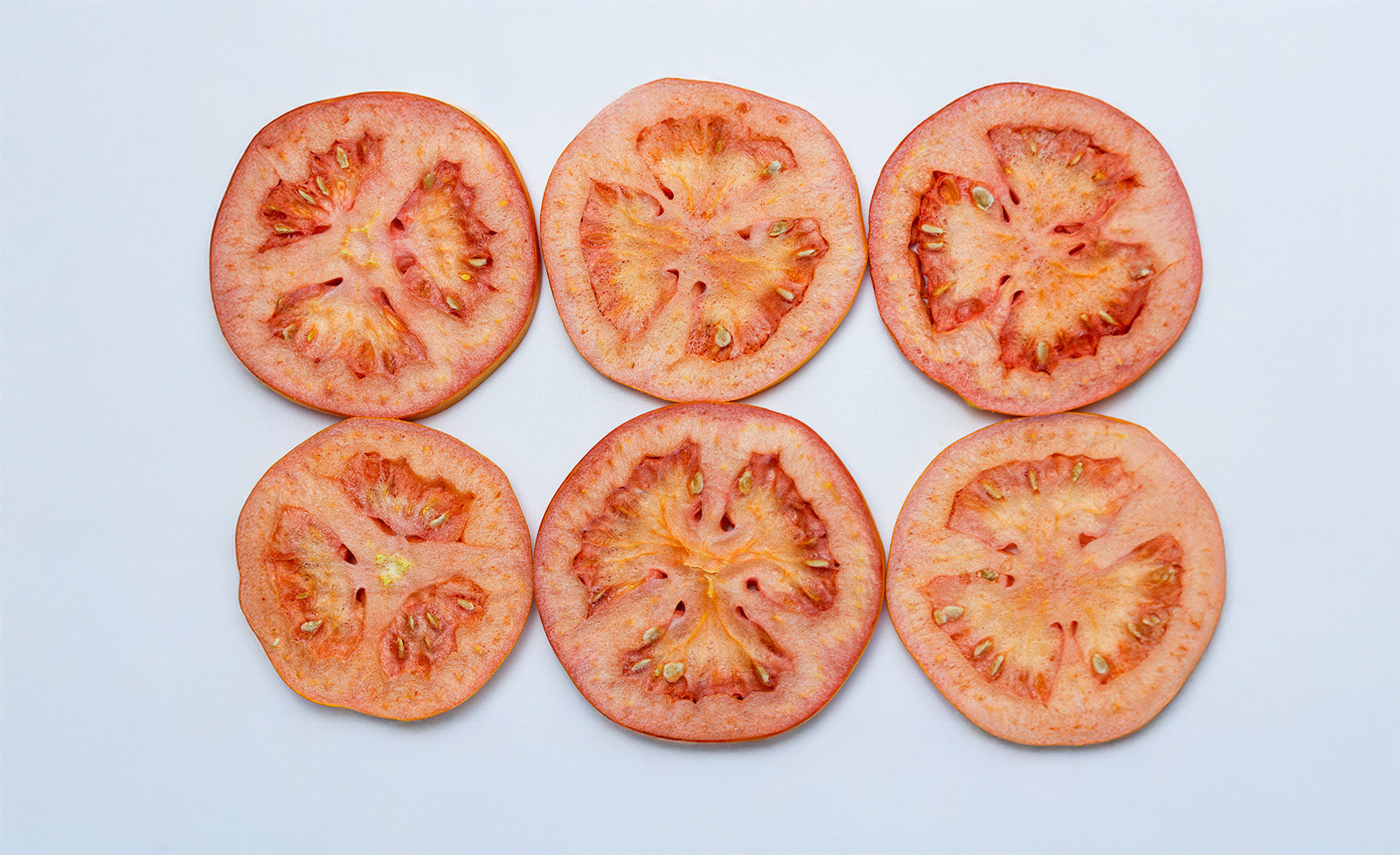
Le fromage blanc frais et les tomates mûres constituent un mariage classique, que ce soit pour un déjeuner léger, un en-cas équilibré ou un repas estival. Grâce à la lyophilisation, vous pouvez conserver ces deux ingrédients pendant des mois, voire des années, sans qu'ils ne perdent grand-chose de leur saveur, de leurs qualités nutritionnelles ou de leur polyvalence.
La lyophilisation élimine l'humidité tout en permettant aux aliments de conserver leur goût, leur texture, leur couleur et leur valeur nutritionnelle d'origine. Que ce soit pour conserver la récolte de votre potager, préparer des repas pour le camping, constituer un garde-manger d'urgence ou réduire le gaspillage alimentaire, la lyophilisation du fromage blanc et des tomates vous permet de profiter facilement de ces aliments quand vous en avez besoin.
Dans ce guide, vous apprendrez comment préparer le fromage blanc et les tomates en vue de leur lyophilisation, comment les conserver correctement, ainsi que les meilleures façons de les réhydrater et de les déguster par la suite.
Pourquoi congeler-sécher du fromage blanc et des tomates ?
Ces deux aliments se complètent bien et présentent plusieurs avantages lorsqu'ils sont lyophilisés.
Les avantages comprennent :
Conserver les ingrédients frais avant qu'ils ne se gâtent
Réduire le gaspillage alimentaire
Préparez des repas légers pour le camping et la randonnée
Savourez à tout moment des en-cas sains et riches en protéines
Profitez de vos tomates du jardin bien après la saison des récoltes
La lyophilisation éliminant la quasi-totalité de l'humidité, le produit fini est léger, se conserve longtemps et est facile à stocker.

Peut-on lyophiliser du fromage blanc ?
Oui.
Le fromage blanc se prête étonnamment bien à la lyophilisation. Comme il contient une quantité importante d'eau, le lyophilisateur élimine l'eau tout en conservant les protéines et les autres nutriments.
Une fois réhydraté, le fromage blanc se prête bien à des recettes telles que :
Salades
Wraps
Plats de pâtes
Bol de légumes
Trempettes
En-cas sains
Beaucoup de gens aiment également déguster du fromage blanc lyophilisé tel quel, comme en-cas croustillant, sans le réhydrater.
Peut-on lyophiliser des tomates ?
Tout à fait.
Les tomates comptent parmi les légumes les plus appréciés pour la lyophilisation, car elles conservent toute leur saveur et peuvent être utilisées dans d'innombrables recettes.
Parmi les bonnes variétés, on peut citer :
Tomates cerises
Tomates cerises
Tomates Roma
Tomates « beefsteak »
Tomates anciennes
Les tomates cerises et les tomates raisins sont particulièrement appréciées car elles sont faciles à préparer et se déshydratent de manière homogène.

Préparation du fromage blanc en vue de la lyophilisation
La préparation est simple.
Répartissez le fromage blanc de manière homogène sur le plateau du lyophilisateur.
Veillez à ce que la couche ait une épaisseur d'environ ½ à ¾ de pouce.
Évitez de trop remplir le plateau.
Placez le plateau directement dans le lyophilisateur.
Une couche uniforme permet au produit de sécher de manière homogène tout au long du cycle.
Préparation des tomates pour la lyophilisation
Avant de charger les tomates dans votre lyophilisateur :
Lavez soigneusement.
Retirez les tiges.
Coupez les tomates les plus grosses en morceaux de taille égale.
Coupez les tomates cerises ou les tomates raisins en deux.
Disposez les morceaux en une seule couche.
En laissant un espace entre les pièces, on permet à l'air de circuler et on favorise un séchage uniforme.
Peut-on lyophiliser ensemble du fromage blanc et des tomates ?
Oui.
L'un des avantages du lyophilisateur Harvest Right réside dans le fait qu'il permet de traiter, au cours d'un même cycle, de nombreux aliments différents dès lors que leurs exigences en matière de séchage sont similaires.
Pour un résultat optimal :
Disposez le fromage blanc sur un plateau.
Disposez les tomates sur des plateaux séparés.
Évitez de mélanger différents aliments sur le même plateau.
Le fait de séparer les aliments facilite également leur conditionnement et leur stockage une fois le cycle de séchage terminé.
Comment conserver du fromage blanc et des tomates lyophilisés
Un stockage adéquat est essentiel pour optimiser la durée de conservation.
Une fois que les plats ont complètement refroidi :
Conserver dans des sachets en Mylar avec des absorbeurs d'oxygène.
Utilisez des bocaux Mason hermétiques pour les aliments que vous consommez régulièrement.
Conservez les récipients dans un endroit frais, sec et à l'abri de la lumière.
Indiquez sur chaque emballage son contenu et la date d'emballage.
L'élimination de l'oxygène et de l'humidité permet de préserver la fraîcheur pendant des années.
Comment réhydrater du fromage blanc
Il est facile de réhydrater du fromage blanc.
Versez la quantité souhaitée dans un saladier.
Ajoutez progressivement de l'eau froide.
Mélangez délicatement.
Laissez agir quelques minutes pour que l'humidité soit bien absorbée.
Ajoutez de l'eau jusqu'à obtenir la consistance souhaitée.
Évitez d’ajouter trop d’eau d’un seul coup, car il est plus facile d’en rajouter que d’éliminer l’excès d’humidité.

Comment réhydrater des tomates
Les tomates peuvent être réhydratées de plusieurs façons, selon l'usage que l'on souhaite en faire.
Pour les salades :
Vaporisez légèrement d'eau.
Laissez-les reposer pendant quelques minutes.
Pour les plats cuisinés :
Ajoutez-le directement dans vos soupes, sauces, chili ou pâtes.
Ils se réhydratent souvent naturellement pendant la cuisson.
Pour les sandwichs ou les wraps :
Faites-les tremper brièvement dans de l'eau froide jusqu'à ce qu'ils ramollissent.
Idées originales pour utiliser du fromage blanc et des tomates lyophilisés
Une fois conservés, ces ingrédients offrent une polyvalence incroyable.
Essayez de les utiliser dans :
Salades du jardin
Salades de pâtes
Bol de riz
Omelettes
Œufs brouillés pour le petit-déjeuner
Wraps
Repas au camping
Recettes pour la randonnée
Repas de réserve alimentaire d'urgence
Bol protéiné
Plats d'inspiration méditerranéenne
Disposer d'ingrédients lyophilisés prêts à l'emploi permet de préparer les repas plus rapidement tout en réduisant le gaspillage alimentaire.
Conseils pour obtenir les meilleurs résultats
Suivez ces conseils simples pour obtenir d'excellents résultats à chaque fois :
Répartissez le fromage blanc uniformément sur le plat.
Coupez les tomates en morceaux de taille similaire.
Ne surchargez pas les plateaux.
Veillez à ce que le cycle de séchage soit entièrement terminé avant de procéder à l'emballage.
À conserver immédiatement après refroidissement.
Protégez les produits finis de l'oxygène et de l'humidité.
Une préparation et un stockage adéquats permettent de préserver la saveur, la texture et la durée de conservation des aliments.
Foire aux questions
Peut-on lyophiliser des produits laitiers ?
Oui. De nombreux produits laitiers — notamment le fromage blanc, le yaourt, la crème fraîche et le fromage râpé — peuvent être lyophilisés avec succès.
Faut-il faire cuire les tomates au préalable ?
Non.
Les tomates fraîches peuvent être lyophilisées directement après avoir été lavées et coupées en tranches.
Quelle est la durée de conservation du fromage blanc et des tomates lyophilisés ?
Lorsqu'ils sont correctement conditionnés avec des absorbeurs d'oxygène et conservés dans un endroit frais et sec, les aliments lyophilisés peuvent se conserver pendant de nombreuses années.
Puis-je lyophiliser différents aliments en même temps ?
Oui. De nombreux aliments peuvent être lyophilisés au cours d'un même cycle lorsqu'ils présentent des caractéristiques de séchage similaires. L'utilisation de plateaux séparés permet de mieux organiser les aliments et facilite leur rangement par la suite.
Les tomates lyophilisées ont-elles le même goût après réhydratation ?
Les tomates lyophilisées conservent une grande partie de leur saveur fraîche et peuvent être utilisées dans les salades, les soupes, les plats mijotés, les sauces et d'innombrables autres recettes.
Conserver les aliments frais en toute saison
La lyophilisation permet de déguster du fromage blanc et des tomates bien après leur achat ou leur récolte. Que ce soit pour conserver les produits frais de votre potager, préparer des repas sains pour le camping ou constituer un garde-manger pour le long terme, la lyophilisation permet de réduire le gaspillage tout en gardant à portée de main des ingrédients nutritifs dès que vous en avez besoin.
Grâce à une préparation, un stockage et une réhydratation adéquats, vous disposerez d'ingrédients pratiques et savoureux pour vos repas quotidiens, vos sorties en plein air et vos situations d'urgence.
Partager:
Repas rapide lyophilisé : saumon au pesto
Que donnez-vous à manger à votre chien ?