

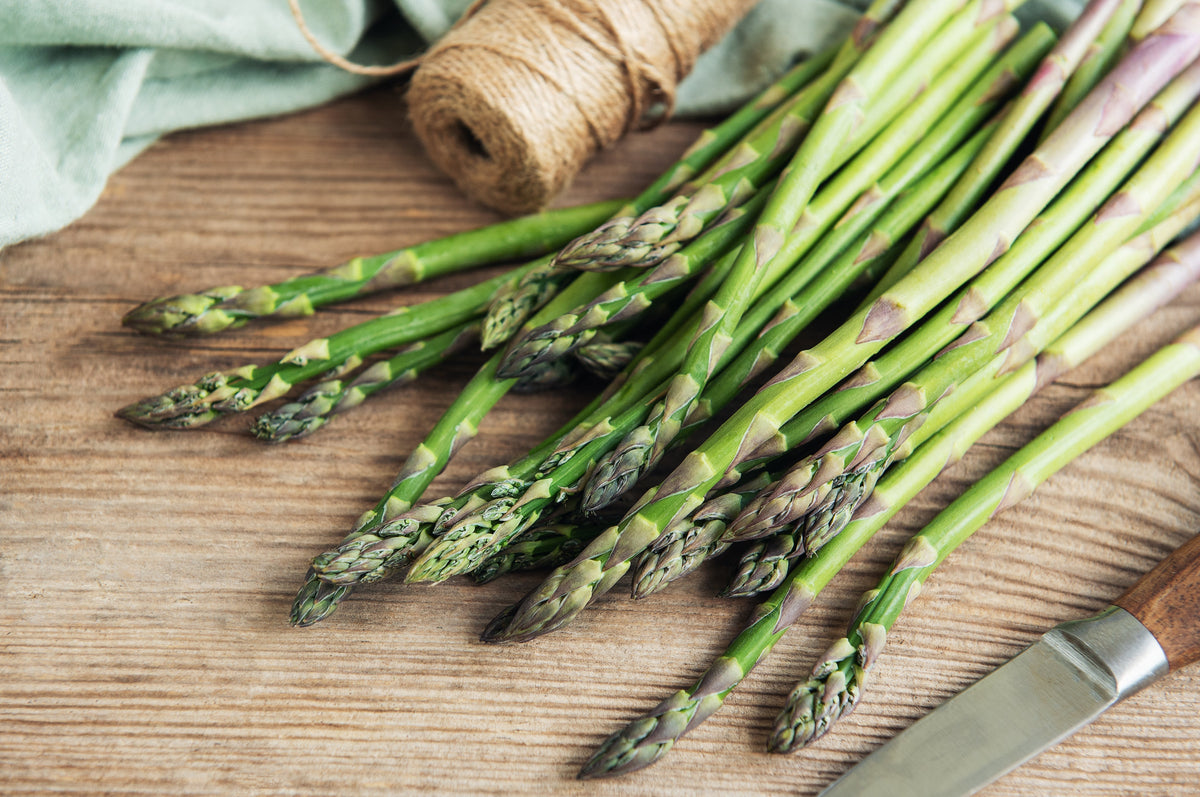
Comment lyophiliser des asperges
Les asperges fraîches comptent parmi les légumes les plus attendus du printemps, mais leur saison de récolte est étonnamment courte. Si vous vous retrouvez un jour avec plus d'asperges que vous ne pouvez en consommer, la lyophilisation est l'un des meilleurs moyens de préserver leur saveur fraîche et d'en profiter tout au long de l'année.
Que vous récoltiez des asperges dans votre potager, que vous fassiez vos courses au marché fermier du coin ou que vous profitiez des promotions saisonnières, la lyophilisation vous permet de réduire le gaspillage alimentaire tout en obtenant un ingrédient pratique pour vos soupes, plats mijotés, sautés, plats de pâtes et accompagnements.
Dans ce guide, vous apprendrez comment préparer les asperges pour la lyophilisation, pourquoi il est recommandé de les blanchir, comment les conditionner pour une conservation à long terme, ainsi que les meilleures méthodes pour les réhydrater lorsque vous serez prêt à les cuisiner.

Pourquoi lyophiliser les asperges ?
Les asperges ont une teneur en eau naturellement élevée, ce qui rend difficile leur conservation à l'état frais pendant plus de quelques jours. La lyophilisation élimine la quasi-totalité de cette eau tout en contribuant à préserver la saveur, la couleur et la texture de ce légume.
Les avantages comprennent :
- Conserver les récoltes de saison
- Réduire le gaspillage alimentaire
- Ayez des asperges à disposition toute l'année
- Préparer des plats de camping légers
- Constituez une réserve alimentaire d'urgence
- Ajoutez des légumes à vos repas rapides en semaine
Les asperges lyophilisées, si elles sont conservées dans les règles de l'art, sont toujours prêtes à être consommées quand vous en avez besoin.
Comment choisir les meilleures asperges
Commencez par choisir les asperges les plus fraîches que vous puissiez trouver.
Recherchez des spears qui :
- Vert vif
- Cabinet
- Hétéro
- Bien fermées aux extrémités
- Sans zones molles ni décoloration
Les tiges plus fines offrent généralement la meilleure texture après réhydratation, car elles sont généralement moins fibreuses que les tiges plus épaisses.
Faut-il blanchir les asperges avant de les lyophiliser ?
Oui, il est recommandé de les blanchir.
Un bref blanchiment permet de préserver la couleur et la texture tout en réduisant le risque que les asperges se ratatinent pendant le processus de lyophilisation. Il peut également améliorer la texture après réhydratation, en particulier lorsque l'on utilise des tiges plus fines.
Comment blanchir des asperges
- Portez une grande casserole d'eau à ébullition.
- Lavez et équeutez les asperges.
- Faites-les blanchir pendant 2 à 4 minutes, selon l'épaisseur des pointes.
- Plongez immédiatement les asperges dans un bain de glace pour arrêter la cuisson.
- Égouttez-les bien et séchez-les en les tapotant.
Cette étape simple permet de préparer les asperges en vue d'une lyophilisation réussie.

Préparation des asperges pour la lyophilisation
Une fois que les asperges ont refroidi :
- Coupez les extrémités ligneuses.
- Laissez les petites pointes entières ou coupez les plus grosses en morceaux de 1 à 2 pouces.
- Disposez les asperges en une seule couche sur les plateaux du lyophilisateur.
- Évitez de trop entasser les plantes afin que l'air puisse circuler librement.
Les pièces disposées de manière uniforme favorisent un séchage homogène.
Lyophilisation des asperges
Placez les plateaux préparés dans votre lyophilisateur Harvest Right et lancez le cycle prévu pour les légumes.
Une fois le cycle terminé :
- Vérifiez si les morceaux les plus épais contiennent encore de l'humidité.
- Si nécessaire, prolongez le temps de séchage.
- Laissez refroidir les asperges avant de les emballer.
Les asperges parfaitement sèches doivent être croquantes et se casser facilement au lieu de se plier.
Comment conserver des asperges lyophilisées
Un emballage adapté est essentiel pour préserver la qualité.
Pour une durée de conservation optimale :
- Conditionner immédiatement après refroidissement.
- Utilisez des sachets en Mylar équipés d'absorbeurs d'oxygène.
- Mettez sous vide dans des bocaux Mason les aliments que vous consommez le plus souvent.
- Conserver dans un endroit frais, sec et à l'abri de la lumière.
Protéger les asperges de l'humidité, de l'oxygène, de la chaleur et de la lumière permet d'optimiser leur durée de conservation.
Comment réhydrater des asperges lyophilisées
La réhydratation des asperges est très simple.
Pour les accompagnements
- Mettez les asperges dans un saladier.
- Recouvrez d'eau chaude.
- Laissez-les tremper jusqu'à ce qu'ils soient tendres.
- Égouttez et assaisonnez à votre goût.
Pour la cuisine
Vous pouvez également ajouter des asperges lyophilisées directement dans :
- Soupes
- Ragoûts
- Pâtes
- Risotto
- Sautés
- Plats en cocotte
Les asperges se réhydrateront naturellement pendant la cuisson.
Idées d'utilisation des asperges lyophilisées
Les asperges lyophilisées sont incroyablement polyvalentes.
Essayez de l'ajouter à :
- Omelettes
- Quiche
- Soupes onctueuses
- Poulet à l'Alfredo
- Pâtes « primavera »
- Riz frit
- Gratins de légumes
- Plats à préparer sur une plaque de cuisson
- Bol de riz
- Salades de céréales
En gardant des asperges dans votre garde-manger, vous pourrez facilement agrémenter vos repas de légumes tout au long de l'année.
Conseils pour obtenir les meilleurs résultats
Pour des résultats toujours excellents :
- Commencez par des asperges fraîches.
- Blanchir avant la lyophilisation.
- Utilisez des pointes plus fines dès que possible.
- Coupez les tiges les plus épaisses en petits morceaux.
- Ne surchargez pas les plateaux.
- Assurez-vous que les asperges soient parfaitement sèches avant de les emballer.
- Fermez hermétiquement les aliments dès qu'ils ont refroidi.
Ces petites mesures peuvent faire une différence notable en termes de qualité.
Foire aux questions
Peut-on lyophiliser des asperges fraîches ?
Oui. Les asperges fraîches se prêtent très bien à la lyophilisation lorsqu'elles sont correctement préparées et blanchies avant le traitement.
Pourquoi faut-il d'abord blanchir les asperges ?
Le blanchiment permet de préserver la couleur et la texture, réduit le rétrécissement lors de la lyophilisation et peut améliorer la texture après réhydratation.
Peut-on lyophiliser des asperges épaisses ?
Oui. Les tiges épaisses peuvent être lyophilisées sans problème, même si les tiges plus fines retrouvent souvent une texture plus tendre une fois réhydratées.
Comment conserver les asperges lyophilisées ?
Conservez-le dans des sachets en Mylar hermétiques contenant des absorbeurs d'oxygène ou dans des récipients sous vide, dans un endroit frais, sec et à l'abri de la lumière.
Quelles sont les recettes qui se marient le mieux avec les asperges lyophilisées ?
Les asperges lyophilisées sont délicieuses dans les soupes, les gratins, les plats de pâtes, le risotto, les sautés, les omelettes et les accompagnements.
Savourez les asperges bien après la récolte
La saison des asperges fraîches ne dure peut-être que quelques semaines, mais la lyophilisation vous permet de profiter de ce légume polyvalent tout au long de l'année. En les blanchissant au préalable, en les conditionnant correctement et en les conservant dans de bonnes conditions, vous pouvez préserver leur saveur et disposer d'un ingrédient pratique dès que l'inspiration vous vient.
Que ce soit pour conserver une récolte abondante de votre potager, préparer vos repas pour vos sorties en camping ou remplir votre garde-manger de légumes sains, les asperges lyophilisées constituent un moyen simple et délicieux de profiter pleinement de la saison des asperges.
Partager:
Peut-on lyophiliser un steak ? Conseils, conservation et réhydratation
Comment lyophiliser des hamburgers